


_1782098484336.webp)
How does an organic fertilizer manufacturing machine work
Through a controlled set of biological and mechanical processes, an Organic Fertilizer Manufacturing Machine turns farm waste like animal manure, crop leftovers, and food preparation by-products into organic fertiliser that can be sold. At its core, the system uses equipment for aerobic fermentation, moving materials, granulation, and drying and cooling to make soil amendments that are high in nutrients and free of pathogens. The process starts with getting the raw materials ready. Then it moves on to managing the fermentation, making the particles, reducing the amount of moisture, and checking the quality one last time. At the end, the standard fertiliser products are ready to be packed up and sent out.
Introduction
A lot of waste comes from farming and raising animals, which is bad for the environment and could be good for business. Medium-sized businesses that make fertiliser, deal with trash, and are forward-thinking farms are becoming more aware of how choosing the right equipment can turn disposal problems into assets that bring in money. This detailed guide explains how industrial composting and pelletisation systems work, what businesses need to think about when buying systems that can handle 5 to 30 tonnes per day, and the technical details that are important when turning raw organic matter into products that are ready to sell.
We look at how integrated machinery lines can cut down on manual labour by 60–70% compared to old-fashioned composting ways, help meet stricter environmental standards, and make the most of the growing organic farm industry. Production managers who want to know how equipment works before investing a lot of money will find useful information in every step of the process. Purchasing teams can look at important choice factors like licenses, power compatibility, and after-sales infrastructure.
Understanding the Organic Fertiliser Manufacturing Machine
Core Components and Their Functions
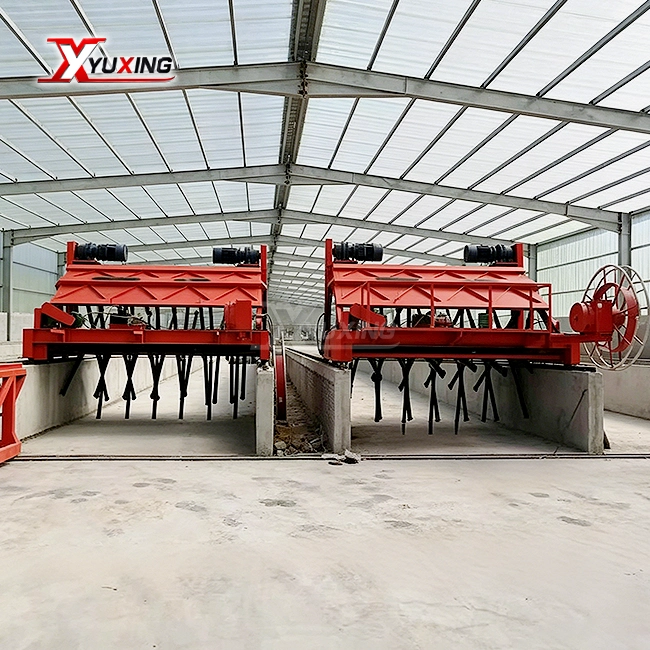
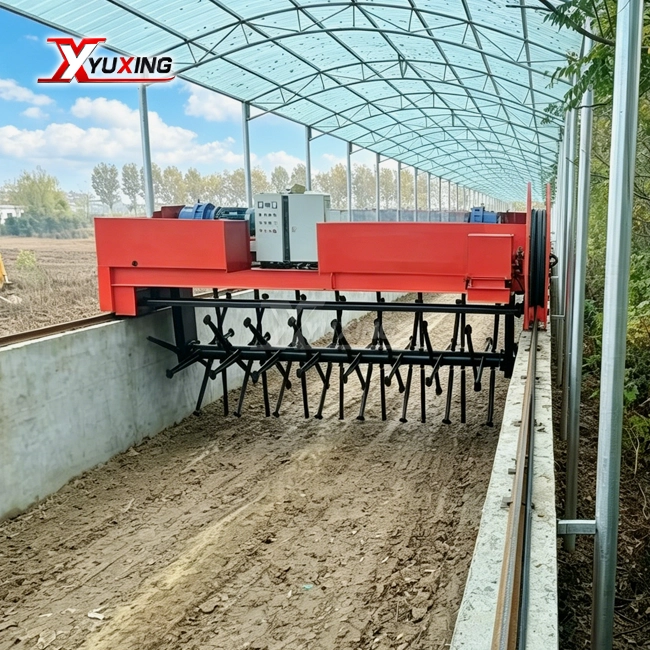
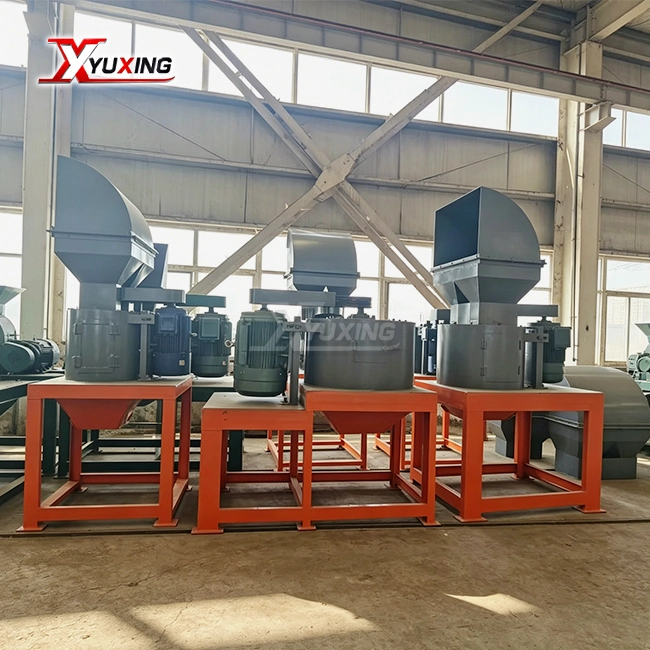
Modern methods for composting and granulation are made up of several parts that work together in a certain order. Crawler-type compost turners take care of fermentation by mechanically aerating windrows. This lets oxygen get into the pile and makes sure that the temperature is the same all over. Horizontal or vertical mixers mix fermented materials with extra nutrients and microbes to make batches that are all the same. Crushers get rid of big chunks and particles, making the material ready for pelletisation. Disc pelletisers, drum granulators, or extrusion tools are used to turn the treated compost into spherical or cylindrical pieces. Rotary dryers get rid of extra water, and cooling systems keep the structure of the pellets stable. After being crushed and granulated, oversize and undersized particles are sent back to the crushing and granulating stages by screening machines. Coating tools put on protection layers that keep nutrients in and cut down on dust. The finished product is weighed and packed by automated bagging lines.
Raw Materials and Feedstock Characteristics
These systems are flexible because they can handle a range of organic feedstocks. Most operations depend on animal waste like chicken poop, cow dung, pig waste, and sheep droppings, which make up 50 to 70% of the raw material mix. Things left over from crops like wheat straw, corn stalks, rice husks and sugarcane bagasse smooth out the carbon balance and make the overall density better. Biosolids from cities, food processing waste like spent grain or fruit pomace from breweries, and green waste from gardening businesses can all be used as alternative or extra sources. For production to go well, the carbon-to-nitrogen ratio needs to stay between 25:1 and 35:1, the original moisture level needs to be between 55 and 65%, and the pH needs to be between 6.5 and 8.5 so that microbes can work during fermentation.
Environmental and Economic Advantages
Equipment-based processing with an organic fertilizer manufacturing machine solves three major problems at the same time: following the rules for managing garbage, cutting down on greenhouse gas emissions from unchecked decomposition, and keeping groundwater clean from nutrient leaching. Through controlled ventilation and temperature management, mechanised fermentation cuts the normal 90–180 day waste cycle down to 15–25 days. This speeding up means that inventory will be turned over more quickly and less land will be needed for windrow space. When temperatures inside the pile stay between 60°C and 70°C for long periods of time, pathogens are safely killed, meeting safety standards for farming use. When you compare the prices of the pelletised goods to the raw manure, the profit margins are often higher than 40% after handling costs are taken into account.
How Does an Organic Fertiliser Manufacturing Machine Work?
Stage One: Raw Material Collection and Preparation
The first step in the process is receiving the feedstock and adjusting the initial moisture level. Solid-liquid separators take out the extra water from new dung, lowering the moisture level from 75 to 85% to the 55 to 65% range needed for composting to work well. Large plant materials are broken up by shredding equipment, which makes sure that the pieces are less than 250 mm in size so that microbes can get to them easily and fermentation can happen evenly. Pre-mixing stations mix different types of trash according to recipe instructions, making sure that the physical and nutritional qualities are balanced. Some facilities start to fix the pH at this point by adding limestone or gypsum to materials that are too acidic.
Stage Two: Aerobic Fermentation with Mechanical Turners
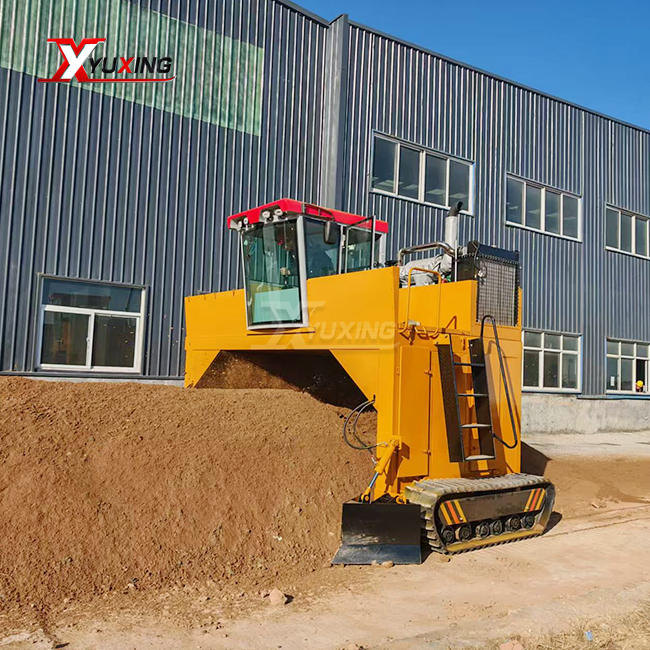
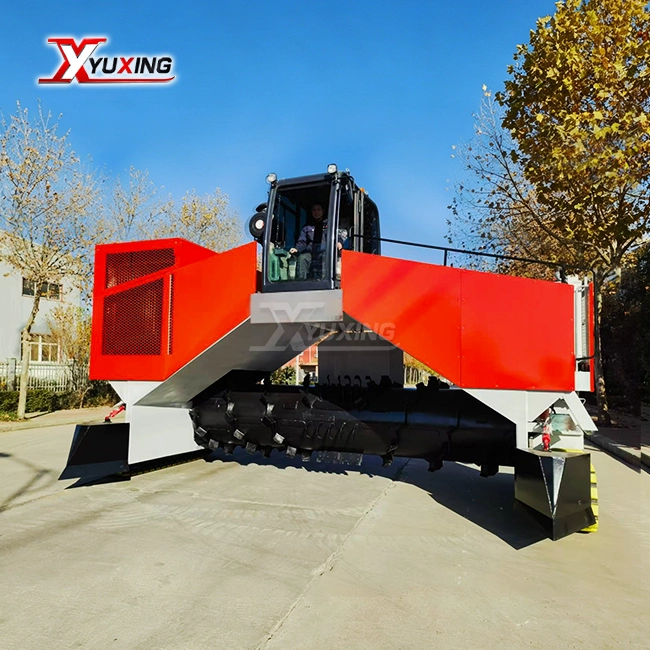
The organic change that happens most quickly happens during windrow composting, which is controlled by special tools. With a 4000mm working width and an 1800mm pile height capacity, the YUXING YXFD-4000 Crawler Compost Turner is the perfect example of industrial-grade fermentation management. Its 154kW diesel engine powers a hydraulic walking system that lets it turn precisely 360° while it's still in place. The machine can theoretically process 1200–1600m³/h, which means that one person can oversee fermentation across large windrow fields.
When the turner is in use, its 910 mm diameter drum with heavy-duty blades moves at speeds between 0 and 15 m/min and moves, aerates, and redistributes material. This mechanical action spreads oxygen throughout the pile, which stops anaerobic conditions that cause ammonia and bad smells to form. Precision balancing is done on the 20# seamless steel pipe moving gear to reduce vibrations and make the parts last longer. The 3500mm-tall machine's weight is spread out over a 5400mm width by heavy-duty widened tracks. This keeps the soil from compacting and lets it work in tight areas with 4.0m door openings.
During this phase, monitoring the temperature determines how often the piles need to be turned. Materials that are producing internal heat above 75°C need to be aerated more often to keep beneficial microbes from being damaged by too much heat, while piles below 50°C may need insulation or more carbon sources to keep microbes active. When fermentation is done right, it cuts the amount of organic matter by 30 to 40 per cent and gets rid of pathogens, weed seeds, and smelly compounds.
Stage Three: Material Refinement and Granulation
After fermentation is done and the material has cooled below 40°C, the next step is secondary processing. Cage mills or chain crushers break up lumps and clumps into small pieces smaller than 3 mm. This makes uniform feedstock for pelletisation. Dynamic mixing systems add extra things like rock phosphate, potassium sulphate, or trace element packages based on the fertiliser formulas that are being made. Horizontal ribbon mixers or vertical screw mixers can get uniformity coefficients of variation to less than 5%, which makes sure that every pellet has the same amount of nutrients.
Granulation technology changes depending on the needs of the product and the properties of the raw materials. Disc pelletisers work best with materials that naturally stick together well and need 10-15% moisture. Drum granulators can handle higher levels of moisture (about 25–30%) and make rounder pellets by tumbling them in a circle. Under high pressure, extrusion granulators push material through dies to make dense, cylinder-shaped pellets that are perfect for slow-release formulations. The output from these units goes straight into rotating dryers, which lower the moisture level to 10–15 per cent so that the goods can be stored safely.
Stage Four: Finishing and Quality Control
Rotating fans keep the pellets from getting too hot and improve the structure of the particles in the organic fertilizer making machine. Vibrating screens sort the material into different sizes, usually between 2 and 4 mm for precision farming and between 4 and 6 mm for broadcast spreading. Customised sizes can also be made to fit the needs of local markets. Oversized particles go back to the crushers, and undersized fines go back to the granulation stage. This makes the best use of the materials, which is above 95% of the time.
Thin films of clay, humic acid, or polymer are put on by coating equipment. These films stop dust from being made while the food is being handled and keep moisture in, so nutrients don't get lost during storage. Automatic bagging systems can fill 25 kg or 50 kg woven polypropylene bags at speeds of more than 6 to 8 bags per minute, and digital scales make sure that the net weight is correct. Robots that palletise or people stacking things by hand get finished goods ready to be stored in a building or loaded into a shipping container.
Choosing the Right Organic Fertiliser Manufacturing Machine for Your Business
Production Capacity and Operational Scale
Before choosing equipment, it's important to be honest about how much fuel is available and how much you want to produce. Operations processing 5-10 tonnes of raw material daily suit small-scale lines having 1.5-2.5 m width compost turners paired with 500-800 kg/h grinding capacity. Facilities that handle 15 to 30 tonnes of material every day can benefit from 3- to 4-metre turning equipment like the YXFD-4000 model and systems that can pelletise 2 to 3 tonnes of material every hour. When figuring out throughput, you have to take into account the loss of moisture. For example, raw dung with 65% moisture gives about 35% of its original weight as a finished product. This means that 20 tonnes of fresh feedstock makes about 7 tonnes of dried fertiliser.
Automation Level and Labour Requirements
Manual batch processes with stand-alone machines need 8 to 12 people per shift, but they can handle a wide range of low-volume goods. Semi-automated lines with material elevators and conveyors cut down on staffing to 4 to 6 people while keeping production steady. Fully automated systems with PLC control, sensor-based material flow management, and centralised tracking make it possible for two to three people to run whole processing lines. The difference in labour costs often justifies a bigger initial investment in equipment within 18 to 24 months for businesses that put in more than 8,000 hours of production each year.
Power Supply and Infrastructure Compatibility
Different electricity standards in international markets mean that careful equipment design is needed. The YXFD-4000 runs on diesel power, so it doesn't need to be plugged into the wall and can be moved between outdoor windrow sites. 380V, 440V, or 480V three-phase power supplies are usually needed for electric auxiliary equipment like crushers, mixers, and granulators. When facilities look at their total connected load, they should figure out that integrated production lines can process between 0.6 and 0.8 kW per tonne per hour. In places where the power grid isn't stable all the time, having a generator backup is important, especially for temperature-sensitive monitoring systems for fermentation and automatic bagging lines.
Certification Standards and Quality Assurance
When equipment has CE certification, it means it meets European safety and environmental rules. This certification is becoming more and more important for exporting to markets outside of Europe because it is seen as a quality standard. When a manufacturer is certified by ISO 9001, it means that they use systematic quality management practices throughout the whole production process. When equipment is made with 304 or 316 stainless steel contact surfaces, it doesn't rust in acidic fermentation conditions, and with proper care, it can last longer than 15 years. Heavy-duty parts on the organic fertilizer machine YXFD-4000 include elephant brand chains, high-strength sprockets, and 50mm-wide, 10mm-thick walking wheels. These are examples of engineering standards that keep breakdowns to a minimum during continuous production runs.
Conclusion
Knowing how the equipment that changes organic waste works lets you make better buying choices that are in line with your production goals and market possibilities. From raw manure to controlled fermentation, mechanical granulation, and quality finishing, this process shows both traditional farming methods and cutting-edge manufacturing technology. For implementation to go well, it's important to match the capacity of the equipment to the supply of the feedstock, choose the right amount of automation for the labour market, and work with suppliers who offer full technical support after the initial installation. As environmental laws get stricter around the world and organic farming grows, mid-sized businesses can take advantage of market growth by investing in tried-and-true machinery systems that can also handle their waste management duties well.
FAQ
1. What moisture content works best for different processing stages?
The raw materials go into fermentation with between 55 and 65% wetness, which supports bacterial activity without making the environment oxygen-free. For disc or drum pelletisers to granulate, the material needs to be 25–35% wet, but extruder systems can handle materials that are only 15–20% wet. For keeping and bagging, finished goods stay stable at 10-15% wetness.
2. How long does a complete production cycle take from raw waste to packaged fertiliser?
Fermentation takes 15 to 25 days, depending on the type of raw materials used, the temperature of the environment, and how often the mixture is turned. For every tonne of finished product that goes through mechanical processing like crushing, granulating, drying, cooling, and screening, the equipment has to run for an extra 4 to 8 hours.
3. Can a single machine process both animal manure and plant residues?
Yes, versatile systems can handle mixed feedstocks as long as the C: N ratio is balanced during pre-mixing. The consistency of the material's particle size is more important than its source. Preprocessing shreds large plant materials to match the texture of manure, making sure that all blended batches ferment and granulate the same way.
Partner with YUXING for Reliable Organic Fertiliser Manufacturing Solutions
Fertiliser makers all over the world can benefit from YUXING's more than 20 years of experience in composting and granulation technology. Our engineering team takes care of the whole project, from planning the layout of the plant to completing it, teaching operators, and providing ongoing technical support. The YXFD-4000 Crawler Compost Turner shows our dedication to long-lasting, effective machinery designed for continuous production settings. It is CE- and ISO-certified, and every installation comes with lifetime 7x24 technical support.
Whether you need stand-alone fermentation equipment or complete processing lines that handle everything from accepting waste to bagging it, we can customize our products to meet your exact voltage, automation, and capacity needs. You can email our team at yuxing@hnyxmachinery.com to talk about your project needs with experienced organic fertilizer manufacturing machine suppliers who know how waste-to-value operations work from a technical and financial point of view.
References
1. Bernal, M.P., Alburquerque, J.A., & Moral, R. (2009). "Composting of animal manures and chemical criteria for compost maturity assessment." Bioresource Technology, 100(22), 5444-5453.
2. Cooperband, L. (2002). "The Art and Science of Composting: A resource for farmers and compost producers." University of Wisconsin-Madison Center for Integrated Agricultural Systems.
3. Larney, F.J., & Hao, X. (2007). "A review of composting as a management alternative for beef cattle feedlot manure in southern Alberta, Canada." Bioresource Technology, 98(17), 3221-3227.
4. Pagans, E., Barrena, R., Font, X., & Sánchez, A. (2006). "Ammonia emissions from the composting of different organic wastes: Dependency on process temperature." Chemosphere, 62(9), 1534-1542.
5. Rashad, F.M., Saleh, W.D., & Moselhy, M.A. (2010). "Bioconversion of rice straw and certain agro-industrial wastes to amendments for organic farming systems: Composting, quality, stability and maturity indices." Bioresource Technology, 101(15), 5952-5960.
6. Zhang, L., & Sun, X. (2014). "Changes in physical, chemical, and microbiological properties during the two-stage co-composting of green waste with spent mushroom compost and biochar." Bioresource Technology, 171, 274-284.

USER EVALUATE
Get your tailored fertilizer plant solution — contact us today.