




What is a manure composting machine and what are the Benefits of Compost?
A manure composting machine is industrial equipment that speeds up the biological breakdown of livestock manure and organic waste through mechanical turning and forced aeration. Instead of waiting months for natural decomposition, these machines compress the fermentation cycle to just 7–15 days. By maintaining proper oxygen flow, moisture balance, and temperature inside fermentation troughs, a manure composting machine produces consistent, nutrient-rich compost that serves as premium raw material for organic fertilizer production—making it a practical solution for farms, fertilizer plants, and commercial composting operations worldwide.
Understanding Manure Composting Machines What These Machines Actually Do
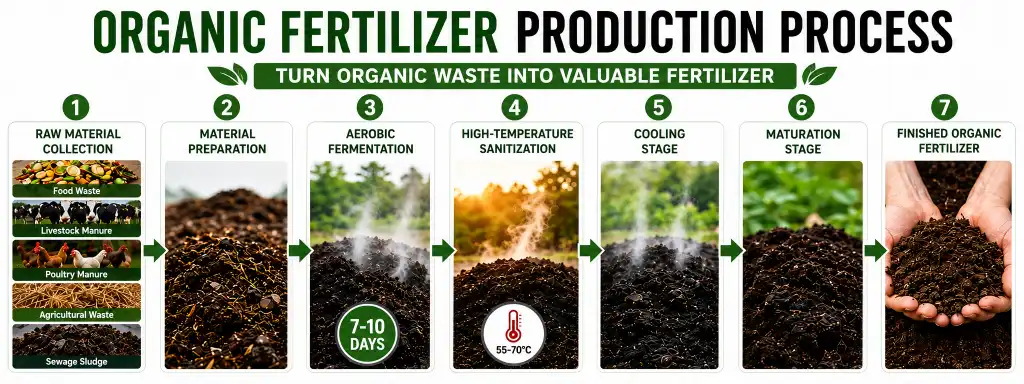
A compost turner works by physically moving and airing out piled organic matter at set times. This mechanical action loosens up layers that are stuck together, adds oxygen to feed aerobic microbes, and spreads heat evenly throughout the pile. The thermophilic phase, in which temperatures hit 55–70°C, kills bacteria and weed seeds and speeds up the breakdown process. Most compost piles never get to or stay in this vital temperature range if they are not turned by hand.
Key Components and Operation Modes
A normal trough-type turner has a travel drive system, a control panel, a turning shaft with blades, and a transfer device that lets it work with more than one trough. Most industrial units can be operated by hand or by remote control, which gives workers on big composting sites more options. For example, the YUXING YXFP-4000 has two 18.5kW motors that power both ends of the turning shaft. It also has two cycloidal pinwheel reducers and a 20A chain-and-sprocket transmission, which means it can handle thick, wet manure without the shaft getting worn out.
Matching Machine Scale to Your Operation
Different tasks need various kinds of tools. Here is a useful ability guide for making decisions about procurement:
- Small farms (under 50 cows or 5,000 poultry): Compact turners with a working width under 2,000mm and capacity around 50–80m³/h are generally sufficient.
- Medium-scale operations (4,000mm working width): The YXFP-4000 delivers ≥200m³/h at a center-to-center width of 4,000mm, covering multiple fermentation troughs with one machine via its built-in transfer car—ideal for farms generating several hundred cubic meters of waste daily.
- Large industrial fertilizer plants: Multi-unit trough systems or crawler-type turners with capacities exceeding 500m³/h suit continuous, high-volume processing.
Choosing the right size keeps you from under-processing when there is a lot of trash and from spending too much on energy when things are slow.
The Benefits of Using Manure Composting Machines
Environmental Advantages
Methane and nitrous oxide are greenhouse gases that are released when raw manure is not managed. They have a much greater potential to warm the planet than CO₂. The FAO says that cattle are responsible for about 14.5% of the world's greenhouse gas emissions. A big part of this comes from manure that breaks down without being managed. A manure composting machine moves this process into a controlled aerobic environment, which lowers the amount of methane released and the amount of nitrogen that flows into groundwater and contaminates it.
Agricultural and Soil Health Benefits
The finished compost made by mechanical fermentation has a stable carbon-to-nitrogen ratio and a lot of good microbes living in it. When used on fields, it makes the soil more stable, helps sandy soils hold on to water, and slowly releases nutrients over the growing season. According to a study published in Bioresource Technology, applying thermophilically composted manure to treated soils greatly improves the amount of available phosphorus and microbial biomass compared to applying raw manure.
Economic and Business Benefits
When you use a trough-type compost turner in your business, you'll get the following main benefits:
- Labor cost reduction: One operator managing a machine like the YXFP-4000 can replace a team of four to six manual turning workers, cutting daily labor expenses substantially.
- Volume reduction: Properly managed aerobic composting reduces raw waste volume by up to 60%, lowering disposal costs and storage space requirements.
- Revenue generation: Finished compost or bagged organic fertilizer commands a reliable market price, turning a waste management cost into a secondary income stream.
- Faster throughput: Compressing the fermentation cycle to 7–15 days means more batches processed per month, directly increasing production output.
Because of these benefits, the technology investment pays for itself faster, which is very important for medium-sized businesses with budgets between $3,000 and $35,000.
Comparing Manure Composting Machines with Traditional Composting
Time and Labor Differences
It usually takes 3–6 months of traditional windrow composting without any mechanical help to make stable compost. Using trucks or hand tools, workers have to turn piles by hand, which takes a lot of time and gives inconsistent results. This time is cut down to less than two weeks with mechanized trough composting, which keeps the right amount of airflow going all the time.
Process Control and Consistency
The results of manual composting are not always consistent because the pile's temperature and moisture change without warning. A trough system that is controlled by a machine keeps the thermophilic temperature range much more accurately, making compost batches with consistent nutrient profiles. When the compost goes into a pelletizing or granulation line further down the line, this regularity is very important because it directly affects the quality of the end fertilizer product.
ROI Comparison
A farm in Vietnam that was testing trough-based composting said that the time it took for the compost to break down went from 90 days to 12 days after they switched from using hand windrows to a motorized turner. Within 14 months, the business paid back the cost of the equipment by cutting down on labor and selling more fertilizer. Similar outcomes have been seen in Nigerian chicken farms and Brazilian cow farms, where moving by hand would be too expensive on a large scale.
How to Choose the Right Manure Composting Machine for Your Business
Match Capacity to Daily Waste Volume
Before you choose an organic manure compost machine, figure out how much wet waste you produce each day in cubic meters. A medium-sized chicken farm that makes 80–120 m³ of fresh manure every day needs a turner that can handle at least 200m³/h of work so that it can keep up with peak loads and batch schedules. The YXFP-4000 meets this level and has room to grow.
Evaluate Mechanical Durability
Manure is very acidic. High-manganese steel blades and worn parts don't wear down easily and normally last two to three years. The YXFP-4000 has 8 290 mm cast steel drive wheels and a hydraulic lifting system that lets the height be changed from 0.8 m to 1.2 m. This means that it can work with different pile layouts without having to be moved by hand.
Prioritize Certifications and After-Sales Support
The equipment meets international safety and performance standards because it has CE and ISO certification. The YUXING YXFP-4000 has both certifications and a lifetime 7x24 after-sales service that includes help with installation, teaching on how to use it, and advice on extra parts. This level of support after the sale makes costly downtime much less likely for buyers in Africa, Southeast Asia, Central Asia, and South America.
Essential Maintenance Tips to Maximize Machine Performance
Routine Inspection Protocols
During busy composting times, check the turning blades, chain tensioner, and travel wheels every week. To keep the chain from skipping, clean the sprocket teeth of any dirt or debris that has built up between shifts. Every month, check the amount of hydraulic fluid and look for worn seals around the lifting cylinder.
Preventive Wear-Part Management
To make sure you always have a full set of replacement high-manganese blades on hand, make sure you carry one set with you at all times. Before they break under load, replace any chain links that have stretched past 3% of their original length. The YXFP-4000's cycloidal pinwheel reducers need to be oiled every 2,000 hours of use. Planning this ahead of time keeps unplanned downtime to a minimum.
Troubleshooting Common Issues
If the spindle slows down or stops when it's under load, make sure there aren't any blockages between the blade rows before you assume the motor is too busy. If the travel speed changes all the time, check the links for the speed-regulating motor and the encoder input. YUXING offers remote video help for most field-level issues so workers can fix issues without having to wait for a technician to arrive.
Conclusion
No longer just a luxury for big factories, mechanical composting is now a must for any animal farm or organic fertilizer business that deals with a lot of waste every day. If you choose the right manure composting machine, fermentation can be done in days instead of months, the output is consistent and of high quality, and the machine pays for itself in labor savings and fertilizer sales. The YXFP-4000 is a well-designed choice for medium-sized businesses that need a lot of processing power, reliable mechanics, and the ability to use more than one trough, all while getting long-term technical support. The numbers make a good case for motorized turning if you are looking at your composting process.
FAQ – Frequently Asked Questions
1. How long does it take to produce finished compost with a mechanical turner?
With proper moisture content (55–65%) and regular turning cycles, most livestock manures reach stable, pathogen-free compost within 7–15 days using a trough-type machine. Traditional open windrow methods take 3–6 months for comparison.
2. Can this equipment handle mixed organic waste?
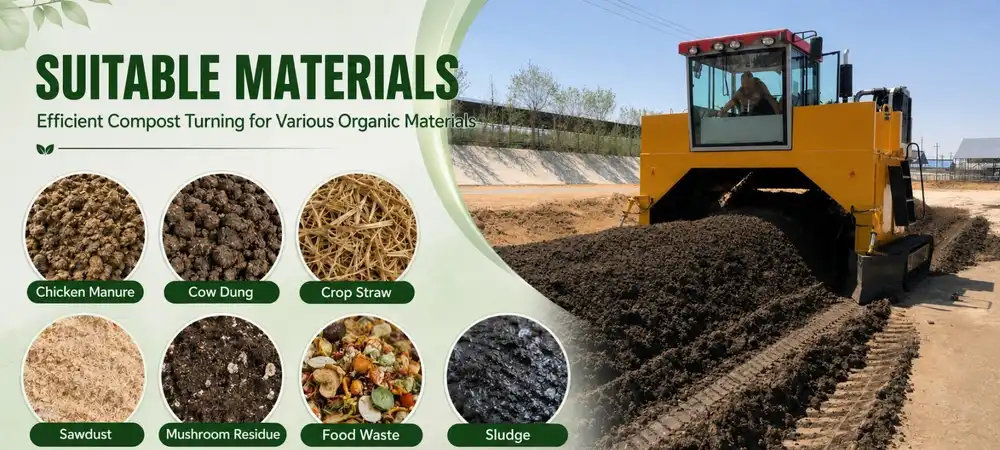
Yes. Trough-type turners process poultry manure, swine waste, cattle dung, crop straw, and municipal biosolids. Adding bulking agents like sawdust or rice husks to high-moisture inputs (above 65%) improves aeration and prevents anaerobic pockets.
3. What warranty and support does YUXING provide?
The YXFP-4000 comes with CE and ISO certification and YUXING's lifetime 7×24 after-sales support, including installation guidance, operation training, remote troubleshooting, and stable spare parts supply. Standard equipment ships from stock; customized configurations carry a 15–20 day production lead time.
4. What is the power supply requirement?
The YXFP-4000 runs on dual 18.5kW main motors plus 2.2kW travel and transfer motors. YUXING offers voltage and electrical component customization (including Siemens and Schneider options) to match local grid standards in any target region.
Get a Quote from YUXING — Trusted Manure Composting Machine Manufacturer
For more than 20 years, YUXING has been making fertilizer tools for customers in more than 50 countries. The YXFP-4000 One-machine Whole-trough Compost Turner is a tried-and-true, CE and ISO approved option that can handle up to 200m³/h of work across multiple fermentation troughs with just one machine. Our team is ready to give you a project-specific price and expert advice, whether you are looking for a manure composting machine for sale or a full organic fertilizer production line. To get your personalized proposal right away, email us at yuxing@hnyxmachinery.com.
References
1. Food and Agriculture Organization of the United Nations. Tackling Climate Change Through Livestock. FAO, 2013.
2. Bernal, M. P., Alburquerque, J. A., & Moral, R. "Composting of animal manures and chemical criteria for compost maturity assessment." Bioresource Technology, 2009.
3. Tiquia, S. M., & Tam, N. F. Y. "Fate of nitrogen during composting of chicken litter." Environmental Pollution, 2000.
4. Rynk, R. (Ed.). On-Farm Composting Handbook. Northeast Regional Agricultural Engineering Service, 1992.
5. Cooperband, L. R. "The Art and Science of Composting: A Resource for Farmers and Compost Producers." Center for Integrated Agricultural Systems, University of Wisconsin–Madison, 2002.
6. Huang, G. F., Wu, Q. T., Wong, J. W. C., & Nagar, B. B. "Transformation of organic matter during co-composting of pig manure with sawdust." Bioresource Technology, 2006.

USER EVALUATE
Get your tailored fertilizer plant solution — contact us today.