



_1782098484336.webp)
Windrow composting machine: A Natural Path to Rich Soil
A windrow composting machine is industrial equipment that mechanically turns and aerates organic waste arranged in long rows, accelerating aerobic fermentation far beyond what nature achieves alone. Rather than waiting months for raw manure or crop residue to break down, operators using a properly managed compost turner can complete the thermophilic decomposition cycle in as little as 7–15 days. For livestock farms, organic fertilizer plants, and commercial composting facilities, this speed translates directly into higher output, lower odor, and consistently nutrient-dense finished compost ready for soil application or granulation.
Understanding Windrow Composting Machines
What the Technology Actually Does
By turning the pile mechanically, new oxygen is added, which pushes out carbon dioxide and stops anaerobic pockets that make smells from methane and sulfur. Every time the rotor goes around, it moves the moisture around, mixes the feedstocks, and exposes the cooler material on the outside to the hot core, where pathogens are killed. The USDA Agricultural Research Service says that windrow piles that are managed properly can reach temperatures inside that are higher than the EPA's Process to Further Reduce Pathogens (PFRP) thresholds, between 131°F and 170°F (55°C and 77°C).
Machine Types and Their Fit
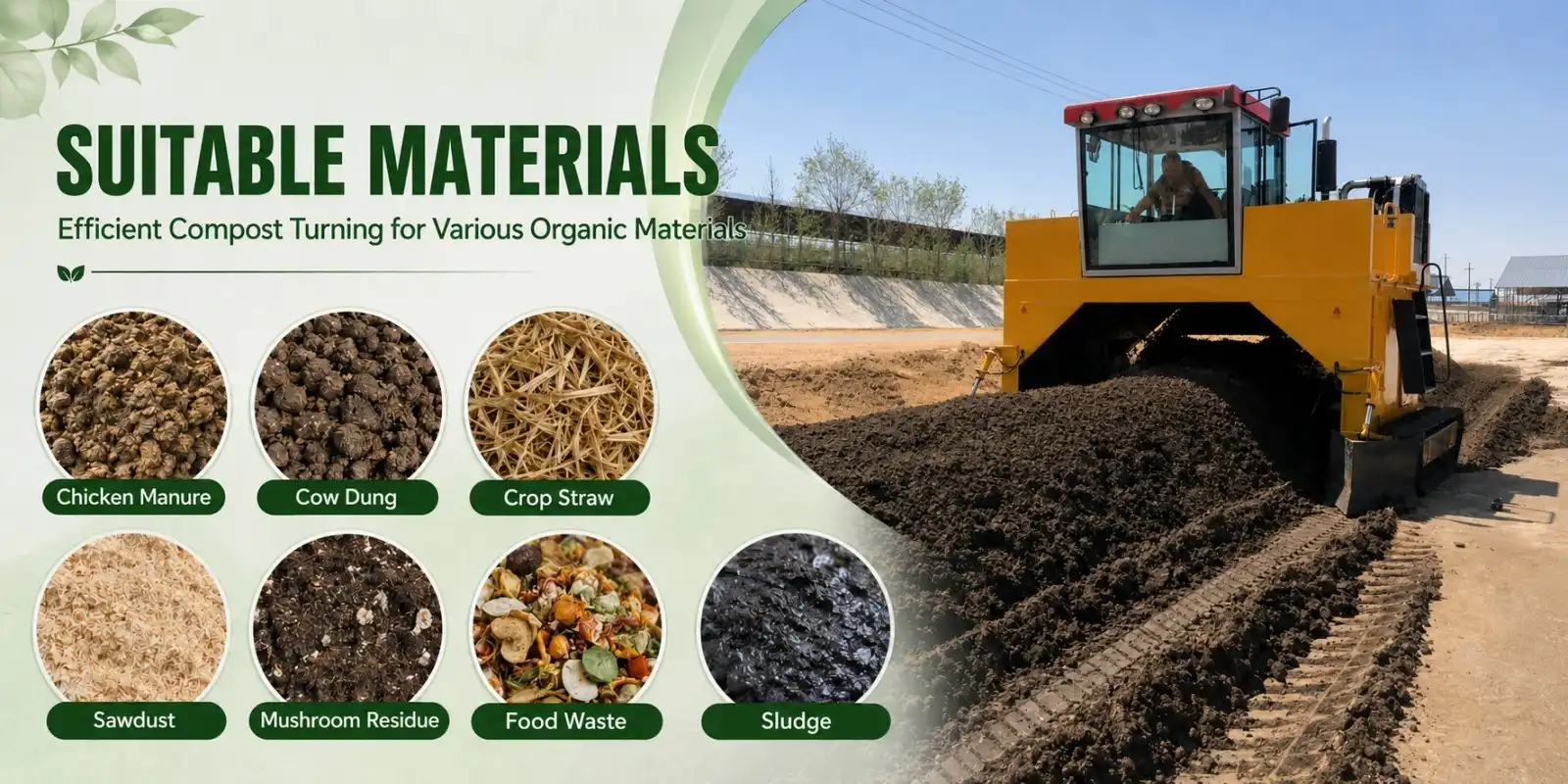
Crawler-type turners that move on their own can handle rough ground and wide working widths without losing their tracks. This is why they are the best choice for open composting pads in Southeast Asia, South America, and Africa. Bridge-type machines can be used inside covered fermentation rooms, while tractor-mounted units are better for smaller activities. When people choose the wrong type of machine, they often end up with poor airflow and wasteful fuel use.
Key Operating Parameters to Understand
Before buying any compost windrow equipment, you need to make sure of three numbers: the pile's width, height, and hourly throughput in cubic meters. These numbers show if a single machine can handle the daily waste without creating a backlog. A machine with a 2500 mm pile width and a 1150 mm pile height that can process 600–800 m³/h can handle the work of a medium- to large-sized livestock operation in a single shift each day.
Best Practices and Operation Guide for Windrow Composting
Daily Operational Checklist
Habits that you stick to lead to consistent results. Before each shift, workers should make sure that the carbon-to-nitrogen ratio in the windrow is between 25:1 and 35:1, that the pile moisture level is between 50 and 60%, and that the windrow compost turner drum can turn easily without any waste building up. Every morning, you should write down how much fuel and hydraulic fluid you have. The most common reason why large-scale processes report uneven breakdown is that these checks are skipped.
Preventive Maintenance That Extends Machine Life
When used in corrosive manure environments, manganese steel blades usually last between 600 and 1,000 hours before they need to be hard-faced or replaced. By scheduling checks of the blades every 200 hours, major failures during the shift can be avoided. Three more things that should be checked every month are the soundness of the hydraulic hose, the tension of the drive chain, and the alignment of the crawler track. If these are done correctly, they will make the machine last much longer than the manufacturer's minimum standards.
Operator Safety Protocols
Any rotor-based turner has a known risk of debris ejecting at high speeds. Operators must stay at least 5 meters away from the active turning zone and wear PPE, such as dust-rated respiratory protection, because the amount of ammonia in an active windrow can be higher than 25 parts per million. It is not enough to just assume that emergency stop circuits and hydraulic overload safety work; they should be checked every week.
Comparing Windrow Composting with Other Composting Solutions
Windrow vs. In-Vessel Rotary Drum Composting
In-vessel rotating drum composters break down materials more quickly per batch, but they are much more expensive to buy and don't work well with mixed animal waste because the particles are of different sizes. With a crawler-type windrow changer, you can handle particles up to 250 mm in size without first breaking them, which saves time and effort during pre-processing. For businesses that make 500 to 1,000 m³ of organic waste every day, the open windrow method is still the most cost-effective way to process it.
Windrow vs. Static Pile Aeration
In forced-aeration static pile devices, air is pushed through lines with holes in them under the pile by a network of blowers. They cut down on the work of turning, but they need a steady source of electricity and can't move moisture around or make mixed feedstocks uniform. For areas where the power source isn't always reliable, like in rural Southeast Asia and sub-Saharan Africa, a diesel-powered self-propelled turner can get the job done without being limited by infrastructure.
Windrow vs. Manual Pile Turning
Small farms still turn by hand or with a loader, but the cost of labor per cubic meter processed is four to six times higher than with a machine, according to figures from composting projects backed by FAO. On a large scale, a single crawler compost turner can do the work of 8–12 people turning compost by hand every shift, and it can do it more consistently than any human crew. For commercial production volumes, the return on investment for a mid-range machine is usually between 12 and 24 months.
How to Choose the Best Windrow Composting Machine for Your Business
Match Capacity to Daily Waste Volume First
The YXFD-2500 Crawler Compost Turner from YUXING, a compost windrow machine, can handle up to 800 m³ per hour at a speed of 0 to 15 m/min and a pile width of up to 2500 mm and a height of up to 1100 mm. The 70 kW (102 HP) 4102 National II turbocharged diesel engine gives it the torque it needs to turn thick, wet animal manure without stopping. A medium-sized composting business that produces 300–500 m³ of trash every day can use one unit working a single shift to keep the pile turning often enough to keep aerobic fermentation going.
Evaluate Durability and Certification
Before you buy something, you should be able to find the following basic scientific information on the paper from a reputable supplier:
- Working drum diameter with blades: 680 mm — wide enough for thorough pile penetration without excessive power draw.
- Gear configuration: 6 forward / 2 reverse — gives operators precise control over turning speed across different material densities.
- Longitudinal turning distance: 1,000–2,000 mm per pass — adjustable to match windrow spacing on your specific site layout.
- Maximum material particle size: 250 mm — eliminates pre-shredding requirements for most livestock manure and crop residue mixes.
- CE and ISO certification — confirms the machine meets international machinery safety and quality management standards.
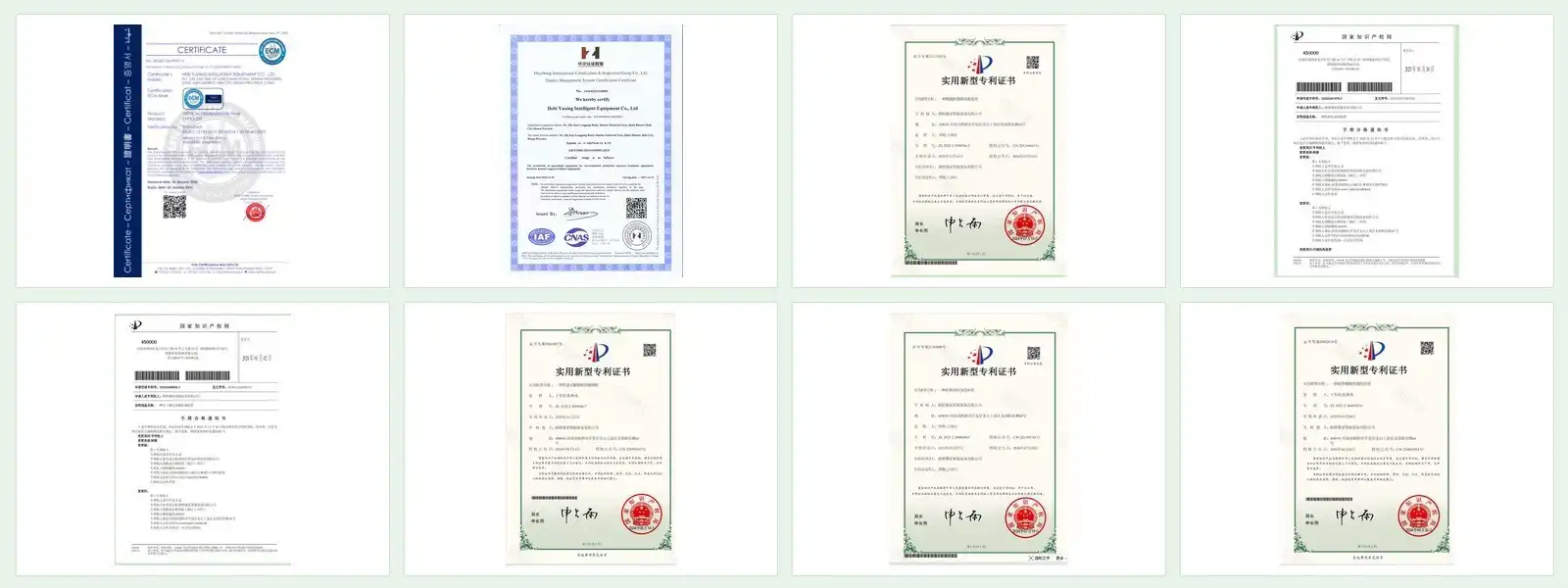
All of these specs work together to make sure that the machine works the same way over and over again for thousands of hours in harsh fermentation environments.
Factor in After-Sales Support and Supplier Track Record
A machine is only as reliable as the company that sells it. For more than 20 years, YUXING has been making fertilizer equipment for customers in more than 50 countries. They were the first company in China to make an automatic crawler-type cutter. Standard items can be shipped quickly from stock, but custom configurations usually have a 15–20-day lead time. The company offers lifetime, 7x24 technical support after the sale, which includes help with installation, training on how to use the machine, and advice on spare parts. This way, if a blade breaks in Vietnam or Nigeria, production doesn't stop for weeks.
Maximizing Composting Performance: Troubleshooting and Optimization
Diagnosing Uneven Decomposition
Most of the time, uneven decomposition is caused by one of three things: not enough turning frequency, moisture levels below 45% in the outer pile layers, or feedstock C: N ratio drift above 40:1. During the first week of fermentation, lowering the time between turns from every three days to every two days usually stops both hot spots and cold zones from forming at the same time.
Addressing Machine Performance Issues
If the processing speed drops below the recommended 600 m³/h, blade wear should be the first thing that is checked. Because worn blades cut down on the rotor's entry depth, the lower third of the pile doesn't get any air. An onboard gauge can show if the hydraulic pressure drops below the manufacturer's recommended operating range. This is a sign of hose or pump wear that needs to be fixed before the next shift to keep the powertrain from getting damaged.
The Role of Technology in Future Operations
Advanced units now come with sensors that can be used to monitor pile temperature in real time and plan turning paths using GPS. These improvements cut down on over-turning, which loses fuel and upsets microbial communities, and they create data logs that meet the needs of organic certification audits. A written record of turning is required for businesses that want to get commercial organic manure approval.
Conclusion
Taking care of organic trash properly is good for business and good for the environment. If you choose and use a windrow composting machine correctly, it will turn raw manure and farm waste into consistent, high-quality compost in 7–15 days instead of months. Medium- to large-sized businesses can depend on the YXFD-2500 Crawler Compost Turner to work every day because it has the volume, durability, and approved manufacturing they need. It is a practical, tried-and-true investment for any facility serious about turning organic garbage into something useful and improving soil health. It comes with lifetime expert support and is backed by more than 20 years of manufacturing experience.
FAQ
1. How long does windrow composting take with mechanical turning?
Active aerobic fermentation usually ends in 7–15 days if the mixture is turned over by hand every two to three days. The exact time depends on the type of food, the amount of wetness in it, and the temperature of the environment. It can take 3–6 months for the same thing to happen without motorized turning.
2. Can a crawler compost turner operate on unpaved ground?
Yes. Low ground pressure lets crawler-type machines work on stable soil, gravel, or compacted clay composting pads without sliding or losing their grip.
3. What maintenance do turning blades require?
In high-abrasion areas, manganese steel blades need to be inspected every 200 hours and either replaced or hardened after 600 to 1,000 hours of use, depending on how much sand and grit is in the feedstock.
4. What pile dimensions does the YXFD-2500 handle?
The YXFD-2500 can handle piles that are up to 2500 mm wide and 1100 mm high, and they can cover an area of up to 2.5 m².
Get Your Composting Operation Running at Full Capacity with YUXING
The YUXING YXFD-2500 windrow composting machine source team is ready to help you find the right tools for the amount of trash you produce every day. With more than 20 years of production experience, CE and ISO approval, lifetime expert support 7 days a week, and export experience to more than 50 countries, YUXING gives you more than just tools; it gives you a production system that works. You can email us at yuxing@hnyxmachinery.com to get pricing information, specifications, or a capacity assessment for your specific site.
References
1. Rynk, R. (Ed.). On-Farm Composting Handbook. Northeast Regional Agricultural Engineering Service, 1992.
2. Haug, R. T. The Practical Handbook of Compost Engineering. Lewis Publishers, 1993.
3. United States Environmental Protection Agency. A Citizen's Guide to Composting. EPA, 2014.
4. Food and Agriculture Organization of the United Nations. Composting and Its Applicability in Developing Countries. FAO Agricultural Services Bulletin, 2003.
5. Cooperband, L. R. "The Art and Science of Composting: A Resource for Farmers and Compost Producers." Center for Integrated Agricultural Systems, University of Wisconsin–Madison, 2002.
6. Sommer, S. G., & Møller, H. B. "Emission of Greenhouse Gases During Composting of Deep Litter from Pig Production." Journal of Agricultural Science, Cambridge University Press, 2000.

USER EVALUATE
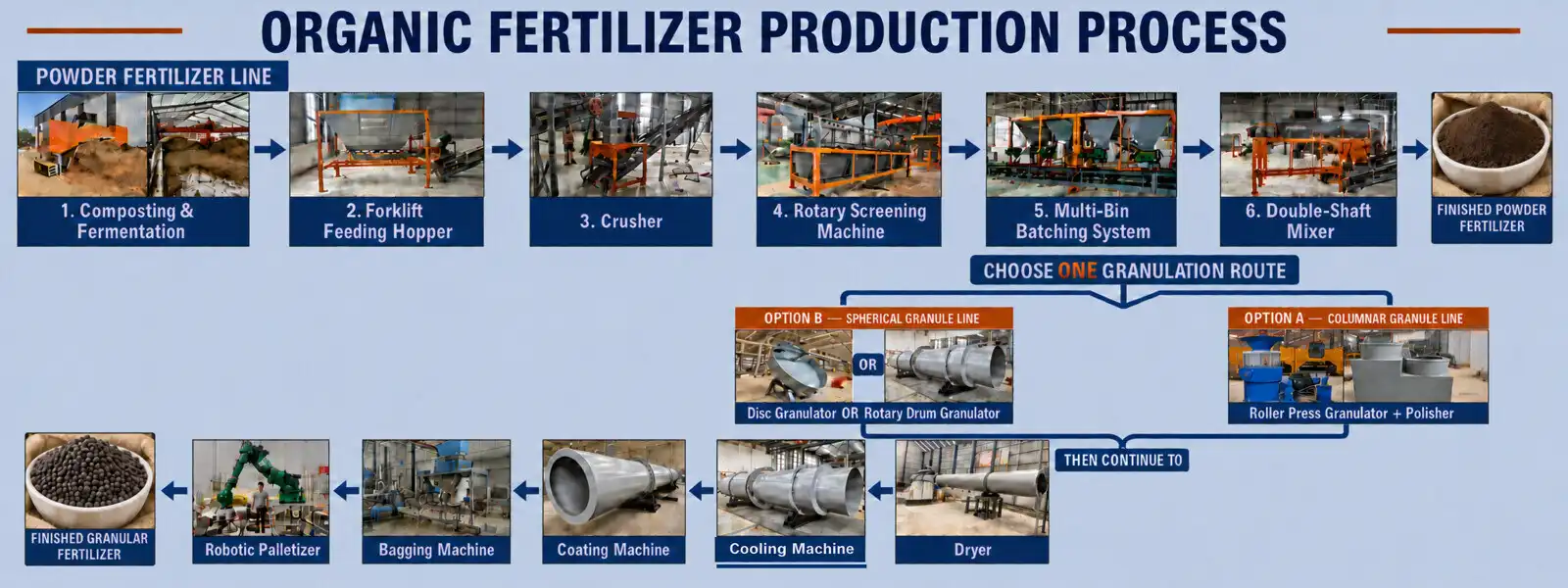
Get your tailored fertilizer plant solution — contact us today.