




Understanding the Role of Fertilizer Crusher Machines in Modern Agriculture
A fertilizer crushing machine is specialized industrial equipment designed to reduce the particle size of raw materials used in organic and compound fertilizer production. Whether you're processing fermented compost, crop straw, or caked animal manure, a reliable crusher directly affects granulation quality, downstream efficiency, and your final product's market value. With global demand for organic fertilizer growing steadily—the market was valued at over $10 billion in 2023 according to Grand View Research—producers in Africa, Southeast Asia, Central Asia, and South America need equipment that performs consistently at scale.
How Fertilizer Crusher Machines Work and Their Key Benefits
If you know how a manure crusher works, you can pick the right one for your production line and avoid buying expensive machines that aren't made for the type of material you're using.
Crushing Mechanisms Explained
A lot of fertilizer crushers work with one of three main types of mechanisms: hammer impact, roller compression, or disc-type shredding. Hammer-type tools are good for things that are dry or almost dry. Crushers that break fibrous materials, like crop straw and plant waste, into 3–5 cm pieces that are perfect for composting and fermentation are called disk or straw crushers. They work by spinning hammers inside a circular disk chamber.
From Feed to Finished Particle
The process starts when the material is put into the hopper. There are 27 hammer pieces inside the breaking chamber that hit the material and tear it against the wall. The 700mm wide bottom release port, which is 500mm above the ground to make it easy to connect to a conveyor, lets the processed material go. A star-delta starting cabinet covers the 37kW main motor during start-up. This lowers the stress on the electrical system and makes the motor last longer.
Key Production Benefits
Granulation works better when particles are all the same size. These are the main benefits this equipment gives to medium-sized businesses:
- Uniform particle output: Crushed material at 3–5 cm length feeds smoothly into rotary drum granulators, reducing rejection rates at the screening stage.
- Reduced downstream clogging: Bottom discharge design prevents material buildup inside the chamber, which is a common failure point in high-moisture organic processing.
- Energy efficiency per ton: At 2–4 t/h productivity with a 37kW motor, the YXYPFS-80 delivers competitive throughput relative to power consumption—roughly 9–18 kWh per ton processed.
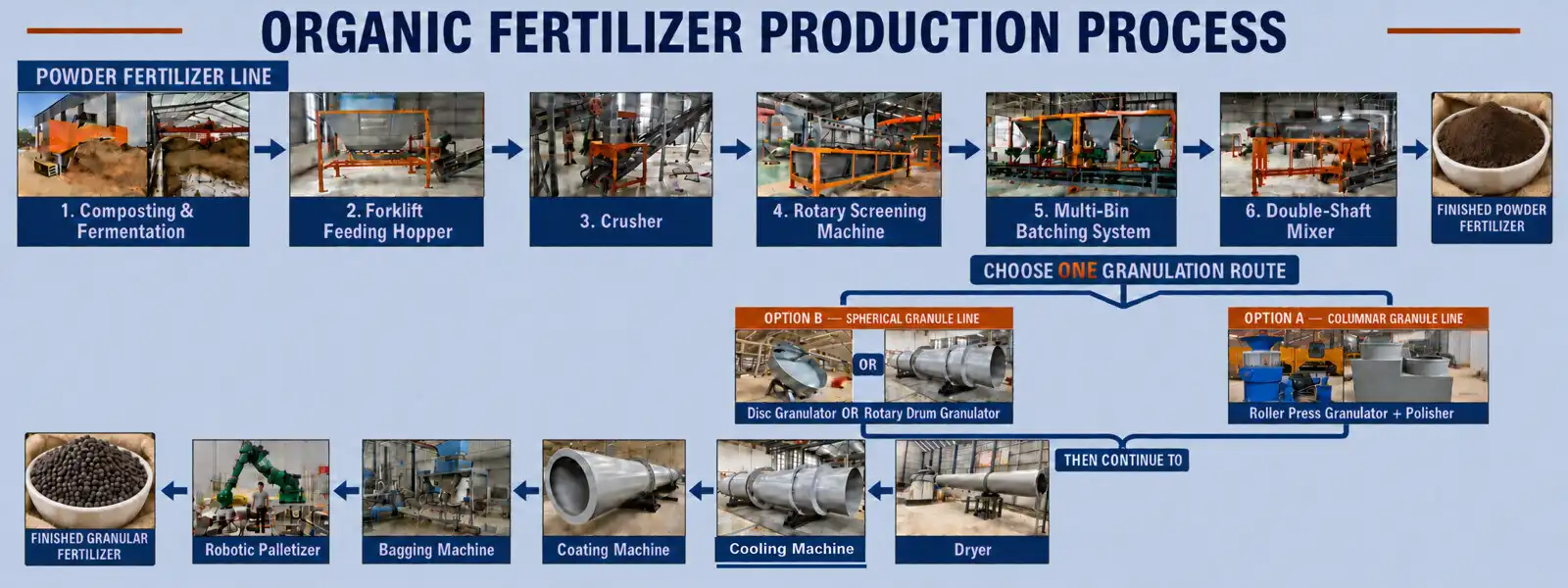
As the material is crushed into 3–5 cm pieces, they feed easily into rotary drum granulators, which lowers the number of rejects at the screening step.
Choosing the Right Fertilizer Crushing Machine for Your Business
One of the most common and costly mistakes people make when setting up a fertilizer plant is choosing the wrong fertilizer crusher equipment. Which option is best for you depends on the materials you use, how much you produce, and how much you can spend on long-term repairs.
Match Capacity to Your Production Line
Medium-sized businesses that need to make between 8 and 16 tons per 8-hour shift can use a 2–4 t/h crusher like the YXYPFS-80. Your crusher will slow down if your rotary drum granulator or screening machine is working at a higher throughput. Always choose a crusher that is 10–15% bigger than the capacity you need per hour to account for changes in the material.
Evaluate Blade and Wear Part Quality
Blade wear is the main reason why organic fertilizer plants have to take unscheduled breaks. Most quenched steel hammer heads are HRC 58–62 hard and can be used for 600–1,000 hours on fairly rough materials. When looking for a fertilizer crusher supplier, be sure to ask about the quality of the hammer material, how much it costs to repair, and whether parts are readily available. The YXYPFS-80 has 27 separate hammer pieces, which makes selective replacement easy without having to take off the whole rotor.
Consider Anti-Clogging Design
Standard crushers quickly get clogged up with high-moisture organic materials like compost made from sludge, fermented dung, and wet straw. The YXYPFS-80's disc-type bottom discharge design solves this problem by letting processed material fall freely downward instead of building up horizontally. Its cone-shaped bucket (2180 mm across the top and 1420 mm across the bottom) directs flow in a way that keeps the chamber clear while it's running all the time.
Market Overview: Pricing, Suppliers, and Trusted Brands
A lot of different prices can be found in the market for fertilizer size reduction tools. Knowing what affects prices helps you make good decisions about quotes.
What Drives Equipment Pricing
In the 30–45kW range, electric disk and hammer crushers usually cost between $2,000 and $20,000. The exact price depends on the quality of the build, the amount of automation, and the state of the certification. It costs more up front to buy CE- and ISO-certified equipment, but it lowers legal risk in foreign markets and protects warranty claims. Diesel-powered units use more fuel and work best in places that don't have access to the power grid.
Evaluating Supplier Credibility
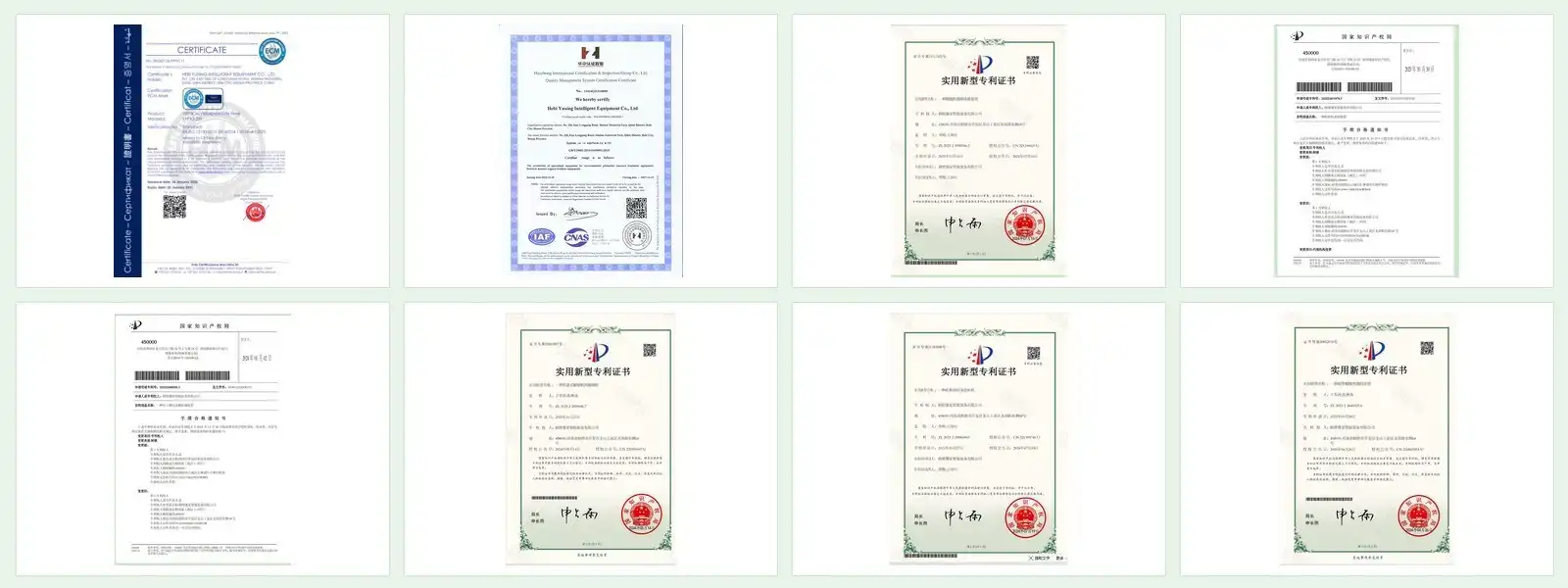
A reliable company that makes fertilizer crushing machines sells more than just machines. YUXING has been making things for more than 20 years, exports to more than 50 countries, and keeps standard equipment on hand for quick shipping. There is a 15–20 day lead time for customized units. Before signing a buy deal with a seller, make sure they have CE/ISO certificates, references from businesses that are similar in size, and that spare parts are available.
Procurement Channels and What to Watch
Online business-to-business (B2B) marketplaces let buyers see a lot of prices, but it takes work to check equipment specs from afar. Before making a decision, you should ask for factory videos, inspection reports from a third party, and detailed load test data. For buyers from other countries in Nigeria, Vietnam, or Uzbekistan, shipping risk is greatly reduced by suppliers who have a lot of experience loading 40GP, Open Top, and oversized containers.
Optimizing Fertilizer Crushing Processes for Maximum Efficiency
Pay attention to the settings, schedule, and material preparation on your straw or waste crusher if you want to get the most out of it. If you take good care of your crusher, it will last longer.
Match Feed Moisture to Equipment Design
The wetness level of the material going into disc-type straw crushers should stay below 50%. Above that point, even designs that don't jam will have trouble. By pre-drying or partially burning the material before crushing it, you can keep your output steady and cut down on hammer wear. By adding a simple step of pre-conditioning before feeding, operators at composting sites in Indonesia and Colombia have seen daily output go up by up to 20%.
Monitor Hammer Wear Proactively
Hammer wear that isn't even is the main cause of machine shaking. When hammers wear out in different places, the rotor loses its dynamic balance. This makes the bearings carry more weight and last less long. The YXYPFS-80 uses F206/4 bearing models, which are easy to find all over the world. I suggest that you do a full dynamic balance check every 600 hours and hammer inspections every 200 hours of operation.
Use Automation for Consistency
If you connect your crusher to a PLC-controlled feed conveyor, the material flow can be controlled automatically. This keeps the particle output consistent and stops overloading. YUXING lets you customize things by automating PLCs and integrating HMIs. They also work with Siemens and Schneider electrical parts. This cuts down on the work that needs to be done by hand and keeps the differences in particle size within accepted ranges for grinding that comes after.
Conclusion
A good straw and compost crusher is more than just a way to reduce the size of ingredients; it's also the key to making sure that the quality of the fertilizer stays the same. We made the YXYPFS-80 Bottom Discharge Disk Straw Crusher—a reliable fertilizer crushing machine for medium-sized businesses that need a steady throughput of 2–4 t/h, low upkeep, and the ability to work with fibrous organic materials. It meets the technical needs of most organic fertilizer plant owners every day thanks to its 37kW star-delta protected motor, 27-piece hammer design, and CE and ISO approval.
Frequently Asked Questions
1. How does a crusher handle high-moisture organic materials?
Disc-type and hammer-type designs without a bottom screen allow wet materials to discharge freely, preventing internal buildup. The YXYPFS-80's bottom discharge system is specifically suited for materials with moisture content up to 50%.
2. How long do wear parts typically last?
Quenched steel hammer heads generally last 600–1,000 operating hours, depending on material abrasiveness. Regular rotation of hammer positions helps distribute wear evenly and extend service intervals.
3. Can output particle size be adjusted?
Yes. Fineness is controlled by adjusting rotor speed or modifying the gap between the hammer and the liner. The YXYPFS-80 produces a kneading length of 3–5 cm, well suited for fermentation and granulation downstream.
4. What causes machine vibration?
Uneven hammer wear or material buildup on the rotor are the primary causes. Periodic dynamic balancing, recommended every 600 hours, keeps vibration within safe limits and protects bearing life.
Get Your Fertilizer Crushing Machine from YUXING
Organic fertilizer makers in Africa, Southeast Asia, Central Asia, and South America can buy fertilizer crushing machines from YUXING that are CE and ISO certified. With more than 20 years of experience making things, fast shipping for in-stock items, and lifetime technical support 7 days a week, 24 hours a day, we can help you with everything from choosing the right equipment to installing it. To get a quote right away, email your production needs to yuxing@hnyxmachinery.com.
References
1. Grand View Research. Organic Fertilizer Market Size, Share & Trends Analysis Report. 2023.
2. Food and Agriculture Organization of the United Nations (FAO). World Fertilizer Trends and Outlook to 2022. 2019.
3. Sánchez, Ó.J., & Cardona, C.A. Trends in Biotechnological Production of Fuel Ethanol from Different Feedstocks. Bioresource Technology, 2008.
4. Huang, G.F., et al. Effect of C/N on Composting of Pig Manure with Rice Straw. Waste Management, 2004.
5. International Fertilizer Association (IFA). Fertilizer Outlook 2023–2027. 2023.
6. Zhang, L., et al. Mechanical Size Reduction of Agricultural Residues for Bioenergy and Fertilizer Applications. Biosystems Engineering, 2012.

USER EVALUATE
Get your tailored fertilizer plant solution — contact us today.