




The working principle of fertilizer drying machine
A fertilizer drying machine is an industrial thermal processing unit that removes excess moisture from fertilizer materials to achieve stable, market-ready moisture levels—typically between 2% and 15%. In a standard production line, it bridges granulation and cooling, ensuring that organic fertilizer, compound NPK granules, or processed manure reach the moisture specifications required for safe packaging and long-distance transport. Without this step, fertilizer caking, mold growth, and nutrient degradation become serious commercial risks.
Understanding the Basics: What Is a Fertilizer Drying Machine?Definition and Industrial Role
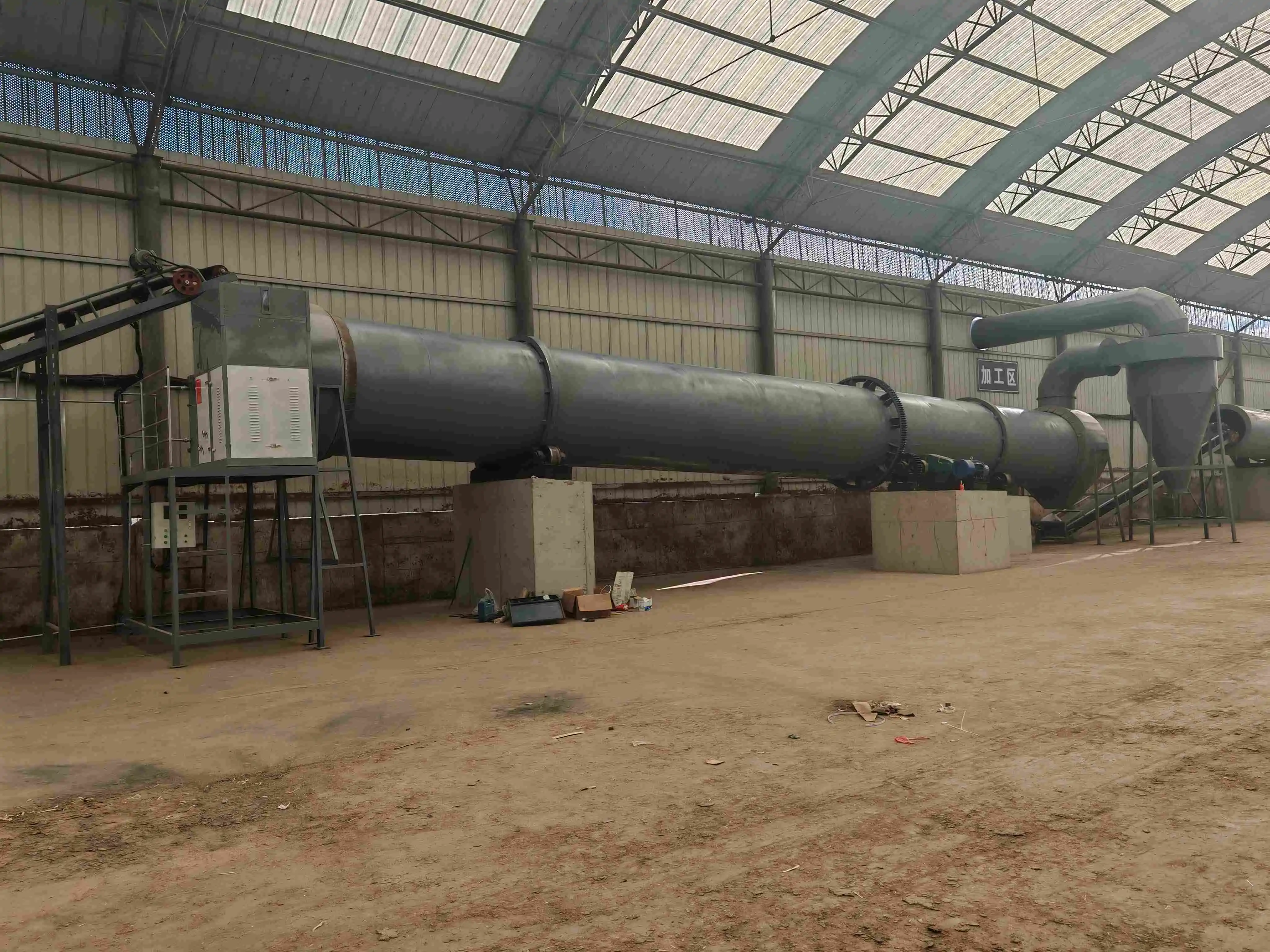
The most common type used in large fertilizer plants is a rotary drum fertilizer drying machine. It handles large amounts of powdered or granular materials by heating and cooling them in a controlled way inside a rotating cylinder. Industry data shows that organic fertilizer usually comes out of the granulator with a moisture content of 25–35%. This is much higher than the 10–15% level that most commercial markets need.
Raw Materials It Handles
Organic fertilizer, animal waste, municipal sludge, coal slime, and compound chemical fertilizers are just some of the materials that modern drum fertilizer drying machines can process. Because of this, one machine can be used for multiple product lines in the same facility. This saves plant owners money when they sell their products in places like Nigeria, Vietnam, or Brazil, where product variety is common.
Where It Fits in the Production Line
The rotary cooler and the fertilizer drying machine are placed next to each other. Grains that are hot and wet come in from the granulator, and grains that are dry come out and go toward the rotary cooler. This order has a direct effect on the quality of the packaging and the shelf life. Skipping or failing this step makes the product unstable, which makes it harder for the market to accept.
The Working Principle of Fertilizer Drying Machines
Heat Transfer Mechanisms
There are three ways that a rotary fertilizer drying machine moves heat at the same time: convection, which moves heat from hot air to the surface of the material; conduction, which moves heat through direct contact between the granules and the drum wall; and radiation, which adds more heat energy when the material enters at high temperatures. All of these systems work together to ensure that the same amount of moisture evaporates from every batch of granules.
How the Drum Drying Process Works
The hot gas that enters the drum is at least 300°C when it starts. The drum spins at 5.2 to 6 r/min, and lifting plates on the inside wall pick up the material over and over again and throw it through the hot airstream. This "material curtain" effect increases the area where particles and heat can touch each other, which greatly speeds up the evaporation of moisture. With an installation angle of 3–5°, the material can move steadily from the feed end to the discharge end by gravity.
Comparing Dryer Types
Rotary drum fertilizer drying machines are the most common choice for 3–18 t/h production lines because they can handle large amounts of material with little help from the operator. You can better control the temperature with fluidized bed dryers, and they work well with fine powders but not so well with sticky or high-moisture organic sources. Though they have a smaller output, paddle dryers are good for drying materials like sludge. The rotary drum design is best for most compound and organic fertilizer plants because it balances capacity, energy use, and material flexibility.
Key Benefits and Advantages of Using Fertilizer Drying Machines
Moisture Control and Product Stability
Getting the moisture level of fertilizer below 14% stops microbes from growing, keeps it from clumping together when it's being bagged, and makes it last longer—from weeks to months. This directly lowers warehouse losses and customer complaints, which are two things that can hurt a business's image in markets that focus on exports.
The YXHG series from YUXING was made to deal with these production realities on a large scale. Here are the core advantages of this equipment lineup:
- Capacity range of 3–18 t/h across five drum sizes (YXHG-1212 to YXHG-2424), matching output from small granulation lines to full industrial-scale operations without slowing down the production flow.
- Multiple heating source options, such as coal, biomass, gas, or waste heat, let plant workers in areas with different fuel systems keep costs down without affecting the temperature needs at the inlet.
- Total power range of 7.5–45 kW with gear motor models ZQ350 through ZQ650, which lets them match the force exactly to the drum size and material density to save energy while the machine is running.
- Rotation speed of 5.2–6 r/min and an adjustable retention time let operators fine-tune the drying depth for different levels of moisture in the raw materials without having to stop the line.
Plant owners in Southeast Asia, Africa, and South America deal with production problems every day, like drying output that isn't regular and high fuel costs. These technology features directly address these problems.
Automation and Continuous Operation
The YXHG series can work with both PLC automation control and HMI interfaces, so it can run continuously without a person being present during long production shifts. This keeps output steady and cuts down on labor costs. The fertilizer drying machine is part of a fully automated fertilizer production line when it is used with granulators upstream and coolers downstream.
Environmental Compliance
Cyclone separators and bag filter dust collection systems can be connected to any dryer setup. This lets fertilizer plants that have to follow local environmental rules—in Eastern Europe, Central Asia, or sub-Saharan Africa—meet particulate matter limits without having to buy different dust control systems.
Maintenance Tips and Troubleshooting for Fertilizer Drying Machines
Preventive Maintenance Schedule
Every week, you should check the support rollers, gear drive, and sealing rings and grease them. Check the lifting plates once a month for damage or material buildup. Over time, carbon or mineral deposits on the inside of the drum of an organic fertilizer dryer make it less thermally efficient. Cleaning the drum every 30 to 45 days keeps the drying performance stable.
Common Issues and Solutions
When drying isn't even, it's usually because the lifting plates are worn out or missing, which breaks the material curtain effect. If the feed outlet gets too hot, it could mean that the furnace's controls are broken or that the hot air duct is blocked. If the material coming out of the exit stays too wet, make sure that the rotation speed and retention time match the starting moisture content of the material coming in. For these adjustments, the line rarely needs to be stopped for long periods of time.
Spare Parts and After-Sales Support
YUXING keeps a steady supply of spare parts on hand and offers online technical support 24 hours a day, seven days a week, for life. Standard parts, like gear motors (ZQ350–ZQ650), sealing rings, and lifting plates, are kept on hand so they can be sent out quickly. Video-guided repair and remote commissioning cut down on downtime for foreign clients who don't need technicians to be on-site.
How to Choose the Best Fertilizer Drying Machine for Your Business
Match Capacity to Your Granulator Output
The fertilizer drying machine needs to be able to handle at least as much as the granulator that feeds it. Not specifying the right drum size slows down production, while specifying the wrong size wastes money. The YXHG series has five drum sizes that cover 3–18 t/h, so it's easy to find a model that works with the line output you already have.
Evaluate Heating Source and Energy Cost
The fuel infrastructure in your area should help you choose a heating source. In places where natural gas is hard to get or costs a lot, biomass and coal-fired hot air stoves are much cheaper to run than gas stoves. YUXING fertilizer drying machines can use all four types of heat sources, so you can choose based on what's best for your area.
Consider OEM and Customization Options
YUXING offers full ODM/OEM customization for plant workers who need specific voltage standards, electrical component names (Siemens or Schneider), CE certification, or private labeling. For non-stock configurations, production lead times are 15–20 days. This means that the equipment can be adapted to meet the rules in different countries.
Conclusion
Rotary drum fertilizer drying machines are not just extras; they are necessary for any plant that wants to make more than 3 t/h of stable, marketable output. Procurement workers can choose the right tools the first time if they know how heat transfer, drum rotation, and material flow all work together. With a capacity range of 3–18 t/h, the YXHG series from YUXING can meet the technical and business needs of organic and compound fertilizer producers in Africa, Southeast Asia, Central Asia, South America, and Eastern Europe.
FAQ
1. What moisture level should fertilizer reach after drying?
Most commercial fertilizer standards say that organic products should have a final moisture level of 10% to 15%, and some kinds of compound granules can have as little as 2–5%. The target level depends on the details of your product and the needs of the market you want to reach.
2. Can the dryer process high-moisture organic manure directly?
Yes. The YXHG series can handle organic fertilizer, animal waste, and municipal sewage sludge. When there is a lot of moisture in the input, using a fertilizer drying machine with a pre-dewatering step makes it more thermally efficient and uses less fuel per ton.
3. How often should I schedule full maintenance?
Every week, the rollers and lubrication are checked, and the lifting plates are inspected once a month. Every 30 to 45 working days, the whole inside is cleaned out. By sticking to this routine, most unexpected stops can be avoided, and the drums will last an extra 10 to 15 years.
4. What dust control options are available?
Cyclone separators and bag filter systems can work with YUXING fertilizer drying machines. This mix successfully controls particulate pollution and meets EPA-level guidelines in most target markets, even those with tighter environmental laws.
Request a Quote from YUXING — Trusted Fertilizer Drying Machine Manufacturer
YUXING has been making fertilizer equipment for more than 20 years and has worked with clients from more than 50 countries on all of their projects. Our YXHG series rotary drum fertilizer drying machines come in five sizes that range from 3 to 18 t/h and can be fully customized to fit your needs. Get in touch with our technical team right away to get a free production review and equipment suggestion based on the size and type of fuel your plant uses. Reach us at yuxing@hnyxmachinery.com to explore the full product range.
References
1. Mujumdar, A. S. (Ed.). Handbook of Industrial Drying. CRC Press, 2014.
2. Chen, X. D., & Mujumdar, A. S. Drying Technologies in Food Processing. Wiley-Blackwell, 2008.
3. FAO. Fertilizer Use by Crop. Food and Agriculture Organization of the United Nations, 2006.
4. IFA (International Fertilizer Association). World Fertilizer Trends and Outlook to 2025. IFA, 2021.
5. Keey, R. B. Drying of Loose and Particulate Materials. Hemisphere Publishing, 1992.
6. Perry, R. H., & Green, D. W. Perry's Chemical Engineers' Handbook (8th ed.). McGraw-Hill, 2008.

USER EVALUATE
Get your tailored fertilizer plant solution — contact us today.