




What is fertilizer manufacturing equipment, and How Does it work?
Fertilizer manufacturing equipment refers to a coordinated set of industrial machines that process raw materials—organic waste, animal manure, crop residues, or chemical compounds—into market-ready fertilizer products in granular, powder, or liquid form. In practical terms, this equipment handles every stage of production: dewatering, fermentation, turning, crushing, mixing, granulation, drying, cooling, screening, and packaging. For medium-scale operations converting agricultural waste into sellable organic fertilizer, choosing the right production machinery directly determines output quality, regulatory compliance, and long-term profitability.
Introduction to Fertilizer Manufacturing Equipment
Why This Equipment Matters
The increase in demand for organic fertiliser is occurring at a rapid pace all around the globe. According to the Food and Agriculture Organization of the United Nations (FAO), the global use of fertiliser is expected to surpass 200 million tonnes in the year 2022. It is due to legislation in Africa, Southeast Asia, and South America that supports sustainable farming, the organic industry is expanding at a pace of around 11% per year. The expansion of the plant is a clear opportunity for the owners of the company to gain money, but only if the production system is able to provide output that is certified and consistent.
From Waste to Product
The disposal of raw organic waste, such as pig manure, poultry droppings, and crop straw, may be a difficult and costly process that also contributes to environmental pollution. In the event that the manufacturing line for organic fertiliser is properly set up, those wastes will be converted into assets. The process begins with the addition of the raw ingredients and continues with the fermentation, reduction in size, granulation, and lastly the packing of the product. At each step, specialised equipment is used in order to maintain the integrity of the nutrients and fulfil the criteria for labelling.
The Business Case
In the context of the agricultural industry, the term "fertiliser manufacturing equipment" refers to a collection of industrial machines that work together to transform raw materials, such as organic waste, animal manure, crop residues, or chemical compounds, into fertiliser products that are ready for sale in granular, powder, or liquid stages. In a practical sense, this machinery is capable of handling all stages of manufacturing, including dewatering, fermentation turning, crushing, mixing, granulating, drying, chilling, screening, and packing. When it comes to medium-scale enterprises that convert agricultural waste into organic fertiliser that can be sold, selecting the appropriate production equipment is directly responsible for determining the quality of the completed product, compliance with regulations, and long-term profitability.
Types of Fertilizer Manufacturing Equipment and Their Functions
Fermentation and Turning Machines
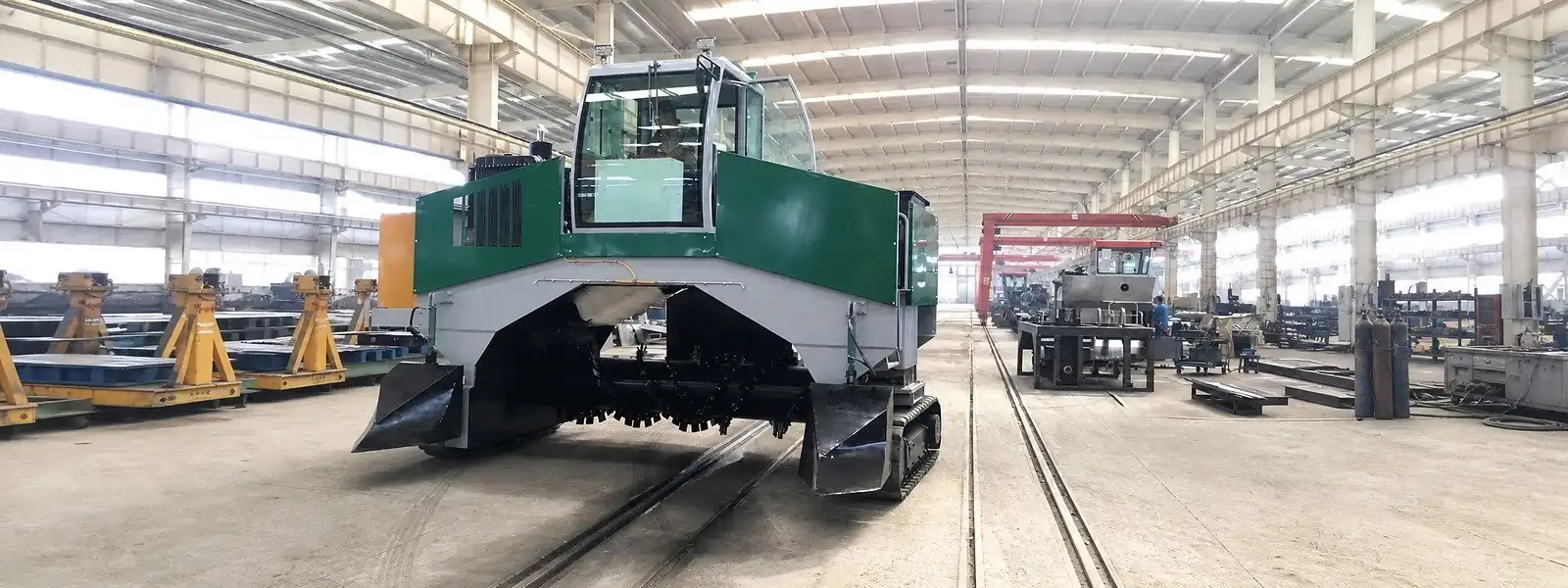
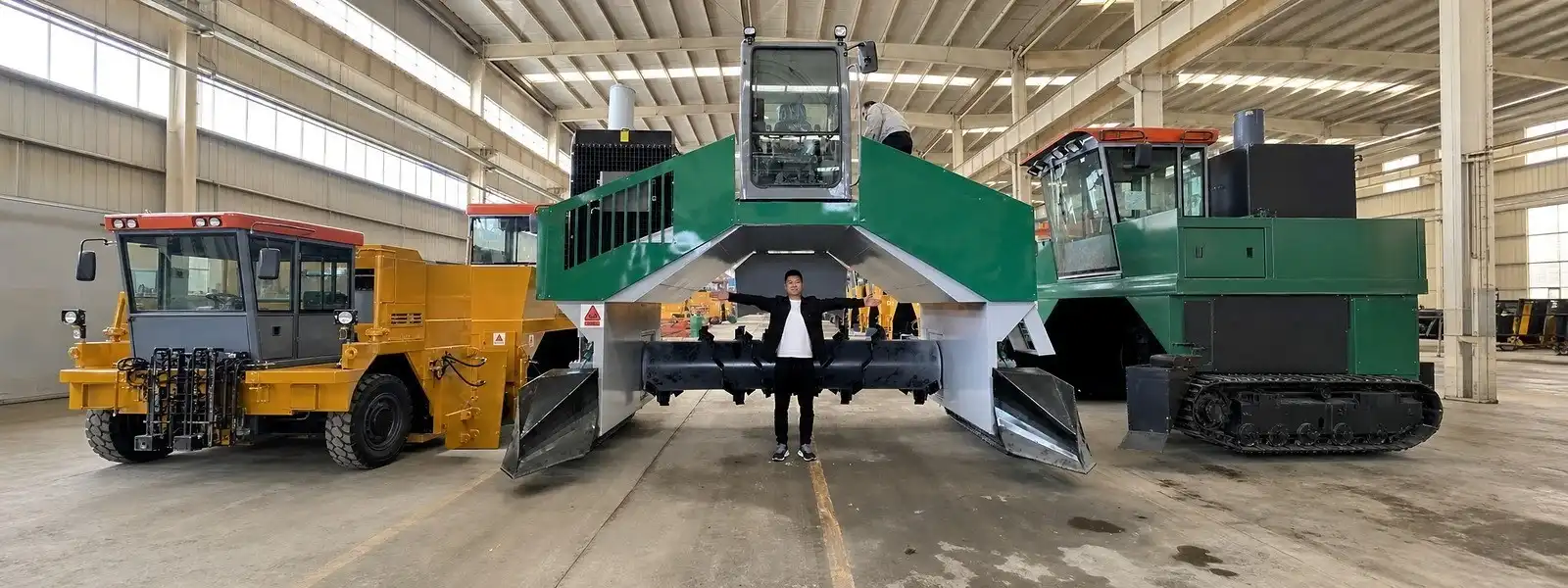
Organic raw materials must finish aerobic fermentation before they can be granulated. Compost turners speed up this process by adding air to piles, keeping the temperature stable, and killing germs. The YUXING YXYYFD-3500 Fully Hydraulic Compost Turner is a great example of heavy-duty fertilizer production equipment that helps with fermentation. It can work with piles up to 3.6 m wide and 1.8 m high, and it can process up to 1,500 m³/h at its fastest. The 6-cylinder hydraulic drive system keeps the power constant even when the pile density changes, and the hard metal drum cutters (hardness ≥ HRC55) don't wear down over time during long production cycles. Because it can turn 360° in place, it takes up less space in a fermentation workshop, and its travel speeds of 0–20 m/min let workers adjust the speed to the state of the pile.
Granulators and Pelletizers
Once the material has been processed, it moves on to granulation. Rotary drum granulators are good for making a lot of NPK because they can achieve granulation rates of more than 90% in continuous runs. When it comes to smaller amounts and mixed formulas, disk (pan) granulators give you more options. The choice is based on the particle size, moisture content, and output goals that are wanted.
Supporting Process Machines
Large clumps (up to 250 mm in pre-processed soil) are broken up by crushers into a regular feed size. Rotary dryers take the moisture level from 30 to 40 percent to 10 to 14 percent, which is a good range for bagging. After that, coolers bring the temperature of the product down to room temperature before checking. Vibrating screens separate fines that go back into the granulator from pellets that meet the specs.
How Fertilizer Manufacturing Equipment Works: Process and Mechanics
Stage 1 — Preparation and Fermentation
In the composting zone, raw materials go. Over the course of 15 to 25 days, compost turners like the YXYYFD-3500 mix and aerate the pile. Microbes break down organic matter, get rid of weed seeds, and keep the amount of nutrients stable. The excavator-specific steel tracks on the machine make it stable to move over uneven workplace floors, and the engineering-grade cab with an air conditioner keeps the user cool and comfortable during long shifts.
Stage 2 — Size Reduction, Mixing, and Granulation
After the fermentation process is over, the material is put through a chain crusher or a vertical crusher to make the particles regular and smaller than 5 mm. Any extra nutrients or microbes are mixed in with a horizontal mixer. The mixed material is then put into the granulator, where the drum speed, spinning angle, and moisture work together to make regular pellets. PLC control systems keep an eye on these parameters in real time, making sure that the granulation is the same from batch to batch.
Stage 3 — Drying, Cooling, Screening, and Packaging
A rotary dryer gets rid of extra wetness at a temperature that you set. Granules that have been cooled go through a vibrating screen. Product that meets the specifications moves to the packaging line, while material that is too big or too small is recycled. Automatic bagging machines put the finished goods in 25–50 kg bags that are ready to be sold in stores or in bulk. This end-to-end sequence gets rid of the need for manual handling at every transfer point, which lowers the risk of contamination and the cost of labor.
Best Practices in Operation and Maintenance
Routine Inspection and Lubrication
Every day, you should check the belt tightness, bearing temperatures, and hydraulic fluid levels of your fertilizer processing equipment. The Linde pump in the YXYYFD-3500 and other hydraulic systems need clean fluid and filter changes on a regular basis, as specified by the manufacturer. Worn drum cutter blades use more power and make the turning quality worse. Upstream quality loss can be avoided by changing fixed blades (at least 28 pieces per drum) before their hardness goes below HRC50.
Common Operational Errors
When the compost turner is loaded more than its rated cross-sectional area of 3.2 m², it puts stress on the hydraulics and aerates the material unevenly. When you run granulators with feed wetness above 35%, the pellets get sticky and don't shape right, and they get stuck in screens. If you don't do screen maintenance, you might end up with off-spec products in your packaging, which will cause customers to complain and cost you money to fix.
Continuous Improvement
By keeping track of production data like throughput per shift, downtime events, and energy use per ton, you can find areas where things aren't working as well as they could. When employees are taught to read PLC alarm codes, they can fix small problems more quickly, before they get worse. The line works at the level it was designed to do thanks to checks that compare real output to rated capacity every three months.
How to Choose the Right Fertilizer Manufacturing Equipment for Your Business
Define Your Production Needs First
First, you need to know how much raw material you have access to each day, how much you want to produce in tons per hour, and whether you need powder or granular output. A line that processes 50 tons of mixed municipal organic waste per day needs a different setup than a line that processes 10 tons of pig manure per day.
Evaluate Equipment Against Key Criteria
Before you decide on a seller, here are the main things you should think about:
- Certification: CE and ISO certification confirm the equipment meets international safety and quality standards—essential for import clearance in many markets.
- Power compatibility: Lines must match local voltage (380V, 440V, or 480V) to avoid costly electrical retrofits.
- After-sales support: Overseas installation support and 24/7 technical access are non-negotiable when operating in markets distant from the manufacturer.
- Automation level: Higher PLC integration reduces headcount requirements and limits human error in nutrient dosing.
These things add up to the real cost of ownership, which is different from the purchase price. A cheaper line with bad customer service usually costs more over five years than a more expensive system with good customer service.
Factor in Total Project Cost
The price of the equipment is shown on a single line. Shipping, clearing customs, civil work, wiring, training operators, and commissioning can all add 20 to 40 percent to the cost of the equipment itself. Ask for detailed quotes that cover all stages so that the budgeting is correct from the start.
Conclusion
Whether farm waste is a cost center or an income stream depends on how well the right fertilizer manufacturing equipment is chosen and used. For each step—fermentation, grinding, drying, and packaging—specific equipment must be used within certain limits. Heavy-duty machines like the YXYYFD-3500 handle the first stages of composting, and machines further down the line keep the quality of the material until it is bagged. For business owners in Africa, Southeast Asia, and South America with fast-growing economies, buying certified, well-supported equipment is the best way to make sure they meet all the rules and keep their output steady.
FAQ: Fertilizer Manufacturing Equipment
1. What is the difference between a granulator and a pelletizer?
A granulator makes particles by clumping together wet feed material. The fines are held together by spinning and moisture, which forms circular granules. Pelletizers press dry materials through a die to make cylinders that are denser and more uniform. Granulators work well with organic fertilizer lines because the moisture content is naturally higher. Pelletizers are commonly used in chemical and feed industries that need to keep very close tolerances on size.
2. How energy-efficient are modern organic fertilizer production lines?
Modern lines with motors that use variable-frequency drives (VFDs) and heat-recovery dryers use about 15 to 25 kWh per ton of finished product, depending on how wet the product was to begin with. Data from the International Fertilizer Association (IFA) shows that this number is 30–40% lower than older fixed-speed systems.
3. What should I check before buying second-hand equipment?
Check the remaining service life of wear parts like blades, screens, and drum liners. Check that the turning and grinding machines' hydraulic systems are working properly. Make sure that extra parts for the control system are still available. Ask for output records to make sure the flow claims are true. Overseas buyers take on more operating risk when they buy used equipment that doesn't come with a guarantee or installation help. It is possible for lines with quick-change screens and customizable PLC controls to switch between NPK ratios and organic formulas in the same shift. A strong batching and mixing section with accurate dosing is very important.
4. Can one production line handle multiple fertilizer formulations?
Yes. Lines with programmable PLC controls and quick-change screens can switch between NPK ratios and organic formulations within a single shift. The key is a robust batching and mixing section with accurate dosing.
Get a Custom Equipment Quote from YUXING
YUXING has been making fertilizer manufacturing equipment for more than 20 years and has worked with clients in more than 50 countries. Our production lines have CE- and ISO-certified tools that can work with 380V, 440V, and 480V power sources. They do the whole process, from turning the compost and making granules to packaging. We offer lifetime technical support 7 days a week, engineering for installation abroad, and full OEM customization. Get in touch with our technical team right away to talk about the details of your project and get a thorough estimate. You can email yuxing@hnyxmachinery.com.
References
1. Food and Agriculture Organization of the United Nations (FAO). World Fertilizer Trends and Outlook to 2022. FAO, 2022.
2. International Fertilizer Association (IFA). Energy Efficiency in Fertilizer Production. IFA, 2022.
3. Cooperband, L. R. The Art and Science of Composting: A Resource for Farmers and Compost Producers. University of Wisconsin Extension, 2002.
4. Rynk, R. (Ed.). On-Farm Composting Handbook. Northeast Regional Agricultural Engineering Service (NRAES), 1992.
5. Zhengzhou University Research Institute. Mechanical Design and Performance Evaluation of Hydraulic Compost Turning Equipment. Journal of Agricultural Engineering Research, 2020.
6. Grand View Research. Organic Fertilizer Market Size, Share & Trends Analysis Report. Grand View Research, 2023.

USER EVALUATE
Get your tailored fertilizer plant solution — contact us today.