



_1782098484336.webp)
How to set up an organic fertilizer production line
A series of biological and mechanical processes is needed to turn animal manure into marketable, nutrient-rich soil amendments in order to set up an organic fertilizer production line. If you set up your Manure Organic Fertilizer Production Line correctly, farm owners and people who recycle agricultural waste can turn chicken manure, cow dung, pig waste, and sheep manure into goods that make money and follow environmental rules. To do the process correctly, you need to choose the right tools, know how fermentation works, and put in place quality control measures that make sure the result is always the same. This all-around method meets both the goals of making money and being environmentally friendly, which are very important for modern farming businesses.
Understanding the Basics of Organic Fertilizer Production
Understanding the basics of making organic fertilizer is the first step toward a sustainable operation. As farming practices around the world become more environmentally friendly, there is a huge demand for organic soil additives. Synthetic chemical fertilizers kill off soil microbiomes over time, but manure-based organic products increase the number of good bacteria and make the soil better at holding water. Studies show that adding composted animal waste to the soil regularly raises the organic matter level by 12–18% over three growing seasons. This makes the soil more fertile in a way that chemical options can't.
Why Manure-Based Fertilizers Matter?
Having livestock creates huge amounts of waste that have historically been seen as disposal liabilities. A typical dairy farm with 500 cows makes about 15 tons of manure every day. Without the right processing infrastructure, this material could pollute groundwater and produce strong greenhouse gases when it breaks down without oxygen. Using this trash to make organic fertilizer pellets or powder solves problems with following environmental rules and creates new ways to make money by utilizing a Manure Organic Fertilizer Production Line.
Raw Material Considerations
The quality of the final product is directly affected by the materials used. With a nitrogen level of 3.5% to 5%, chicken dung is the best thing for growing leafy vegetables. Cow dung has a balanced mix of nutrients and a lot of good microorganisms, but its lower nitrogen levels make it better for use around fruit trees. Pig dung has an average amount of nutrients, but it needs to be composted for longer periods of time because it has more pathogens. Pellets of sheep dung form naturally during gathering, which means that less mechanical processing is needed.
The best carbon-to-nitrogen ratios are made by mixing different kinds of manure with bulking agents that are high in carbon. Adding mushroom stems, sawdust, or straw to high-nitrogen chicken waste speeds up aerobic fermentation and improves the structure of the final product. Before going into the granulation stages, these mixes should aim for C:N ratios of 25:1 to 35:1.
Step-by-Step Process to Set Up a Manure Organic Fertilizer Production Line
An organic manure fertilizer production line requires careful sequence planning. Your production capacity should match the demand in your target market and the amount of raw materials that are available. Processing operations that handle 1 to 20 tonnes per hour can make 10,000 to 200,000 tonnes per year, depending on the hours they work and the changes in the seasons. Continuous production models are often used on large livestock farms that consistently produce manure every day. On the other hand, batch processing schedules may be used at regional collection centers.
Initial Planning and Capacity Determination
When choosing a site, make sure there is enough room for storing raw materials, growing areas, processing equipment, and finished goods. A normal 5 T/H production line takes up about 2,000 to 3,000 square meters, which includes the outdoor composting windrows. Being close to power supplies that can handle 380V, 440V, or 480V at 50Hz or 60Hz frequencies makes sure that industrial equipment works with them.
Essential Equipment Configuration
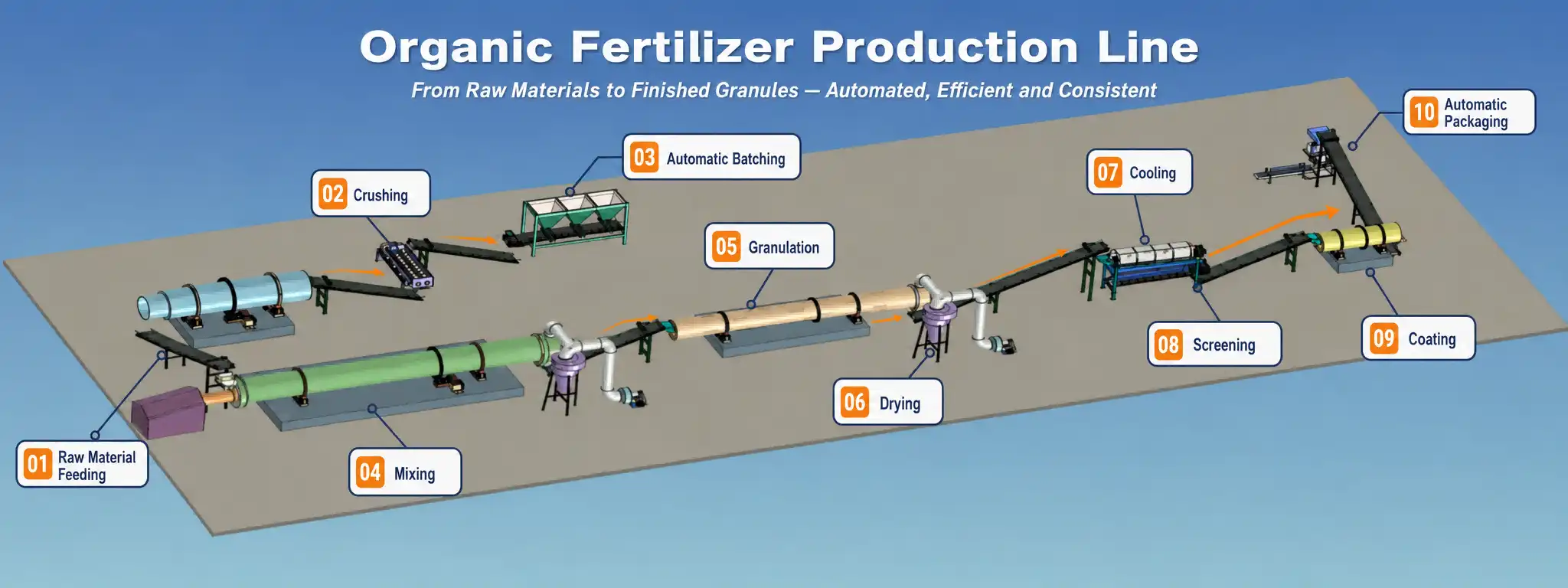
The order of the equipment follows a logical flow pattern for the materials. Aerobic fermentation is started by compost turners, who mix the windrows in a way that keeps the temperature between 55 and 65°C, which kills pathogens and weed seeds. This organic stage usually takes 7–15 days, but it depends on the environment and how well the microbes were introduced.
Once the fermentation is done, feeding hoppers control the flow of the material into crushers, which grind the particles into a powder. When blending formulations, this preparation makes sure that they are mixed evenly. Horizontal mixers mix the processed manure with mineral additives or microbial cultures to make batches that are all the same and ready to be granulated.
The end product shape is set in the granulation stage. Disc granulators are great at making pellets between 2 and 4 mm in size, and you can see the pellets form. New-type agitator granulators, on the other hand, can handle higher throughput rates and are better for large-scale continuous operations. Both systems can handle pellets of any size, from 2 mm to 8 mm, depending on the purpose and the customer's choice.
After granulation, rotary dryers lower the moisture content of final goods from 30–35% to less than 15%. This keeps microbes from breaking down the products while they are stored. After heat treatment, rotary fans bring temperatures back to normal, making pellets ready for screening and packing without damaging the packaging materials with heat.
Workflow Design and Quality Control
Routing materials through rotary screening machines separates particles that are too big or too small from products that meet specifications. Oversized pellets are sent back to the crushers to be processed again, and small material is sent back to the mixers to be recycled. This reduces waste and increases output efficiency. Final screening machines sort finished goods into groups based on their size, which lets uniform pellet batches fetch higher prices.
Automated packing tools put exact amounts into bags that range from 25 kg to 50 kg, depending on the needs of the delivery route. In this packing stage, materials are moved from one processing station to another by belt conveyors. Dust collection systems keep the air quality in the workplace clean and the building in line with environmental standards.
These parts are built into organic fertilizer production line PLC control systems so that operations can be partially or fully automated. Advanced configurations keep an eye on fermentation temperatures, change conveyor speeds, and control drying parameters all in real time. This cuts down on labor needs by a large amount while keeping product quality consistent across production runs.
Evaluating Costs, ROI, and Environmental Impact
Evaluating the costs, ROI, and environmental impact of an organic manure fertilizer production line is essential for financial viability. The prices of machines are very different depending on how automated they are and how much space they need. A simple 1-2 T/H semi-automatic machine made of normal carbon steel Q235 costs around $35,000 to $65,000. Systems that handle 5 to 8 tonnes per hour and come with PLC control and stainless steel parts that can be added for high-corrosion areas cost between $120,000 and $200,000. Large 15–30 t/h fully automated production lines with high-tech tracking tools and environmental controls cost between $250,000 and $300,000.
Investment Breakdown
When you use engineering services from the manufacturer, installation and commissioning costs add 8–12% to the cost of the equipment. This investment includes sending technicians to work overseas, setting up training programs for operators, and overseeing the first production run. These professional services cut the time it takes to get up and running from months to weeks and keep costly mistakes from happening during key launch periods.
How you get raw materials affects how much they cost. When livestock farms process their own waste, they don't have to pay for feedstock or the labor needed to collect it. Regional brokers usually pay $8 to $15 per tonne for manure from various farms. This is a lot less than the $180 to $250 per tonne price range for finished organic fertilizer pellets in North American markets.
Return on Investment Analysis
The costs of production, like integrated processes. A 5 T/H line that runs twenty hours a day makes about 100 tons of finished fertilizer every day, or 30,000 tons a year. At a reasonable market price of $200 per tonne, this brings in $6 million a year. Taking out the costs of raw materials ($150,000), labor ($180,000), utilities ($240,000), and upkeep ($120,000), the yearly gross profit is $5.31 million, and the initial capital investment is recovered in 4 to 6 months in full-capacity situations.
Market dynamics make these returns even better. Since 2019, the US market for organic fertilizer has grown at a rate of 12% per year. This is because of the need for organic certification and the rise of regenerative agriculture. Some stores can afford to charge more because of regional shortages. This is especially true for special formulations made for high-value crops like berries, vineyards, and organic veggie production.
Environmental Benefits and Following the Rules
Compared to anaerobic lagoon storage, aerobic composting cuts methane emissions by 95% when it is done correctly. About 2.3 tonnes of CO2-equivalent greenhouse gas emissions are avoided when one tonne of raw manure is turned into finished fertilizer. This saves 69,000 tonnes of carbon pollution from a 30,000-ton-a-year plant, which makes it eligible for carbon credit programs in several places.
Leaching of nitrogen and phosphorus into groundwater can be stopped by recovering nutrients through systematic processing. Finished organic fertilizer pellets slowly release nutrients through microbial activity, which is better at matching how plants take in nutrients than synthetic alternatives that dissolve. This managed release system lowers the amount of fertilizer needed by 25–35% while keeping the same level of crop growth.
It's easy to follow the rules when organic waste fertilizer line handling methods meet standards for reducing pathogens. For Class A compost to meet USDA organic certification requirements, the temperature must stay above 55°C for 14 days in a row. According to NY525-2021 standards, heavy metal testing protocols make sure that finished products don't have too much arsenic, lead, cadmium, chromium, or mercury.
Conclusion
To make an organic waste fertilizer processing business work, you need to plan ahead, choose the right equipment, and find reliable technical partners. The process of turning manure into fertilizer is very good for businesses that deal with animal waste and farm waste. It also helps the Earth in important ways. Organic fertilizer sales can bring in a lot of money in markets that want more environmentally friendly agricultural inputs. Production lines that can handle 1 to 20 tonnes per hour can do this. Consistent output that meets organic certification standards is guaranteed by high-quality machines with the right amount of automation, materials that don't rust, and full dust control systems. Working with skilled makers who offer full technical support, customization options, and quick-response after-sales service greatly raises the chances of project success and long-term operating profitability with your organic manure fertilizer production line.
FAQ
1. What production capacity should I choose for my livestock farm?
The choice of capacity is based on how much dung is made each day and how much the market is expected to demand. A 2-3 T/H processing line that works 8-10 hours a day is good for a 500-head cattle operation that makes 15 tons of raw manure every day. This setup changes the amount of trash that is generated every day while still allowing for maintenance windows. Larger businesses or regional collection sites that handle materials from many farms need 8–15 T/H systems that can run continuously.
2. How long does installation and commissioning take?
Standard installation times for medium-sized production lines are between 15 and 25 days when the process is coordinated by engineering support from the manufacturer. Before delivering the tools, the site should be prepared with things like concrete foundations, electricity connections, and places to store materials. As part of professional starting services, equipment is put together, system integration tests are run, operators are trained, and production is supervised until stable operations start.
3. Can the system process mixed raw materials?
Modern production lines can handle a wide range of organic feedstocks at the same time. Adding mushroom waste to pig waste, mixing chicken manure with cow dung, or mixing agricultural waste with animal manure all level out the nutrients. Horizontal mixers make sure that everything is mixed well, and formulation flexibility lets you make products that are specific to the needs of a crop. For best processing efficiency, the moisture content of the raw material should stay between 25 and 35% before it is granulated.
Partner with YUXING for Your Organic Fertilizer Production Success
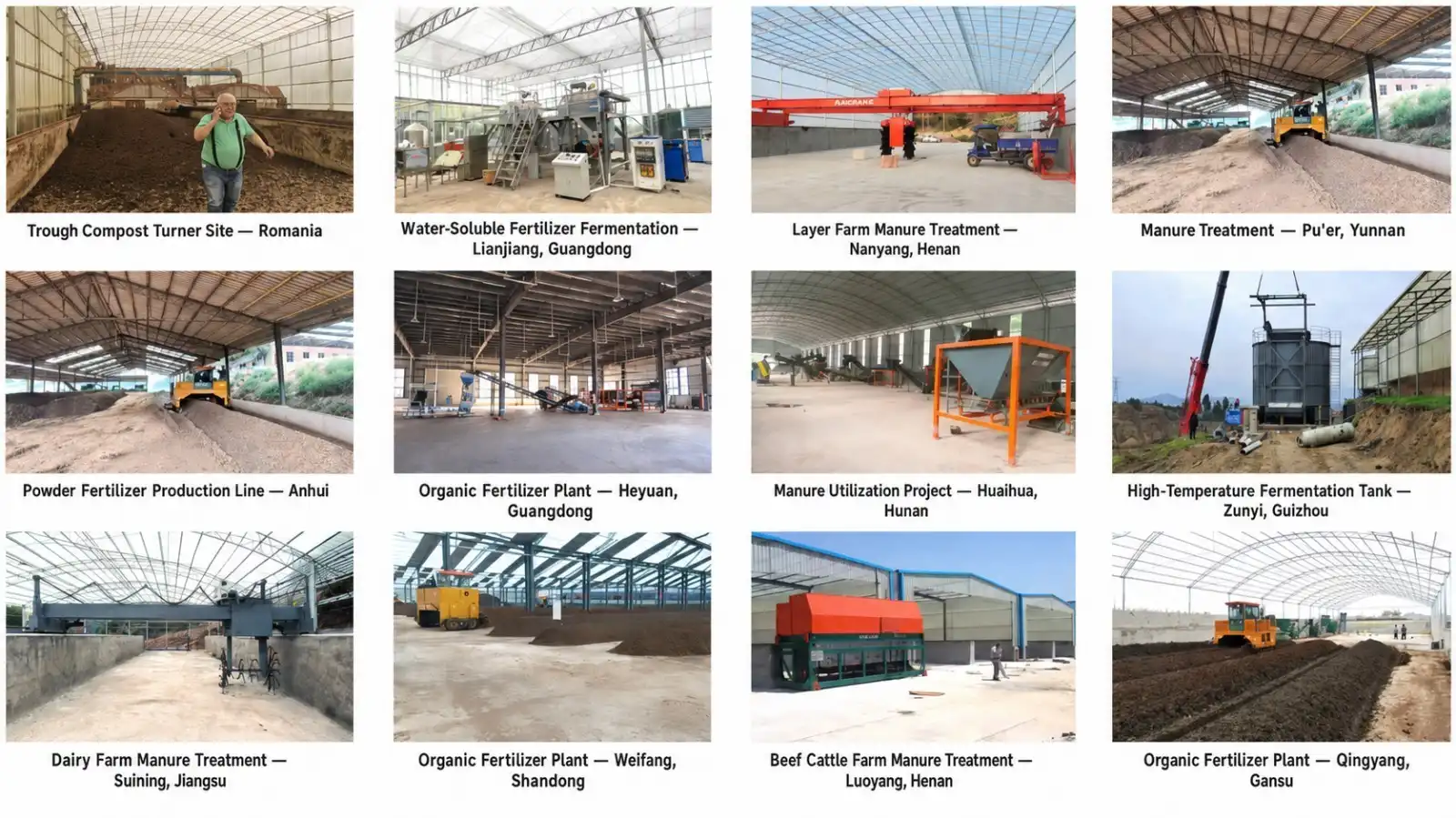
With our complete Manure Organic Fertilizer Production Line solutions, YUXING is ready to help you turn your problems with organic waste into opportunities to make money. As a top manufacturer with more than 20 years of experience, we can make sure that the equipment you get fits your production goals and the needs of your region. Our full support includes designing the plant, supplying the equipment, installing it, and providing expert support for life. This way, we can make sure that your business quickly reaches stable production and stays ahead of the competition in the long run. Contact our expert team right away at yuxing@hnyxmachinery.com to talk about your project needs and get detailed proposals with equipment specs, production capacity analyses, and investment assessments. Find out why farmers in more than 50 countries choose YUXING as their top supplier of the Manure Organic Fertilizer Production Line for building long-lasting, profitable organic fertilizer businesses.
References
1. Chen, J., & Thompson, M. (2021). Organic Fertilizer Production Technologies: From Waste to Value. Agricultural Engineering Press.
2. Rodriguez, A., Kumar, S., & Williams, P. (2022). Economic Analysis of Livestock Waste Conversion Systems in Modern Agriculture. Journal of Sustainable Agriculture Economics, 18(3), 234-256.
3. United States Department of Agriculture. (2023). Organic Certification Standards for Composted Animal Manures. USDA National Organic Program Guidelines.
4. Zhang, L., & Patterson, K. (2020). Greenhouse Gas Emission Reductions Through Aerobic Composting of Agricultural Waste. Environmental Science and Technology, 45(7), 1823-1841.
5. International Fertilizer Development Center. (2023). Global Organic Fertilizer Market Trends and Production Technologies. IFDC Technical Bulletin Series.
6. Morrison, R., & Hassan, Q. (2022). Equipment Selection and Process Optimization in Organic Fertilizer Manufacturing. Industrial Agricultural Engineering Quarterly, 29(4), 412-438.

USER EVALUATE
Get your tailored fertilizer plant solution — contact us today.