




How Does a manure organic fertilizer production line Work?
A manure organic fertilizer production line is an integrated system that converts raw livestock waste—including cow dung, pig manure, chicken droppings, and sheep manure—into stable, nutrient-dense fertilizer products. The process moves through aerobic fermentation, mechanical crushing, blending, granulation, drying, cooling, screening, and automated packaging. Each stage removes pathogens, controls moisture, and preserves nitrogen and phosphorus content. Designed to handle 1–20 t/h with annual output reaching 10,000–200,000 tons, this type of production line gives farm owners and fertilizer plant investors a structured path from raw organic waste to a sellable, market-ready product.
Understanding the Manure Organic Fertilizer Production Line Workflow
The first thing you should do before buying sound equipment is to learn how the whole production process works. The process is more organized than most people think, and each machine has a job to do.
Stage 1 — Raw Material Preparation and Fermentation
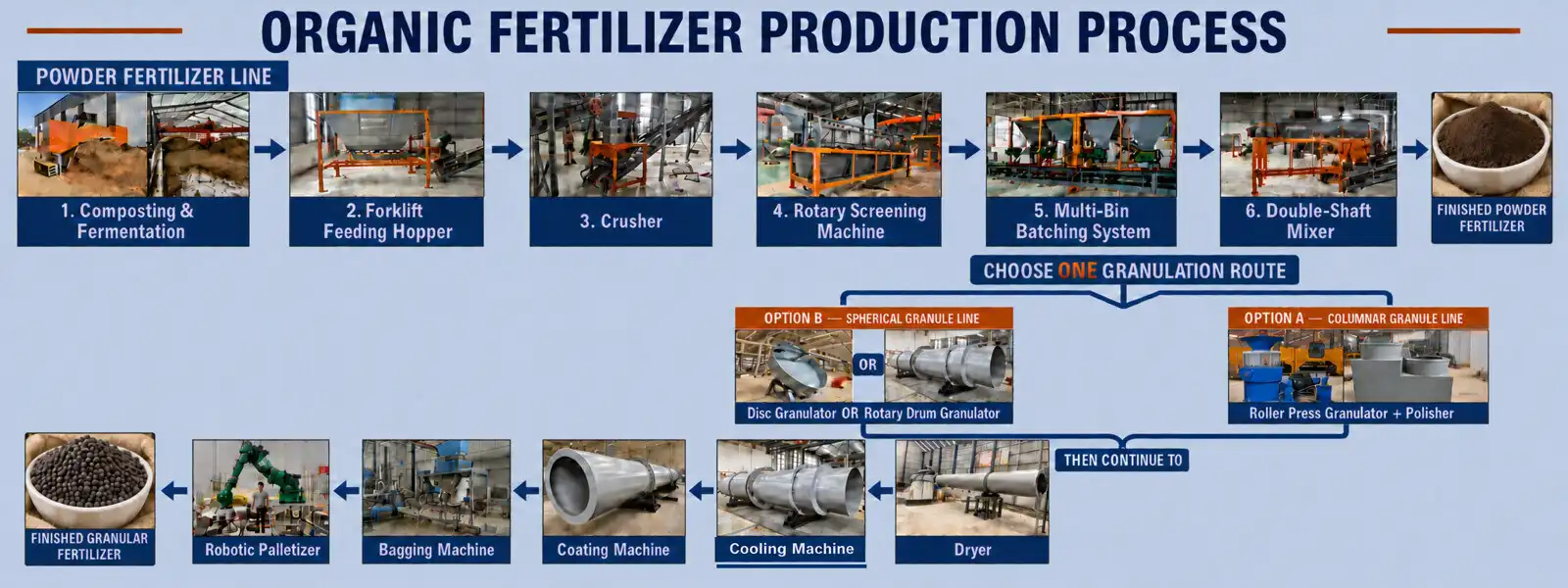
Raw materials like chicken poop, cow dung, mushroom waste, straw, food waste, and organic sludge are gathered and handled first until they have a moisture level of 25% to 35%. A compost turner starts oxygen fermentation, which raises the temperature inside to 55–70°C to get rid of bacteria and weed seeds. This step usually takes 15 to 25 days and checks to see if the final product is safe for living things.
Stage 2 — Crushing, Mixing, and Classification
After being fermented, composted material is put through a high-speed crusher that breaks up the clumps into particles of the same size. Then, a rotating screening machine sorts the pieces that are too big. The fine powder is put into a horizontal mixer, which mixes it with secondary raw materials like peat or microbial inoculants to get the target organic matter content (≥45%) and nutrient ratios.
Stage 3 — Granulation, Drying, and Packaging
Material that has been mixed goes into a disk granulator or a new type of organic fertilizer granulator, which makes pellets that are 2–8 mm in size (customizable). A rotary dryer lowers the wetness level to less than 15%, and a rotary cooler lowers the temperature to levels close to room temperature. A final screening machine sorts the granules into different sizes, and an automatic packing machine seals the powder or granules so they can be shipped. The whole line is run by a PLC control system and a dust collection system.
Benefits and Environmental Impact of Manure Organic Fertilizer Production Lines
Animal farm owners and plant investors are moving toward organic waste processing for reasons that have nothing to do with how the production works. These reasons are strong environmental and financial ones.
Using organic fertilizer made from animal manure via an organic fertilizer production line lowers the amount of chemicals that run off into streams, boosts soil microbes, and lowers the need for synthetic nitrogen. All of these things have a direct effect on the long-term output of the soil. The FAO says that soils with more organic matter can hold up to 20 times more water than soils that have been broken down. This is very important in dry parts of Africa and Central Asia where crops need to grow.
Economic Advantages of Resource Recycling
Ten tons of raw cow dung can be turned into three to four tons of finished granular fertilizer every hour. This turns waste that used to have to be thrown away at high costs into a source of income. According to farmers and buyers, a mid-scale line can make its money back in 18–36 months, based on how much fertilizer costs in the area.
Addressing Odor and Granule Consistency Issues
Odor during fermentation and uneven pellet quality are two problems that often happen when making organic fertilizer. Ammonia and hydrogen sulfide can be neutralized well by biological deodorization towers and negative-pressure ventilation systems. A grinding rate above 90% is guaranteed by keeping the input moisture between 25% and 35% and using wear-resistant granulator parts.
Meeting Environmental Compliance Standards
In Southeast Asia, sub-Saharan Africa, and South America, markets are getting stricter about how animal waste can be dumped by the government. Adding an approved organic fertilizer processing line helps businesses avoid fines for harming the environment and show that they are responsible farmers.
Comparing Manure Organic Fertilizer Production Lines with Chemical Fertilizer Lines
Before making a purchase, many people who have used chemical fertilizers in the past want to know how organic lines are different in terms of cost, operation, and long-term return.
Total Cost of Ownership
Chemical fertilizer lines have higher costs for raw materials because they need inputs that are mined or made in a lab. Organic lines use farm waste, which can often be found on-site for little or no cost. Initial investment for a fully automatic organic fertilizer line is between $20,000 and $300,000 or more. However, operational input costs are low because raw materials are free or cheap.
Automation vs. Manual Operation
Material handling and tracking are harder to do on semi-automatic lines, but a lot easier on fully automatic lines with PLC control systems. For big operations that handle 8–20 t/h, fully automating pays off quickly because it saves time and makes sure the process is always the same. Chemical lines usually need skilled chemical engineers, but farm-based workers with basic technical training can work on organic lines.
Choosing the Right Production Scale
Buyers should make sure that the line's capacity matches the amount of manure they produce each day. Five to eight tons of raw dung are made every day by a farm with 500 cows. A 1–3 t/h line is good for processing on a farm, while 5–20 t/h lines are used by business organic fertilizer plants to serve area markets quickly.
How to Choose the Best Manure Organic Fertilizer Production Line for Your Business
When making this kind of purchase, it's not just about price; it's also about technical fit, supplier reliability, and long-term service access.
Key Machine Specifications to Evaluate
When looking at different kinds of granulators for an organic waste fertilizer line, disk granulators work best with softer, more liquid materials, while new-type organic fertilizer granulators are better at handling dry, fibrous materials. The material of the equipment is also important. Standard equipment is made of carbon steel Q235, but for high-acid inputs like chicken dung, stainless steel parts are suggested. Voltage compatibility (220V/380V/415V/440V/480V, 50Hz/60Hz) must match the power grid in the area.
Assessing Manufacturer Reliability
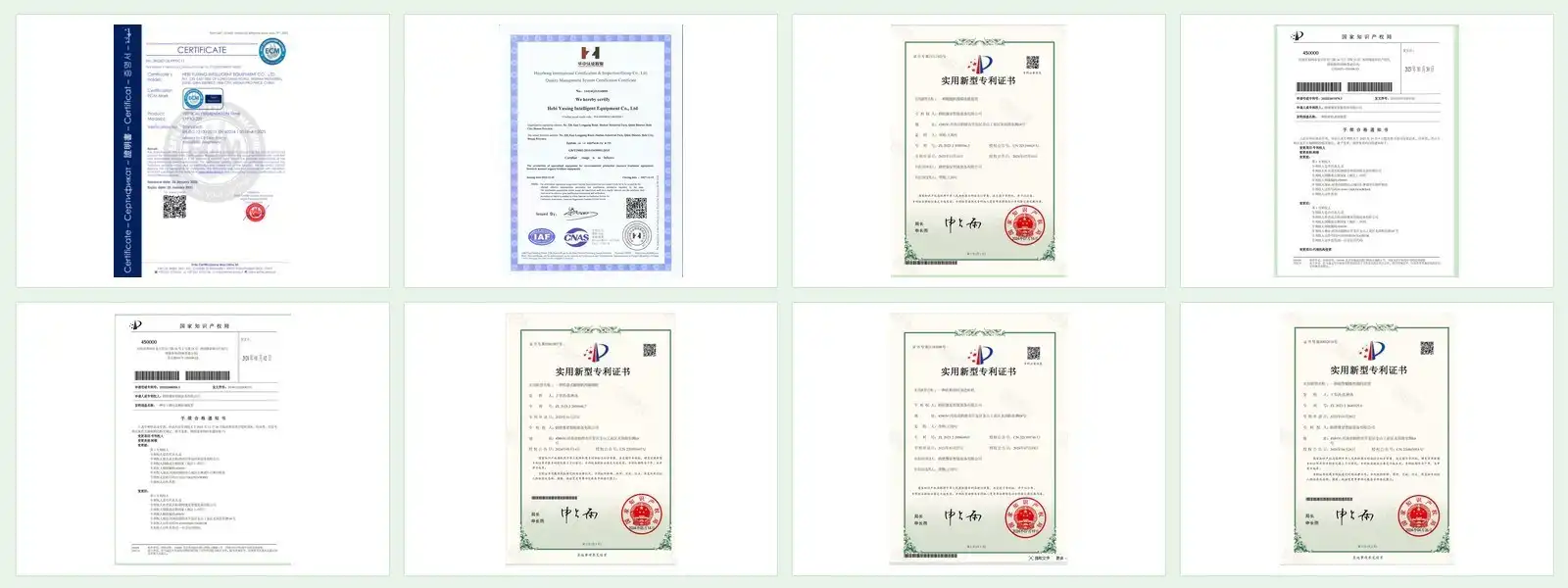
A reliable company that makes organic fertilizer equipment should have CE and ISO certifications, offer OEM/ODM customization options such as labeling, PLC language settings, and electrical component choices, and offer documented installation support. When you buy directly from the factory, you don't have to pay markups to middlemen. Instead, you can talk to tech teams directly to make changes to your project.
After-Sales Support and Installation Services
Overseas engineer installation and technical service 24 hours a day, seven days a week are musts for buyers in developing markets where there may not be a lot of technical know-how available locally. Make sure the seller has a stable supply chain for spare parts, video help, and online support. Standard equipment for making organic fertilizer should be ready to ship right away; custom systems usually have a 15–20 day production lead time.
Future Prospects and Innovations in Manure Organic Fertilizer Production
It is expected to keep growing at a rate of 11.2% per year until 2030 (Grand View Research, 2022). This growth is caused by countries in the European Union, India, and several African countries putting stricter limits on the use of synthetic fertilizer.
AI-Driven Process Controls and Sensor Integration
More and more, modern production lines have sensors that measure the temperature of the fermentation process in real time, automated moisture feedback loops, and dashboards for remote monitoring. Without adding more work, these changes cut down on operator mistakes and improve stability between batches.
Low-Energy Drying Technology
When new rotary dryers are combined with heat recovery systems, they use 20–30% less fuel than older drum dryers. This directly lowers the cost of doing business per ton of finished product.
Adapting Lines to Regional Raw Material Profiles
In Southeast Asia, production lines usually work with chicken manure that is very wet, mixed with rice husks. In Central Asia, on the other hand, lines mostly work with sheep and cattle manure that is much drier. To keep the quality of the product, the design of the equipment—especially the size and type of dryer and granulator—should match the features of the local input.
Conclusion
A well-designed system for processing manure and making fertilizer, such as a manure organic fertilizer production line, can turn a problem with getting rid of waste into a product that can be sold. Each step, from aerobic fermentation to automated packaging, works together to make sure that large amounts of certified organic fertilizer are always the same. Low costs for raw materials, rising demand for organic fertilizer, and stricter rules on how to get rid of waste all support the economic case for farm owners and plant investors in farming markets with a lot of growth. Picking a company with strong engineering knowledge, the ability to deliver products all over the world, and quick technical help can mean the difference between a productive line and one that needs a lot of expensive repairs.
FAQ: Common Questions About Manure Organic Fertilizer Production Lines
1. How long does one full production cycle take?
From raw manure input to finished granular fertilizer, a complete cycle typically takes 20–30 days. The fermentation stage alone runs 15–25 days depending on material type, ambient temperature, and turner frequency. Mechanical processing after fermentation—crushing through packaging—can be completed within a single operating shift.
2. Can an existing chemical fertilizer line be converted to process organic manure?
Partial conversion is possible. The granulation, drying, and packaging sections may be reusable, but the fermentation and crushing stages require dedicated organic processing equipment. A full assessment by a qualified engineer is necessary before assuming compatibility.
3. What maintenance does the equipment require?
Routine maintenance includes checking granulator wear components every 500 operating hours, lubricating conveyor bearings weekly, and inspecting dryer drum alignment monthly. Using high-chromium alloy granulator components extends service intervals to 3,000–5,000 hours. A stable spare parts supply from your manufacturer minimizes unplanned downtime.
Get Your Custom Organic Fertilizer Production Line Quote from YUXING
YUXING has been making fertilizer equipment for more than 20 years and has customers in more than 50 countries. As a reputable company that makes manure organic fertilizer production lines, we offer fully customized setups that include voltage, automation level, granulator type, certifications, and branding. We also offer expert installation services abroad and technical support 24 hours a day, 7 days a week. To get a custom project price right away, email your raw material information and volume needs to yuxing@hnyxmachinery.com.
References
1. Food and Agriculture Organization of the United Nations. Plant Nutrition for Food Security: A Guide for Integrated Nutrient Management. FAO, 2006.
2. Grand View Research. Organic Fertilizers Market Size, Share & Trends Analysis Report. Grand View Research, 2023.
3. Bernal, M. P., Alburquerque, J. A., & Moral, R. "Composting of animal manures and chemical criteria for compost maturity assessment." Bioresource Technology, 2009.
4. Tiquia, S. M., & Tam, N. F. Y. "Elimination of phytotoxicity during co-composting of spent pig-manure sawdust litter and pig sludge." Bioresource Technology, 2000.
5. Cooperband, L. R. The Art and Science of Composting: A Resource for Farmers and Compost Producers. University of Wisconsin-Madison, Center for Integrated Agricultural Systems, 2002.
6. Nkoa, R. "Agricultural benefits and environmental risks of soil fertilization with anaerobic digestates: a review." Agronomy for Sustainable Development, 2014.

USER EVALUATE
Get your tailored fertilizer plant solution — contact us today.