




What is the role of a fertilizer drying machine in an organic fertilizer production line?
A fertilizer drying machine removes excess moisture from granulated organic fertilizer, bringing moisture content down to a commercially acceptable range of 2%–15%. Positioned between the granulation and cooling stages, it directly determines whether the final product resists caking, mold, and degradation during storage and transport. Without adequate drying, organic fertilizer granules absorb atmospheric humidity, clump together, and lose market value. In large-scale operations running 3–18 t/h, a properly sized rotary drum dryer keeps the entire production line moving at consistent output while protecting granule hardness and shelf life.
Understanding the Fertilizer Drying Machine and Its ProcessCore Components and Working Principle
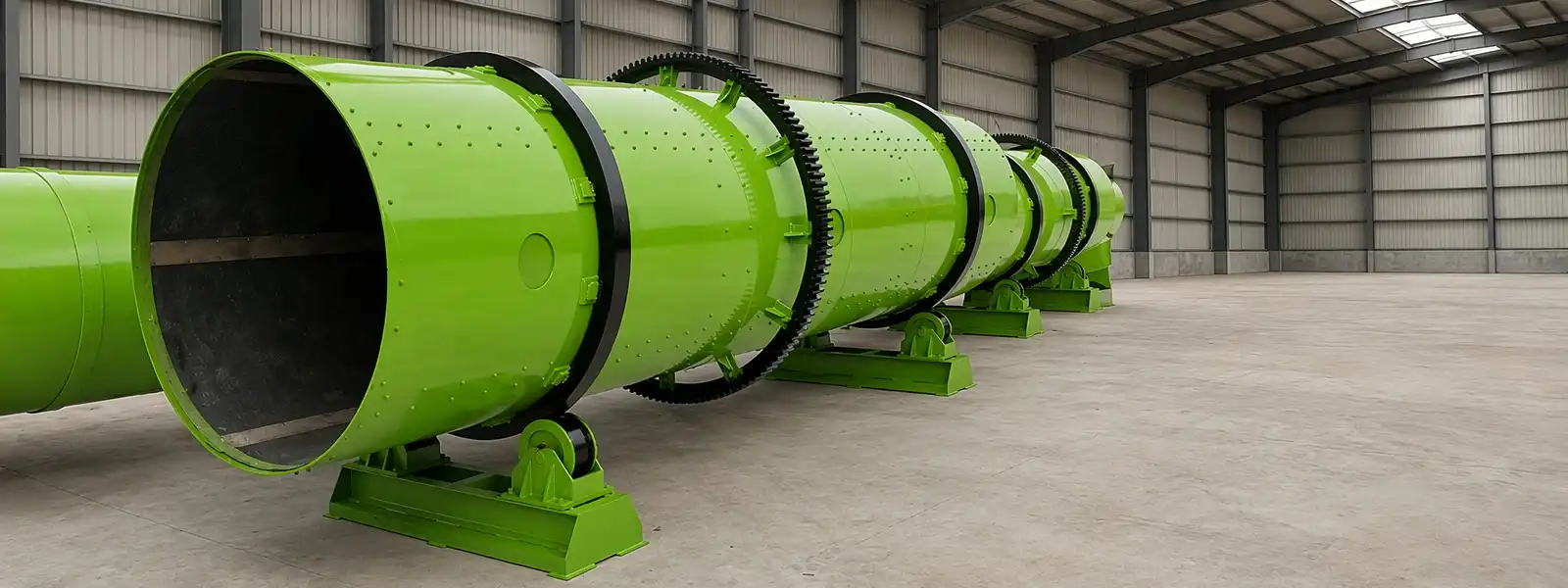
A rotary drum dryer has a cylinder-shaped shell, lifting plates inside, a system for letting hot air in, a set of bearing rollers, and a drive unit with a gear motor. Granules are put into the spinning drum at an angle of 3 to 5°. This makes the granules move forward by gravity while the lifting plates spray the material with hot air over and over again. The high thermal efficiency of this repeated contact between the material and the hot air drives off the wetness.
Machine Types and Heating Methods
Most organic fertilizer plants have one of three types of dryers: rotary drum dryers, fluidized bed dryers, or paddle dryers. Because they can handle the most materials, like manure, sludge, and coal slime, rotary drum types are most often used on big production lines. Coal, biofuel, natural gas, and reclaimed waste heat are all types of heat sources. Biomass and waste heat choices lower fuel costs by a large amount and are appealing to plants in places where regulations are putting pressure on coal use.
Step-by-Step Drying Process
When raw granules from the granulator come into the drum, they are at least 300°C when they first enter. How long the material stays inside is controlled by the speed of spinning, which is set between 5.2 and 6 r/min. Temperature sensors and automated PLC controls keep an eye on the process all the time, making sure that the temperature of the material leaving the process never goes above 70°C to protect the nitrogen content. At the exhaust exit, a cyclone sieve and bag filter system catch small particles before the air goes out. This keeps operations in line with environmental rules.
Why Use a Fertilizer Drying Machine in Organic Fertilizer Production?
It is not possible for a business fertilizer operation to skip the drying step. After being granulated, fresh organic fertilizer granules usually still have 20% to 40% moisture in them. At those levels, microbes work faster, granules get softer, and bags break when they are stacked because they are too heavy. Using a fertilizer drying machine is essential because the money you lose from returned or rejected shipments is much higher than what it costs to own and run a dryer that is properly matched.
Here are the main ways this tool helps with production:
- Moisture reduction to 2%–15%: Brings the product within the moisture standards required by most commercial fertilizer markets, making the product acceptable for export and retail distribution.
- Granule hardness and uniformity: Dried granules resist mechanical impact during conveying and broadcasting, reducing breakage and dust generation throughout the distribution chain.
- Extended shelf life: Low moisture content slows microbial decomposition, allowing organic fertilizer to remain stable for 12–24 months under normal storage conditions.
- Reduced logistics weight: Removing water from the product lowers bulk density, which directly cuts freight costs per nutrient ton shipped.
Because of these benefits, the return on investment (ROI) goes up at all production levels, from 3 t/h to 18 t/h. Routine care, like lubricating the supporting wheels, checking the gear motor, and cleaning the lifting plates every three months, keeps the machine running smoothly and extends its useful life by more than ten years.
Comparing Fertilizer Drying Machines for Organic Fertilizer Production
Rotary Drum Dryers vs. Other Types
When it comes to throughput and material versatility, a fertilizer dryer machine using a rotary drum design is better than fluidized bed and paddle dryers. Fluidized bed dryers are good at drying fine powders but not so good at drying organic materials that are sticky and have a high viscosity. Paddle dryers work well for smaller batch operations but can't handle continuous flow, which is needed by plants that process more than 5 t/h.
YUXING YXHG / XGHG Series Specifications
YUXING makes two types of rotating drum dryers that work well together. Both the XGHG and YXHG series have models 1212, 1515, 1818, 2020, and 2424. Their capacities range from 3 to 18 t/h, and their power needs range from 7.5 to 45 kW. There are different power needs that can be met by gear motors like the ZQ350, ZQ400, ZQ500, and ZQ650. Both types can use coal, biomass, gas, or waste heat as fuel, which gives plant managers real freedom to control costs based on the supply of fuel in the area.
Stationary vs. Mobile Units
Large fertilizer plants mostly use stationary units because they are more structurally stable, easier to connect to conveyor systems, and have lower running costs per ton. Mobile units are good for contract drying services or temporary production sites, but they cost more per unit than they produce. A fixed-installation rotary drum dryer is the most cost-effective choice for most organic fertilizer plants that need to process 3–18 t/h.
How to Choose the Best Fertilizer Drying Machine for Your Production Line
Match Capacity to Your Granulator Output
When the granulation stage is at full speed, the dryer must be able to handle at least that much. If a plant has a granulator that can handle 10 t/h, it should choose a dryer that can handle 10–12 t/h so that it doesn't get stuck. One of the most common and expensive mistakes made when planning the building of a new fertilizer plant is not giving the dryer enough space.
Evaluate Energy Consumption and Efficiency
Fuel costs are a big part of running a business. Machines with stronger thermal insulation layers keep heat loss rates below 5%, which directly lowers the amount of fuel needed to dry one ton of product. Before you buy, you can get a good idea of how efficient different models are by comparing their kW ratings to their capacities.
Assess Supplier Support and Customization Options
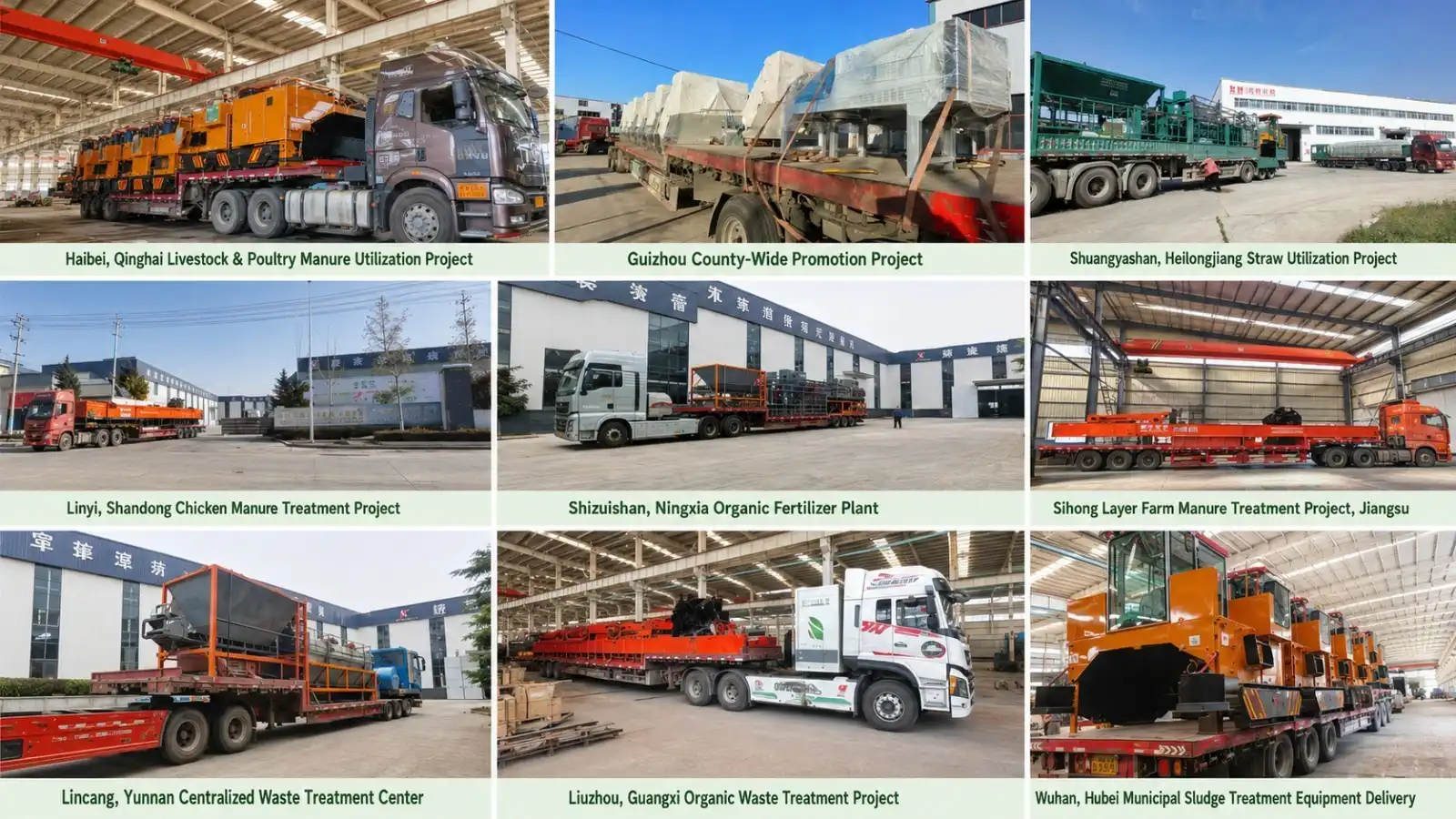
Supplier reliability is just as important as equipment quality. YUXING has been making things for more than 20 years and has customers in more than 50 countries. They can customize their products to meet voltage standards and use electrical parts from names like Siemens and Schneider. They can also add PLC control systems, multilingual working interfaces, and CE certification. Spare parts are always available, and technical support is available 24 hours a day through both remote help and service coordination on-site.
Conclusion
In commercial organic fertilizer production, the drying stage is necessary because it directly affects the quality of the product, how well it stores, and how well it sells. When a fertilizer drying machine is the right size and is used correctly, it lowers the cost of shipping, keeps the moisture content within acceptable ranges, and protects the quality of the grains. The YXHG and XGHG lines from YUXING can produce between 3 and 18 t/h, have a number of heating source choices, and can be fully customized. YUXING is a reliable long-term partner for any fertilizer production business. They have been making things for over 20 years and have customers in five countries.
FAQs About Fertilizer Drying Machines in Organic Fertilizer Production
1. How long does one drying cycle take?
The amount of time that the material stays in the drum depends on how dense it is, how much water is in it at first, and how fast it is rotating. To control this quantity without stopping output, operators change the speed of the rotation between 5.2 and 6 r/min.
2. What routine maintenance does a rotary dryer need?
The supporting rollers and the gear motor should be oiled once a week, and the lifting plate wear should be checked. The cyclone separator should also be cleaned. Gear alignment, shell thickness measurement, and seal inspection at the kiln head and tail every three months are some of the things that should be checked to make sure heat isn't lost.
3. Can high drying temperatures damage organic nutrients?
Not at all. Nitrogen and helpful organic compounds stay chemically stable during the drying process because the material outlet temperature is kept below 70°C by automatic temperature tracking.
4. How does the machine control dust emissions?
Each unit is linked to a cyclone separator and either a bag filter or a water curtain system. Fine particles are caught by this combination before the exhaust air is released. This meets local environmental standards in markets in Africa, Southeast Asia, and Eastern Europe.
Get a Quote from YUXING — Trusted Fertilizer Drying Machine Supplier
Over 50 countries have bought fertilizer drying machines and full production lines from YUXING for more than 20 years. Our YXHG and XGHG dryers can handle 3–18 t/h and can use different types of fuel depending on the conditions where they will be used. We create plants, set up equipment, help with installation, and offer expert support for life. To get a quote right away, email your production needs to yuxing@hnyxmachinery.com.
References
1. Tiquia, S. M., & Tam, N. F. Y. (2002). Characterization of Nitrogen Loss During Composting of Animal Manure. Bioresource Technology.
2. Huang, G. F., Wu, Q. T., Wong, J. W. C., & Nagar, B. B. (2006). Transformation of Organic Matter During Co-composting of Pig Manure with Sawdust. Bioresource Technology.
3. Walling, E., & Vaneeckhaute, C. (2020). Greenhouse Gas Emissions from Inorganic and Organic Fertilizer Production and Use. Journal of Cleaner Production.
4. Shen, Y., Zhao, R., Koottatep, T., & Tang, S. (2017). Effect of Aeration and Rotary Drum on Composting of Livestock Manure. Waste Management.
5. Food and Agriculture Organization of the United Nations. (2019). World Fertilizer Trends and Outlook to 2022. FAO.
6. Nkoa, R. (2014). Agricultural Benefits and Environmental Risks of Soil Fertilization with Anaerobic Digestates. Agronomy for Sustainable Development.

USER EVALUATE
Get your tailored fertilizer plant solution — contact us today.