




Best fertilizer manufacturing equipment for Efficient Production
If you're searching for the best fertilizer manufacturing equipment for efficient production, you're already thinking in the right direction. The right organic fertilizer production machinery determines your output quality, operational costs, and long-term profitability. From composting and granulation to drying and packaging, each piece of equipment plays a direct role in how well your facility runs. This guide walks through what to look for, what to avoid, and which equipment choices make the most sense for medium-scale organic fertilizer operations today.
Understanding Fertilizer Manufacturing Equipment and Its Key Components
A well-planned organic fertilizer production line is made up of a series of tools that are all linked to each other. To keep throughput and product quality stable, each unit must work with the others in sync.
Composting and Fermentation Equipment
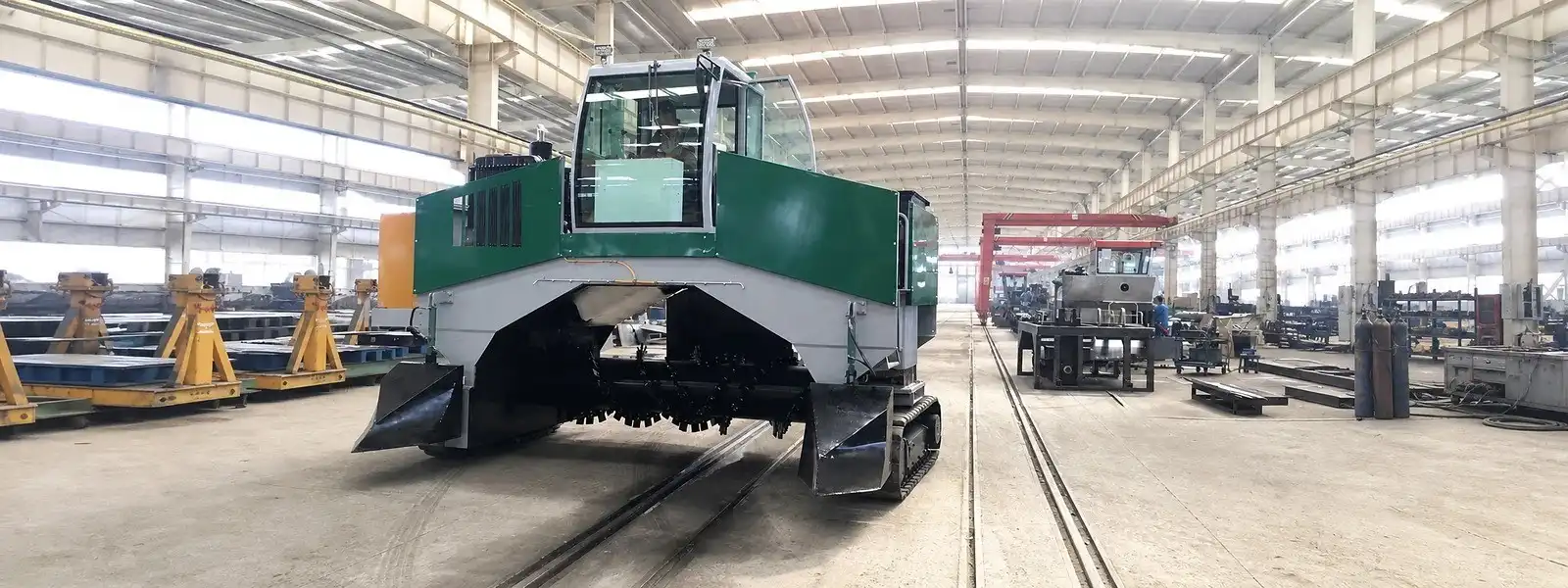
Raw organic trash has to go through aerobic composting before it can be ground up. At this stage, compost turners do most of the work. The YUXING YXYYFD-3500 Fully Hydraulic Compost Turner was made to do this job. It can handle piles up to 3.6 m wide and 1.8 m high, and it can process up to 1,500 m³/h. It has a full hydraulic drive system driven by a Linde hydraulic pump. The drum has 28 sets of blades made of a hard metal with a hardness of ≥HRC55. This makes sure that they will last even after heavy use for a long time.
Granulation and Crushing Equipment
After composting, the material is crushed and then turned into granules. The stuff is turned into regular pieces by disk granulators and drum granulators. Before grinding, crushers break up groups that are too big. The YXYYFD-3500 can handle bits of material up to 250 mm in size, which greatly reduces the need for pre-processing.
Drying, Cooling, and Screening Equipment
After the granulation process, rotary dryers get rid of any extra water. Coolers keep the temperature of the product stable, and rotating screens pick out bits that don't meet the standards so they can be processed again. When calibrated correctly, these machines make sure that the final fertilizer meets the size and moisture standards needed for sale.
Choosing the Best Fertilizer Manufacturing Equipment for Efficient Production
A common and expensive mistake is choosing tools without having a clear plan for how they will be used. The choice of fertilizer making equipment should always start with your raw materials, the amount you process every day, and the type of output you want (powder or granular).
Match Capacity to Your Raw Material Supply
If the capacity of the equipment doesn't meet the availability of the raw materials, either the gear sits idle, or production slows down. If you're a medium-sized business that deals with manure from animals, crop waste, or mixed agricultural waste, a compost turner like the YXYYFD-3500 that can handle up to 1,500 m³/h will give you room to grow without spending too much.
Evaluate Drive Systems and Mechanical Reliability
In heavy composting environments, hydraulic drive systems usually work better than chain-driven options. The YXYYFD-3500 has a full hydraulic control system, which works more smoothly and with more power than mechanical systems. Its steel tracks are designed to work with excavators and keep it stable on uneven ground, which is important for outdoor waste yards.
Consider Power Supply Compatibility and Certifications
Your equipment must meet the standards of your local grid. The YUXING equipment works with 380V, 440V, and 480V and is certified by CE and ISO. In areas in Africa, Southeast Asia, and South America, where grid standards are different, this is important. Machinery that is CE-certified also makes it easier to get it through customs and get approval from local regulators.
Benefits of Investing in High-Quality Fertilizer Manufacturing Machines
There is a big difference between cheap tools that break down a lot and high-quality machines that work well for years. The return on investment is real, but so is the funding gap.
When you buy professional-grade equipment for composting and making fertilizer, you get the following main operational benefits:
- Higher throughput consistency: The YXYYFD-3500's 360° in-place turning function and travel speed of 0–20 m/min allow operators to turn large compost windrows efficiently without repositioning delays.
- Reduced labor requirements: Full hydraulic and electrical control, combined with an engineering-grade cab with air conditioning, means one operator can manage the entire turning operation comfortably and safely.
- Lower long-term maintenance costs: Hard alloy drum cutters with ≥HRC55 hardness reduce blade replacement frequency. The TLM-series drum motor is built for continuous industrial operation.
- Regulatory compliance: Using certified equipment helps organic fertilizer plants meet government waste disposal regulations and avoid environmental penalties, which are becoming stricter across Nigeria, Vietnam, Indonesia, and other target markets.
Because of these benefits, the price of treated organic matter per ton goes down, and the consistency of your waste before it goes into the granulation stage gets better.
Maintenance, Troubleshooting, and Long-Term Equipment Performance
It's important to keep an eye on even the best-built machines. Setting up a structured maintenance routine will protect your investment and keep output from stopping.
Daily and Weekly Checks
Every day, check the oil level and hydraulic fluid levels. Check the drum blades for wear and make sure the track tightness is correct once a week. The YXYYFD-3500's 6-cylinder hydraulic system should have its pressure checked every shift to make sure it stays the same.
Monthly and Periodic Servicing
Every month, grease all the parts that move. Check the Linde hydraulic pump for problems with how it works. Look for error codes in the electrical control system and make sure the fire extinguisher and roof warning light work. These checks keep small problems from getting worse and causing major downtime.
Partnering With a Supplier Who Backs Their Equipment
Yuxing offers expert help 24 hours a day, 7 days a week, as well as remote video advice and spare parts. Their experts offer installation help and on-site testing in other countries. This is especially helpful for first-time buyers reviewing a fertilizer equipment list for organic production who might not have access to local technical resources.
Procurement Guide: Where and How to Buy Quality Fertilizer Manufacturing Equipment
Buying equipment to make fertilizer is a big investment of money. If you choose the wrong provider, you might end up with equipment that doesn't work with your process, doesn't have spare parts, or doesn't come with any useful help after the sale.
How to Assess Supplier Credibility
Look for suppliers who have international experience that can be proven, client referrals that can be tracked, and certifications. It has worked with clients in more than 50 countries, and it has installed projects directly in Africa, Southeast Asia, Central Asia, and South America. Their gear has been sent abroad in 40GP and open-top containers, with professional loading plans in place to keep it safe during transport.
Standard vs. Customized Equipment
Standard equipment for making organic fertilizer is usually kept on hand so that it can be sent out quickly. It takes 15–20 days to make customized configurations like voltage settings that are just right, PLC systems, branded control interfaces, or OEM labeling. YUXING allows full ODM/OEM customization, such as choosing the language of the HMI, the name of electrical components (Siemens, Schneider), and the color of the equipment.
Budgeting for a Complete Production Line
The budget should include the cost of the equipment, shipping, installation, and commissioning. YUXING's prices are clear; taxes are included, and shipping costs are shown separately based on where the item is going. Depending on the amount of automation and daily throughput goals, the cost of building a full organic fertilizer line can run from $20,000 to over $300,000.
Conclusion
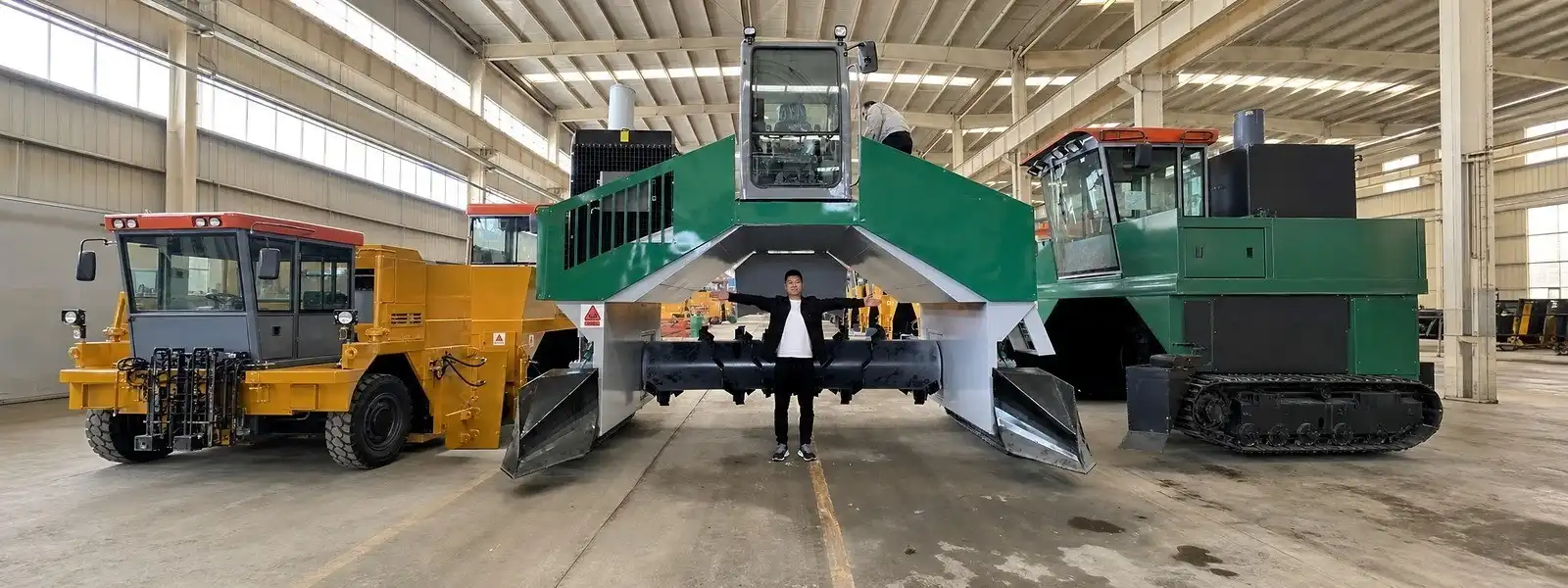
Getting the right fertilizer manufacturing equipment is an important choice that will affect your plant's productivity, output, and long-term costs. Every piece of equipment, from composting turners to granulators and dryers, needs to be chosen with your raw materials, capacity goals, and the way things work where you live in mind. The YUXING YXYYFD-3500 Fully Hydraulic Compost Turner is a tried-and-true, heavy-duty place to start for any medium-sized organic fertilizer business. It's designed to meet the needs of real-world production in harsh agricultural settings. It comes with CE/ISO approval, full hydraulic control, and lifetime after-sales support.
FAQ
1. What is the best equipment for starting an organic fertilizer production line?
A garbage turner is the first machine that every medium-sized business needs. The YUXING YXYYFD-3500 can handle up to 1,500 m³/h, works with materials up to 250 mm in size, and has full hydraulic control, so it can handle manure, straw, and mixed farm waste.
2. How do I match equipment capacity to my raw material volume?
Figure out how much trash you get every day in cubic meters, and then use that number to find a compost turner that can handle that much. Too big of equipment loses energy, and too small of equipment slows down processes.
3. What certifications should organic fertilizer equipment carry?
The most well-known standards around the world are CE and ISO. They make sure the equipment meets quality and safety standards, which also makes it easier for countries like Nigeria, Vietnam, and Brazil to approve imports.
4. Does YUXING support overseas installation?
Yes, YUXING does send engineers to do installation, setup, and training for operators on-site. Technical questions can also be answered remotely by video chat 24 hours a day, seven days a week.
Get Your Fertilizer Production Line Running With YUXING Equipment
YUXING has been making fertilizer manufacturing equipment for more than 20 years and has worked with customers in more than 50 countries. Whether you need a single compost turner or a full, turnkey production line, our team can help you set up the equipment, plan the project, and install it all. To get a price and talk to a professional advisor about your project, email us at yuxing@hnyxmachinery.com.
References
1. Food and Agriculture Organization of the United Nations. Managing Crop Residues and Animal Waste for Soil Fertility. FAO, 2021.
2. International Fertilizer Association. Fertilizer Outlook and Technology Conference Proceedings. IFA, 2022.
3. Rynk, R. (Ed.). On-Farm Composting Handbook. Northeast Regional Agricultural Engineering Service, 2020.
4. Huang, G. F., Wu, Q. T., Wong, J. W. C., & Nagar, B. B. "Transformation of organic matter during co-composting of pig manure with sawdust." Bioresource Technology, 2018.
5. United Nations Environment Programme. Global Organic Waste Management and Fertilizer Recovery Trends. UNEP, 2022.
6. World Bank Group. Organic Agriculture and Sustainable Land Management in Developing Economies. World Bank, 2021.

USER EVALUATE
Get your tailored fertilizer plant solution — contact us today.