




The core application of the hydraulic compost turning machine
The hydraulic compost turner is a heavy-duty industrial machine engineered to automate aeration, mixing, and crushing of organic waste in windrow composting systems. Unlike belt-driven alternatives, its hydraulic drive delivers consistent high torque even when processing dense, high-moisture materials like livestock manure or municipal sludge. For medium-to-large organic fertilizer plants and commercial composting facilities, this technology directly addresses the two most costly problems in daily operations: excessively slow fermentation cycles and uneven compost quality caused by poor oxygen distribution through deep windrow piles.
Understanding Hydraulic Compost Turning Machines
How the Hydraulic Drive System Works
A closed-loop hydraulic circuit is used instead of mechanical gears and belts in a hydraulic compost turner. The spinning drum and the travel device are both powered by high-pressure fluid. Because the functions are separated, the drum keeps its torque even when the machine slows down on dense material. This is a big benefit over mechanical drive systems, which often stop working or break under load.
Key Machine Components
The main working part is the turning drum, which has blades made of manganese steel that can be replaced. The hydraulic lifting cylinder changes the height of the drum in real time to fit different windrow shapes. The crawler base spreads the machine's weight across soft or wet compost surfaces so that the ground doesn't get too compacted.
Machine Types and Their Fit
Each part is made to work continuously in the harsh, acidic environment that fermenting organic matter creates.
Core Applications and Operational Principles
Large-Scale Livestock Waste Management
In areas with a lot of livestock, pig and chicken farms produce a lot of manure that can't be turned by hand without a large crew. A self-propelled windrow turner continuously works on these materials, keeping the oxygen levels high enough for thermophilic bacteria to live. Bioresource Technology (2019) published research that confirms that regular mechanical turning keeps pile temperatures above 55°C, which is the level needed to kill pathogens. This is a standard that is rarely met by manual methods.
Industrial Organic Waste Processing
Food processing waste, spent grain from distilleries, and sugar mill filter mud all have one thing in common: they have a high bulk density that keeps water in and oxygen out. Industrial compost turners have a high-torque hydraulic motor that breaks up thick clumps and adds air to the whole cross-section of the pile. This process speeds up the breakdown of organic matter by microbes and lowers the chance of anaerobic zones that make hydrogen sulfide smells, which is a common reason why neighbors worry about industrial composting sites. For these applications, a hydraulic windrow turner can be used to support mechanical turning of dense organic materials.
Municipal and Commercial Green Waste Facilities
Composting programs in cities that take in yard waste and food scraps have to follow strict rules about how much they can process and how they can control smells. Hydraulic windrow turners have stepless speed controls that let workers fine-tune the working speed—faster for loose yard waste and slower for dense food scrap mixes. Facility managers can directly control cycle time and product quality without having to change any equipment because of this.
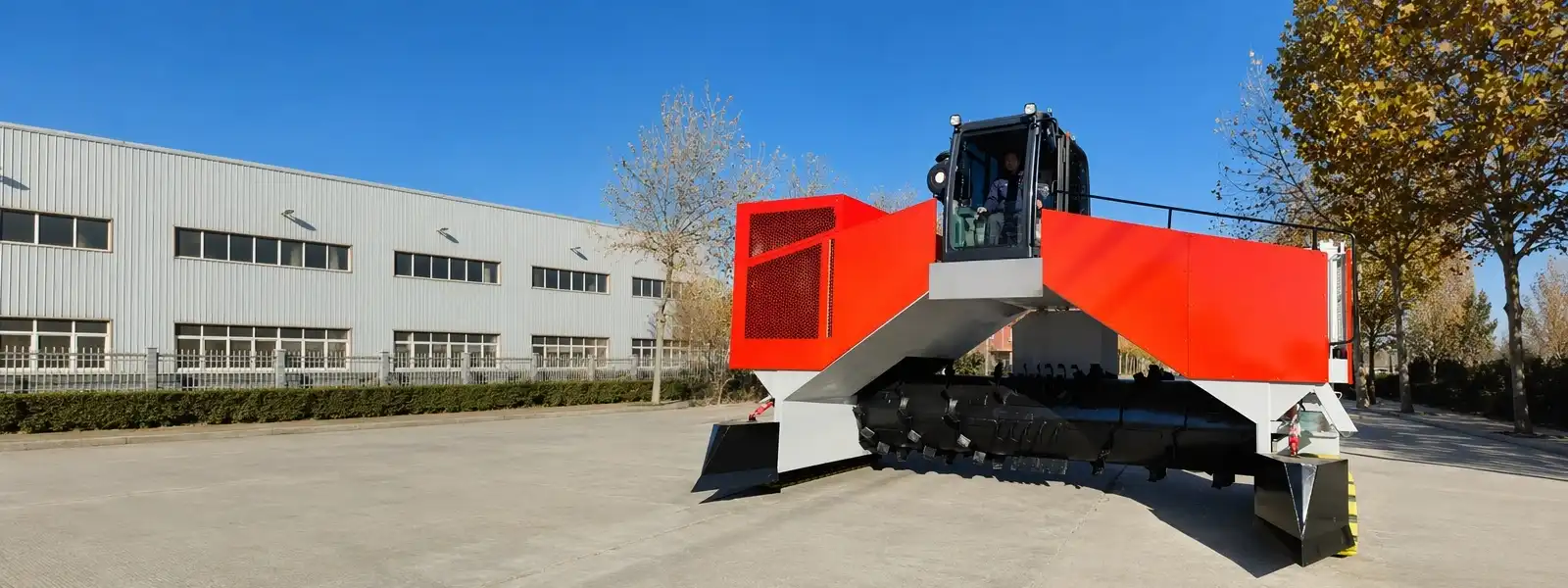
Comparative Analysis: Selecting the Right Hydraulic Compost Turner
A hydraulic model is often asked by procurement teams if it is worth the extra cost compared to a simpler electric or mechanical turner. The answer varies on site factors, the daily volume, and the amount of water in the material.
While the goods are being bought, these are the main differences that matter:
- Hydraulic vs. mechanical drive: Mechanical turners perform adequately on dry, uniform material. When moisture content exceeds 65% — common in fresh pig or cattle manure — hydraulic overload protection bypasses pressure automatically to prevent engine stall, while a mechanical transmission would suffer gear wear or belt failure under the same load.
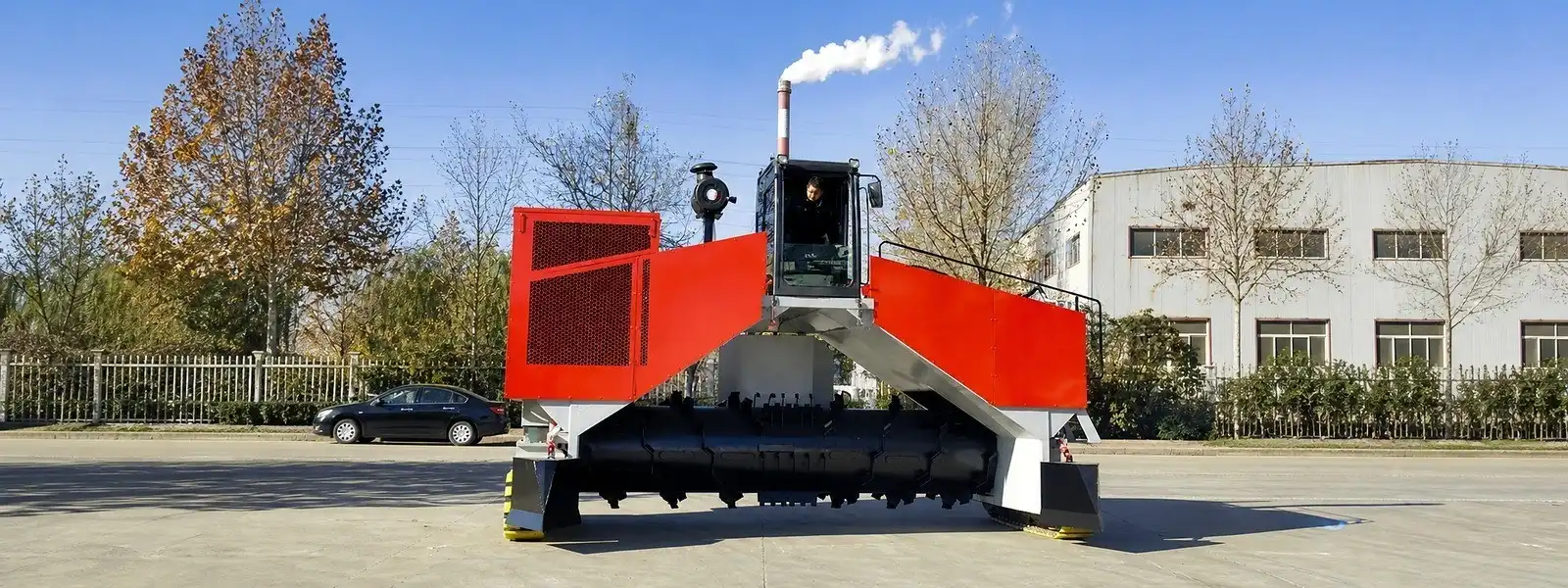
- Self-propelled crawler vs. tractor-mounted: Tractor attachments reduce upfront cost but require a separate tractor and operator. A self-propelled crawler unit like the YXFD-3500 operates independently with one operator, processes windrows up to 3,500mm wide and 1,600mm high, and achieves a theoretical maximum processing capacity of 1,100–1,300 m³/h — output that a tractor attachment cannot match.
- YXFD-3500 key specifications: Powered by a 125kW engine (approximately 170HP), with a working speed of 0–15m/min and travel speed of 0–20m/min. The 910mm drum diameter with blades and a 6 forward / 2 reverse gear configuration gives operators precise control across varied pile conditions.
These differences have a direct effect on the long-term cost of operation, the number of downtimes, and the consistency of the compost quality. Selecting the correct setup ahead of time helps keep equipment changes after installation from being too expensive.
Procurement Guide for Hydraulic Compost Turning Machines
Evaluating Suppliers and Certifications
For export markets, you should not be able to find a hydraulic compost turner supplier that does not have CE and ISO certification. These marks show that the electrical parts, structural welds, and hydraulic seals meet safety and performance standards around the world. The YUXING brand has equipment that is certified by both CE and ISO. We have worked with clients in over 50 countries in Africa, Southeast Asia, Central Asia, and South America.
Pricing Factors and Lead Times
How much a machine costs depends on its working width, engine power, and how it is customized. Standard units in our range are ready to ship right away because we keep them in stock. The production wait time for customized configurations, such as voltage adaptation, PLC automation, specific electrical component names like Siemens or Schneider, and OEM branding, is usually 15 to 20 days. To keep shipping costs for big items as low as possible, we offer professional packing plans for 40GP and open-top containers.
After-Sales Support and Spare Parts
No-shows cost more than extra parts. During the machine's lifetime, our team offers technical support 24 hours a day, seven days a week. This includes help with installation, troubleshooting problems during use, and advice on spare parts. The most common upkeep item is replacing blades that wear out. The YXFD-3500 has bolt-on alloy blades that can be changed by field teams without having to bring welding tools with them.
Environmental and Operational Impact
Reducing Greenhouse Gas Emissions
When compost piles don't get enough airflow, they switch from aerobic to anaerobic breakdown. This produces methane, a greenhouse gas that has 28 times the warming power of CO2 over 100 years (IPCC, 2021). Turning things mechanically on a regular basis keeps aerobic conditions going, which moves carbon toward CO₂ and stable organic matter instead of methane.
Odor Control and Community Relations
People who complain about smells at animal farms and composting sites usually blame hydrogen sulfide and ammonia from piles that haven't been turned over. At the source, these pollutants are controlled by consistent air through mechanical turning. Facilities that use hydraulic windrow turners on a regular basis report a measurable drop in complaints from nearby communities about smells.
Fermentation Cycle Reduction
Fermentation cycles drop from the normal 60–90 days of passive composting to 7–15 days for active windrow systems when aerobic conditions are met and the pile is turned over regularly. The YXFD-3500 is designed to improve even mixing and aeration, which can cut fermentation time by up to 30% based on the material and process conditions. This means that any organic fertilizer production line can make more products in less time.
Conclusion
A hydraulic compost turning machine used to be a niche product, but now it's the standard choice for medium- to large-sized composting businesses that need a reliable output, uniform compost quality, and low running costs. The YXFD-3500 can handle all kinds of production problems, from slow fermentation and smell control to cutting down on labor and processing large amounts of food at once. Your business can regularly and on a large scale make high-quality compost as the main ingredient in organic fertilizer if you get the right machine specifications, approved tools, and reliable support after the sale, making a hydraulic compost turner a relevant option for these operations.
FAQ
1. How often should the hydraulic oil be replaced?
After 500 hours of use, the hydraulic oil should be changed for the first time. After that, change the oil every 1,000 to 1,500 hours, based on how much dust is in the air and how hot it is.
2. Can the machine handle material with moisture above 70%?
Yes. The high-torque hydraulic drive keeps the drum from getting clogged up with wet stuff.
3. Are the turning blades field-replaceable?
Each blade on the YXFD-3500 is a bolt-on part made of steel that doesn't wear down easily. Field teams can replace dull blades without having to join them together, which cuts down on maintenance downtime.
4. What is the maximum material particle size the YXFD-3500 handles?
The machine can handle particles up to 250 mm in size, which includes most raw animal manure, food waste, and mixed organic waste that doesn't need to be crushed first.
Connect with YUXING — Your Hydraulic Compost Turner Manufacturer
YUXING has been making fertilizer tools for more than 20 years and brings that knowledge to every job. The YXFD-3500 crawler compost turner is CE and ISO approved and comes with lifetime 7x24 customer service. Our team will make sure that you get the right setup for your site, whether you need a single machine or a full line for making organic fertilizer, including solutions that require a hydraulic compost turner. To get a quote, email us at yuxing@hnyxmachinery.com right now.
References
1. Bioresource Technology — Effect of turning frequency on composting of pig manure, 2019.
2. IPCC Sixth Assessment Report — Methane emissions from organic waste decomposition, 2021.
3. Waste Management — Aerobic windrow composting of livestock manure: a review, 2020.
4. Journal of Cleaner Production — Mechanized compost turning and its impact on nitrogen retention, 2018.
5. Compost Science & Utilization — Temperature dynamics and pathogen reduction in mechanically turned windrows, 2017.
6. Resources, Conservation and Recycling — Operational parameters affecting compost maturity in large-scale facilities, 2022.

USER EVALUATE
Get your tailored fertilizer plant solution — contact us today.