




Why are fertilizer drying machines needed in fertilizer production?
If you've ever dealt with caked fertilizer bags, moldy granules, or rejected shipments, you already know the problem. Moisture is one of the biggest threats to fertilizer quality—and a reliable fertilizer drying machine is the most direct answer to that challenge.
The Role and Importance of Fertilizer Drying Machines in Production
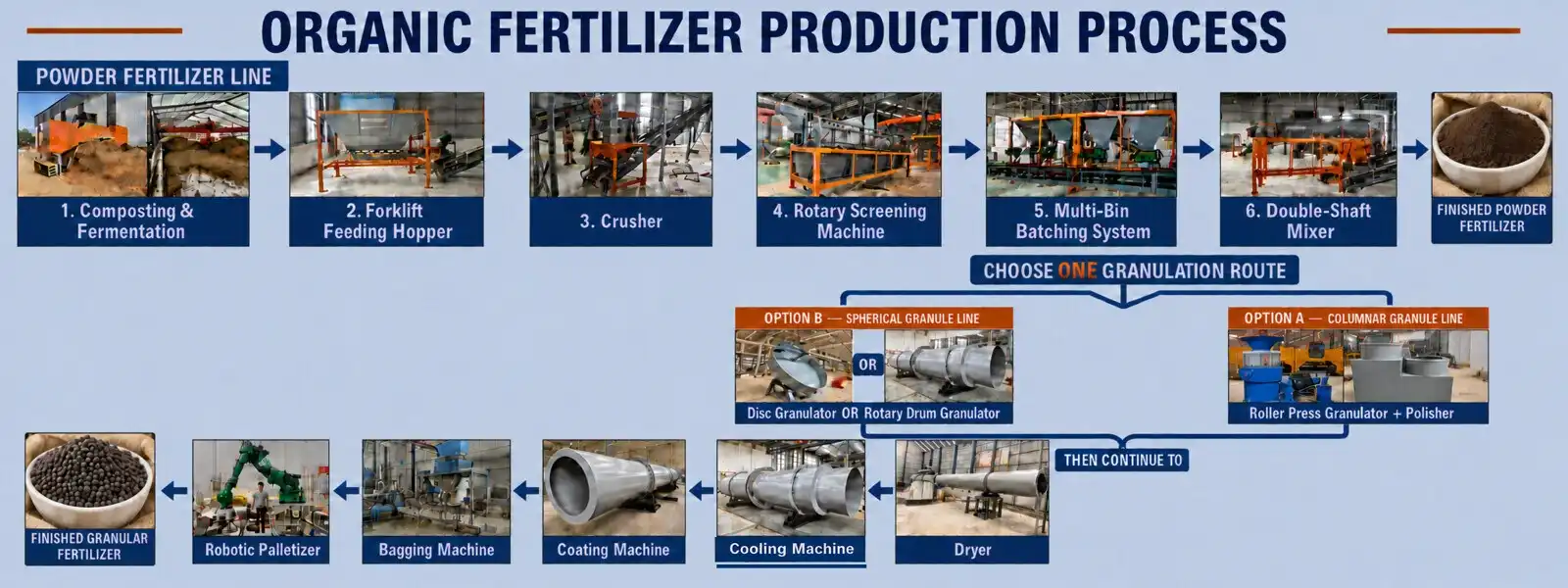
A fertilizer drying machine removes too much water from granulated or processed fertilizer so that it meets safe commercial moisture standards, which are usually between 2% and 15%. If you don't dry fertilizer grains properly, they will soak up moisture from the air, which will cause them to harden, grow microbes, and break down structurally. This directly shortens the shelf life and makes it harder to store and move. Putting a drum dryer between the granulation and cooling steps of big production lines that handle 3–18 t/h keeps the whole line constant, protects the integrity of the packing, and makes sure the finished product meets market standards.
Why Moisture Control Matters at Scale
At a production rate of 10 t/h, even a 1% extra moisture rate means that hundreds of kg of unsafe product are made every hour. That adds up quickly. A lot of water in the fertilizer also makes it heavier to ship and increases the chance that it will clump together while being sent long distances, which is a real problem for farmers sending fertilizer to Africa, Southeast Asia, or South America.
How Drying Affects Granule Integrity
Granules become harder when they are dried at controlled temperatures in the right way. This is important when fertilizer goes through automated equipment for spreading or lines for packing it in bulk bags. When granules break apart while being handled, they make it harder to apply correctly and make customers less confident in the product.
The Economic Case for Proper Drying
Taking away the water weight before shipping lowers the cost of logistics. A product with 5% less wetness weighs less per ton, which means it costs less to ship. Because of its longer shelf life and lower return rate, a rotary drum dryer usually has a short payback period compared to its total production output.
Types of Fertilizer Drying Machines and Their Applications
You can't use every dryer with every kind of fertilizer. Picking the wrong tools loses time and energy and gives uneven results. Here is a breakdown of the most common ways that industrial fertilizer is made that you can use.
Rotary Drum Dryers
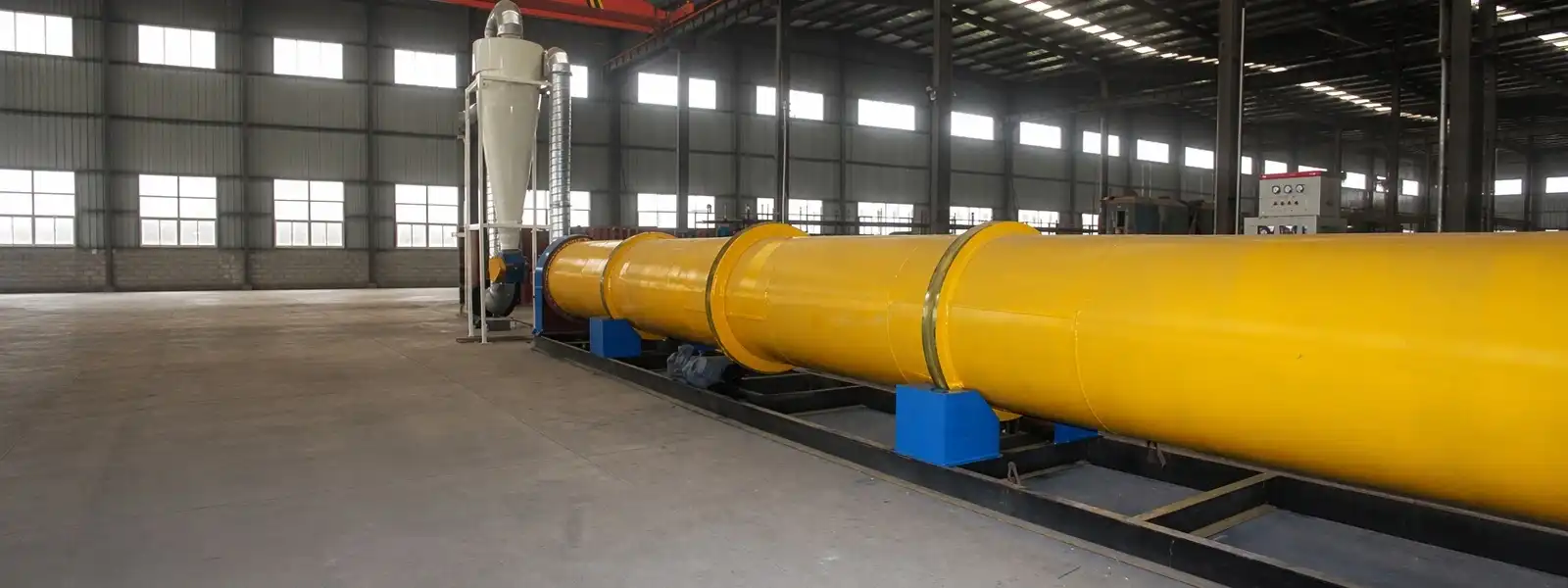
The type of fertilizer drying machine that organic fertilizer and complex fertilizer plants use the most is the rotating drum dryer. It can handle production of a lot of tons, can handle different amounts of moisture, and can use coal, biomass, gas, or waste heat. Models 1212 through 2424 in the YUXING XGHG and YXHG lines work at 3–18 t/h, have an inlet temperature of ≥300°C, and a spinning speed of 5.2–6 r/min. They use 7.5–45 kW of power. The 3–5° installation angle sets the time it takes for the material to stay in place, which makes sure that organic fertilizer, manure, sludge, and coal slime dry completely and evenly.
Fluidized Bed Dryers
Fluidized bed dryers are good for drying fine-particle or solid chemical fertilizers that need to lose a lot of water evenly. They use hot air moving quickly to hold particles, which makes good contact between the heat and the object. But they use more energy than rotary systems and aren't as good for organic materials that are sticky or have a high viscosity.
Flash and Paddle Dryers
Flash dryers dry fast and at high temperatures, breaking down materials. They are more popular in the production of chemical fertilizer. But paddle dryers can handle mud that is thick or pasty, and they are often used as pre-dryers before the main rotating drum stage. Rather than being a full-line worker, each one fills a specific need.
Maintenance Tips and Common Problems in Fertilizer Drying Machines
If you don't check on your dryer often, it will eventually produce uneven output, use too much fuel, or break down in the middle of a shift. Repairs that need to be done right away are much more expensive than routine maintenance.
Routine Checks That Prevent Downtime
The riding rings, support rollers, and gear drive should all be oiled regularly. Check the shell of the drum for damage, especially at the feed end, which gets the most wear. Check the seals at the head and tail of the kiln to make sure heat doesn't escape, and dust doesn't get in. Every 500 hours of use, gear motor types like the ZQ350 through ZQ650 used in the YXHG series machines need to have their oil levels checked.
Addressing Uneven Drying
Lifting plates inside the drum that are worn out or not in the right place can cause uneven drying. The plastic screen that moves heat around is made up of these plates. If they get worn down or move out of place, hot air can get around some of the material load. Checking and replacing the lifting plates on a regular basis makes sure that the drying is even across the whole batch.
Managing Energy Consumption
A dryer that isn't working right will often use more fuel to make less heat. Some common reasons are worn-out heat insulation, air leaks at seals, or an imbalance between the heat source's output and the drum's actual thermal load. Thermal imaging of the outside of the shell on a regular basis can find insulation problems early on, which keeps fuel costs low.
How to Choose the Right Fertilizer Drying Machine: Decision Support for Procurement
When buying a rotary fertilizer dryer, price is not the only thing that matters. Your whole production line could stop if you don't match the capacity or if a machine isn't allowed.
Before you buy, here are the main things you should think about:
- Capacity alignment: Your dryer must match your granulator's output. The YXHG and XGHG series cover 3–18 t/h across five model sizes, making it straightforward to match the dryer to your existing line throughput.
- Heat source compatibility: Plants in regions with biomass availability (Nigeria, Indonesia, Kazakhstan) benefit from biomass-compatible systems. YUXING dryers accept coal, biomass, gas, and waste heat, which gives operators flexibility without requiring a separate heat source investment.
- Dust collection integration: Environmental compliance is non-negotiable in markets like Romania or South Africa. Confirm that any dryer you purchase integrates with cyclone separators or bag filters.
- After-sales support: Spare parts availability and remote technical guidance matter significantly when operating in markets far from the manufacturer.
These things decide whether or not a dryer works well for its whole life, not just the first few months.
Future Trends in Fertilizer Drying Technologies
The fertilizer plant industry is moving toward using less fuel, controlling emissions better, and automating more tasks. Waste heat recovery systems are becoming more popular, especially in power plants that burn coal or biomass and make exhaust that would have been wasted otherwise. Published thermal engineering data shows that putting that recovered heat back into the drying circuit can cut fuel costs by 15 to 25%.
Automation and PLC Monitoring
New setups usually have smart tracking systems that keep an eye on the temperature at the inlet and exit, the speed of the drum spinning, and the conditions of the exhaust gas in real time. Automated PLC control reduces the need for operators and keeps product wetness levels steady without having to be adjusted by hand.
Organic Fertilizer Market Growth
Grand View Research (2023) says that the global market for organic fertilizer will grow at a CAGR of about 11.2% until 2030. This growth is making people want dryers that are made to handle high-moisture organic inputs like chicken manure and composted sludge, which need lower temperatures to keep the microbes in them.
Modular and Space-Efficient Designs
Producers who don't have a lot of floor space are asking for dryers that can be put together in shorter buildings without losing any output. For plants with tight spaces, YUXING offers modular disassembly and custom shipping options.
Conclusion
Controlling moisture is an important part of making commercial fertilizer. It makes the difference between a product that sells and one that goes bad in the warehouse. A good fertilizer drying machine will keep your powders safe, cut down on shipping costs, and keep your production line going at a steady rate. Whether you make organic fertilizer, NPK compound fertilizer, or processed sludge-based goods, the dryer you choose and how well you take care of it have a direct effect on your profits and image in the market.
FAQ
1. How do I know if my fertilizer needs a dryer?
A drum dryer is usually used if the granulated fertilizer comes out of the granulator with more than 15% moisture or if it forms clumps, mold, or gets damaged while being stored. Most commercial fertilizer standards require less than 10 to 14 percent moisture.
2. What heat source works best for a rotary drum dryer?
It depends on how much and where you can get fuel. In Africa and Central Asia, biomass and coal are popular because they are cheaper to use. Natural gas burns cleaner and is easier to control the temperature of. All four types of heat can be used with YUXING dryers.
3. Will drying damage nitrogen content in organic fertilizer?
Not if the temperatures at the outlets are kept in check. Nitrogen stays stable as long as the material exit temperature stays below 70°C. Overheating can be avoided with automated temperature tracking.
4. How long does a drum dryer last?
An industrial rotary drum dryer can usually work for 10 to 15 years of continuous production if it is properly oiled, its seals are maintained, and the shell is coated with an anti-corrosive material.
Get Your Fertilizer Drying Machine from YUXING
YUXING has been making fertilizer equipment for more than 20 years and has sold it to customers in more than 50 countries. Our rotary drum dryer models, the XGHG and YXHG series, can be used as fertilizer drying machines. We offer full customization, such as CE certification, PLC automation, and OEM branding. Customized equipment is ready in 15–20 days, while standard stock units ship quickly. You can get a quote from our team by emailing yuxing@hnyxmachinery.com.
References
1. Grand View Research. Organic Fertilizer Market Size, Share & Trends Analysis Report. 2023.
2. Food and Agriculture Organization of the United Nations (FAO). World Fertilizer Trends and Outlook to 2022. 2019.
3. Mujumdar, A. S. Handbook of Industrial Drying (4th ed.). CRC Press. 2014.
4. International Fertilizer Association (IFA). Fertilizer Outlook 2023–2027. 2023.
5. Keey, R. B. Drying of Loose and Particulate Materials. Hemisphere Publishing Corporation. 1992.
6. Fertilizer Industry Round Table (FIRT). Proceedings of the Annual Meeting: Granulation and Drying Technology in Fertilizer Production. 2021.

USER EVALUATE
Get your tailored fertilizer plant solution — contact us today.