




The development trends of organic fertilizer granulators and the advantages of disc granulators
The organic fertilizer granulator sector is shifting fast. Driven by tighter commercial standards, rising demand for granular products, and pressure to cut production costs, manufacturers across Africa, Southeast Asia, and South America are rethinking their equipment choices. Whether you run a mid-scale composting operation or a compound fertilizer plant processing 3–6 t/h, picking the right granulation technology directly affects your product's market value, shelf life, and field performance. This article breaks down where the industry is heading and why disc granulators remain a strong choice for many B2B buyers.
Evolution and Future Trends in Organic Fertilizer Granulator Technology
From Mechanical Basics to Smarter Systems
Early granulators had motors that ran at a set speed and had to be fed by hand, which led to granules of different sizes that often didn't meet industrial grading standards. Machines with variable-frequency drives (VFDs), PLC controls, and real-time moisture feedback are what producers expect these days. With these features, workers can change the result right away without having to stop the line.
Modular and Multi-formula Designs
More and more modern fertilizer tools can be set up in flexible ways. By switching out dies or changing disk angles, a single production line can handle chicken dung, straw compost, or compound mixes. This is especially important for small to medium-sized plants that serve a wide range of customers or grow foods that only grow during certain times of the year.
Sustainability and Energy Efficiency
The Food and Agriculture Organization (FAO) says that the demand for organic fertilizer around the world will rise at a rate of about 11% CAGR until 2030. As a result, equipment makers are making granulators with lower kWh-per-ton ratios and systems that cut down on dust. When buyers prioritize CE and ISO certificates, they are also saying that they want equipment that meets the environmental standards in the markets they are trying to reach.
Understanding the Advantages of Disc Granulators in Organic Fertilizer Production
How the Disc Granulator Works
A disk granulator, sometimes called a pan granulator, has a slanted disk that rotates at an angle of 40° to 55°. Wet powder material rolls and clumps together into spherical pellets using centrifugal and gravitational forces. Because the process doesn't need dies or high-pressure rollers, the mechanical load is low, and the cost of wear is low as well.
Why Producers Prefer Disc Granulators
Medium-sized businesses like disc granulators because they can work with a lot of different organic and semi-organic raw materials without having to change a lot of their tools. Because the pan is open, workers can see how the granules are forming, which makes quality control easy. Maintenance periods are longer than those for ring die granulators, and cheaper substitute parts are easy to find for this fertilizer granulator machine.
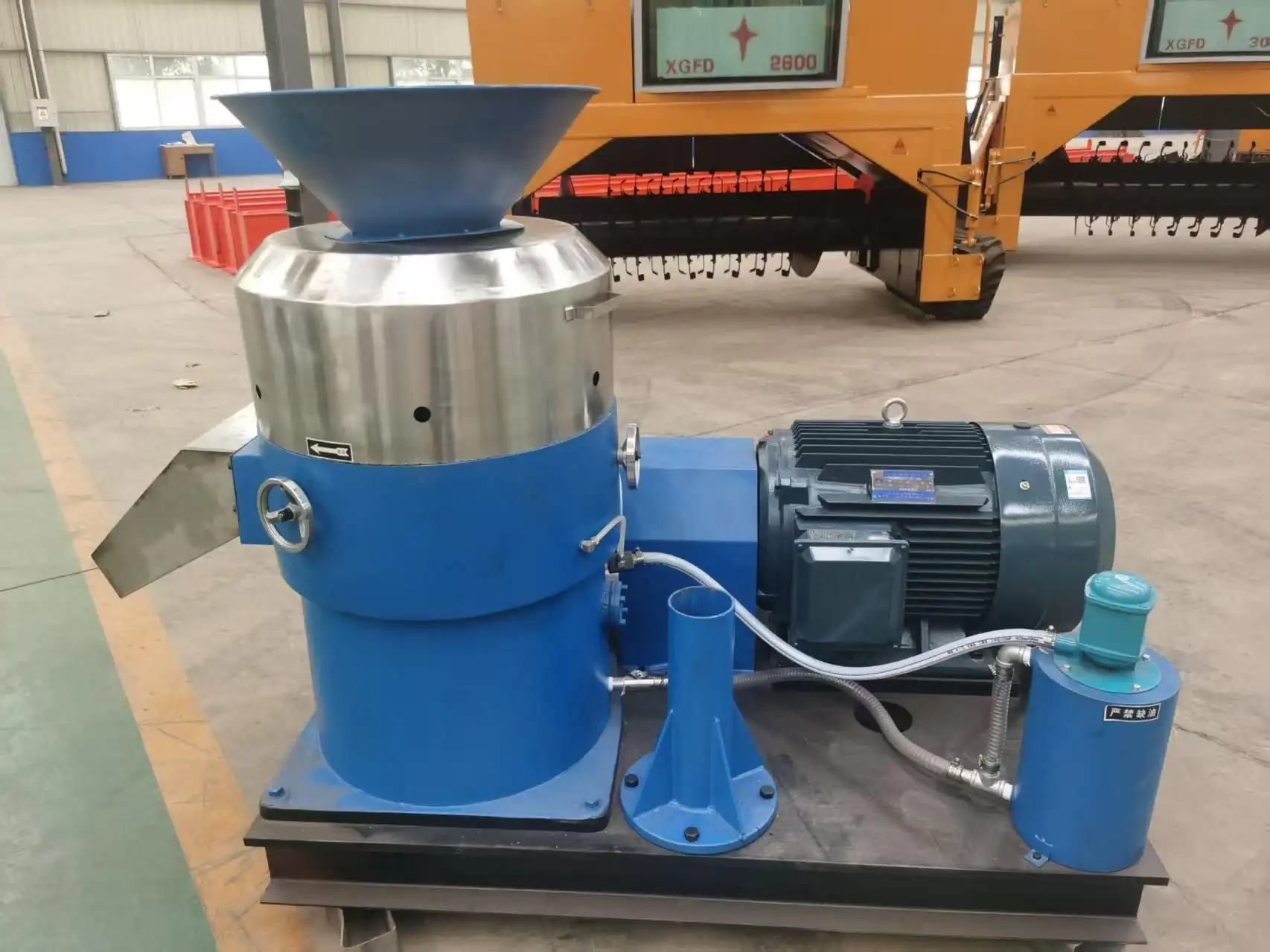
Here are the main ways that disk granulators make mid-sized fertilizer lines run more smoothly:
- Low entry cost: Disc granulators typically cost less than drum or ring die alternatives at comparable capacity, making them accessible for plants with budgets in the $3,000–$15,000 range.
- Visual process control: The open pan allows real-time monitoring of granule growth, so operators can adjust water addition or tilt angle before off-spec product accumulates.
- Broad material compatibility: From chicken manure to peat-based blends, disc granulators accommodate materials with moisture between 25%–40% without frequent clogging.
Because of these benefits, disc granulators are a good place to start for businesses that want to switch from selling powder to selling granular fertilizer. They directly bridge the price gap between bulk powder and granular product that is ready for the market.
ROI in Commercial Farm Settings
A Kenyan company that makes organic fertilizer said that their selling price went up by 35% after they switched from powder to disc-granulated product. The regular 3–5 mm grains met the requirements for fertilizer sold in supermarkets, which allowed them to reach stores that powder products couldn't reach.
Comparison of Organic Fertilizer Granulator Types: Which One Fits Your Procurement Needs?
Disc vs. Drum vs. Ring Die
Rotary drum granulators are good for continuous, high-volume production, but they cost more to buy and take up more floor space. Ring die granulators make thick, cylinder-shaped pellets that work well for slow-release compound fertilizers. However, they need materials that are dry (less than 15% moisture) and need to have their dies replaced more often. Disk granulators are in the middle. They have a low initial cost, a moderate throughput, good granule roundness, and the ability to handle up to 40% moisture.
Wet Granulation vs. Dry Extrusion
Wet granulation (disc, drum) keeps microbes alive in bio-organic goods by keeping the temperatures low. Dry extrusion granulators, like the YUXING YXJY-55, use mechanical pressure to turn materials with as little as 15% wetness into granules. This is useful for makers who don't want to dry the materials themselves or who want to use inputs that have already been dried. The YXJY-55 has a 55kW motor and can make 3–6 t/h of granules with a size range of ¦2–10mm and a density of 0.8–1.2 g/cm³. These are the same specs as most industrial fertilizer bags around the world.
Matching Machine Specs to Your Production Goals
The best option relies on three things: the budget, the goal granule density, and the amount of moisture in the raw material. Before committing to a machine, buyers should ask suppliers for granule crush-strength data (target >15N) and make sure that the output meets local fertilizer registration standards.
Procurement Insights: Navigating the Market for Organic Fertilizer Granulators
Understanding Price Drivers
The price of a machine depends on its motor power, its ability to move materials, its level of automation, and its certification status. A simple disk granulator that can handle 1-2 t/h might cost between $3,000 and $6,000. On the other hand, a fully automatic extrusion granulator line that can handle 3–6 t/h and has PLC control and CE approval is likely to cost between $15,000 and $30,000. Choosing the best granulator for compost pellet making also depends on these equipment specifications and production requirements.
What to Look for in a Reliable Organic Fertilizer Granulator Supplier
There is a difference between trustworthy providers and shady ones when it comes to certifications, recorded after-sales records, and the availability of spare parts. YUXING has been making fertilizer equipment for more than 20 years, has customers in more than 50 countries, and keeps standard equipment on hand so it can be sent out quickly. Customized units have a lead time of 15–20 days, and they can help load entire containers for international shipping.
New vs. Second-Hand Equipment
You can save money by buying used granulators, but you might not be able to tell if the disk plates, bearing housings, or extrusion rollers have been worn when you check them. For companies that are switching from powder to granular products for the first time, buying new CE/ISO-certified equipment with clear guarantee terms greatly lowers the risk of doing business.
Maintenance Tips and Best Practices to Maximize Granulator Performance
Routine Inspection Schedule
Every 500 hours of use, check the bearings, drive belts, and liner surfaces. On disk granulators, check the position of the pan edge scrapers once a week. Scrapers that aren't lined up right cause uneven granule buildup and uneven size distribution. Check the roller skin wear on extrusion granulators every 1,500 to 2,000 hours, based on how rough the material is.
Lubrication and Clogging Prevention
Oil the drive shafts with the manufacturer's recommended oil every so often as stated in the equipment instructions. When starting up an extrusion granulator that works with materials that are close to the upper moisture limit (30%), lowering the feed rate stops the inlet from bridging. The YXJY-55 can handle materials with moisture levels between 15% and 30% and particle sizes of less than 20 mm. To keep the feed system clean, the material must be pre-screened.
When to Call for Technical Support
If the output of granules goes below 80% of its maximum capacity or if the diameter of the granules changes from the desired 2–10 mm range, you should first check the moisture content. Most of the time, quality variation is caused by moisture shift. YUXING offers free 7x24 after-sales support for the life of the equipment, which includes help with installation, process problems, and extra parts questions.
Conclusion
The granulator market is moving toward smarter controls, more materials that can be used with them, and better customer service. Disk granulators are still a cheap way for medium-sized makers to get started, and dry extrusion technology like the YXJY-55 gives businesses that use pre-dried or low-moisture inputs more options. Finding the right organic fertilizer granulator means matching the machine specs to the properties of the raw material, the quality of the granules you want to make, and the amount of production you can handle. You should also look for a seller that has a lot of technical knowledge to back up their equipment.
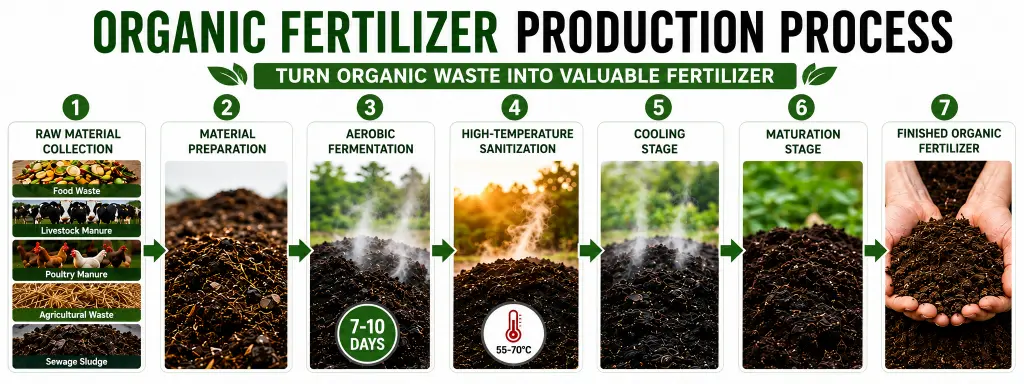
Frequently Asked Questions
1. What moisture level works best for disc granulators?
Disc granulators generally perform well with input materials at 25%–40% moisture. Below 25%, granule formation becomes inconsistent. Above 40%, material tends to stick and clump on the pan surface.
2. Can the YXJY-55 handle mixed organic and compound fertilizer inputs?
Yes. The YXJY-55 extrusion granulator accepts a range of organic and compound blends with material moisture between 15%–30% and input particle length < 20 mm, making it practical for producers switching between formulas.
3. How do I verify granule quality before accepting a shipment?
Request crush-strength test results (target> 15 N) and granule size distribution data (Φ2–10mm for most commercial specs). CE and ISO certification documents confirm the machine met production standards at the factory level.
4. What is the typical replacement cycle for wear parts?
On extrusion granulators, roller skins and dies typically need inspection every 1,500–2,000 hours. Disc granulator pan liners last longer but should be checked every 1,000 hours when processing abrasive materials like phosphate-enriched compost.
Ready to Upgrade Your Fertilizer Line? Contact YUXING Today
YUXING is a reliable company that has been making organic fertilizer granulators for more than 20 years and has projects going on in more than 50 countries. Our YXJY-55 Extrusion Granulator, which is CE- and ISO approved, can turn powder fertilizer into grains that are ready for the market. It can handle up to 6 t/h and has a forming density of 2 to 10 mm. You can email our technical team at yuxing@hnyxmachinery.com to get price information, specs, or a plan for a unique production line.
References
1. Food and Agriculture Organization of the United Nations. World Fertilizer Trends and Outlook to 2030. FAO, 2022.
2. Huang, L., & Chen, Z. "Granulation Technology in Organic Fertilizer Manufacturing: A Review." Journal of Agricultural Engineering Research, 2021.
3. Kaliyan, N., & Morey, R.V. "Factors Affecting Strength and Durability of Densified Biomass Products." Biomass and Bioenergy, 2009.
4. International Fertilizer Association (IFA). Fertilizer Outlook and Statistics. IFA, 2023.
5. Rynk, R. (Ed.). On-Farm Composting Handbook. Northeast Regional Agricultural Engineering Service, 2003.
6. Tumuluru, J.S. "Effect of Process Variables on the Density and Durability of Pellets Made from High Moisture Corn Stover." Biosystems Engineering, 2014.

USER EVALUATE
Get your tailored fertilizer plant solution — contact us today.