




Organic Fertilizer Manufacturing Machine: Complete Buying Guide
If you run an organic fertilizer plant or manage agricultural waste, choosing the right organic fertilizer manufacturing machine is one of the most important decisions you will make. This guide walks you through everything—from understanding how these machines work to comparing types, selecting the best fit for your operation, and knowing what to ask before you buy. Whether you process livestock manure, crop residues, or food waste, the right equipment turns a disposal problem into a profitable product.
Understanding Organic Fertilizer Manufacturing Machines What These Machines Actually Do
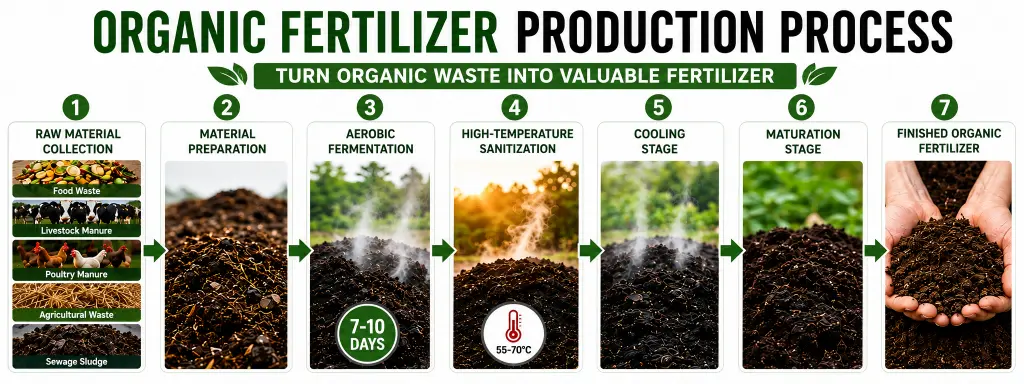
Through mechanical and biological processes, an organic fertilizer production machine turns raw organic waste like manure, straw, sludge, and food scraps into stable, nutrient-rich fertilizer. Usually, the method includes drying, screening, packing, fermenting, crushing, mixing, granulating, and mixing again. Each step is important: fermentation gets rid of pathogens, granulation makes uniform pellets, and drying makes the food last longer.
The Raw Materials They Handle
This machine can handle a lot of different inputs. Chicken, pig, and cow manure, crop waste (like straw and rice husks), and organic sludge are the most frequent. If you set it up right, you can also process industrial inputs like sugar filter mud and lignin waste from paper mills. The FAO says that every year, over 7 billion tons of waste from animals are made around the world, and most of it is not handled.
Why This Matters for Your Business
Turning trash into fertilizer saves money on disposal fees, keeps people from getting fined by the government, and makes a product that can be sold. Grand View Research (2023) says that the world market for organic fertilizer will grow to $16.8 billion by 2030, up from about $10.2 billion in 2022. That rise shows that there is real demand from businesses, especially in Africa, Southeast Asia, and South America, where land loss is a big problem.
Key Types and Technologies of Organic Fertilizer Manufacturing Machines
Small-Scale vs. Industrial Systems
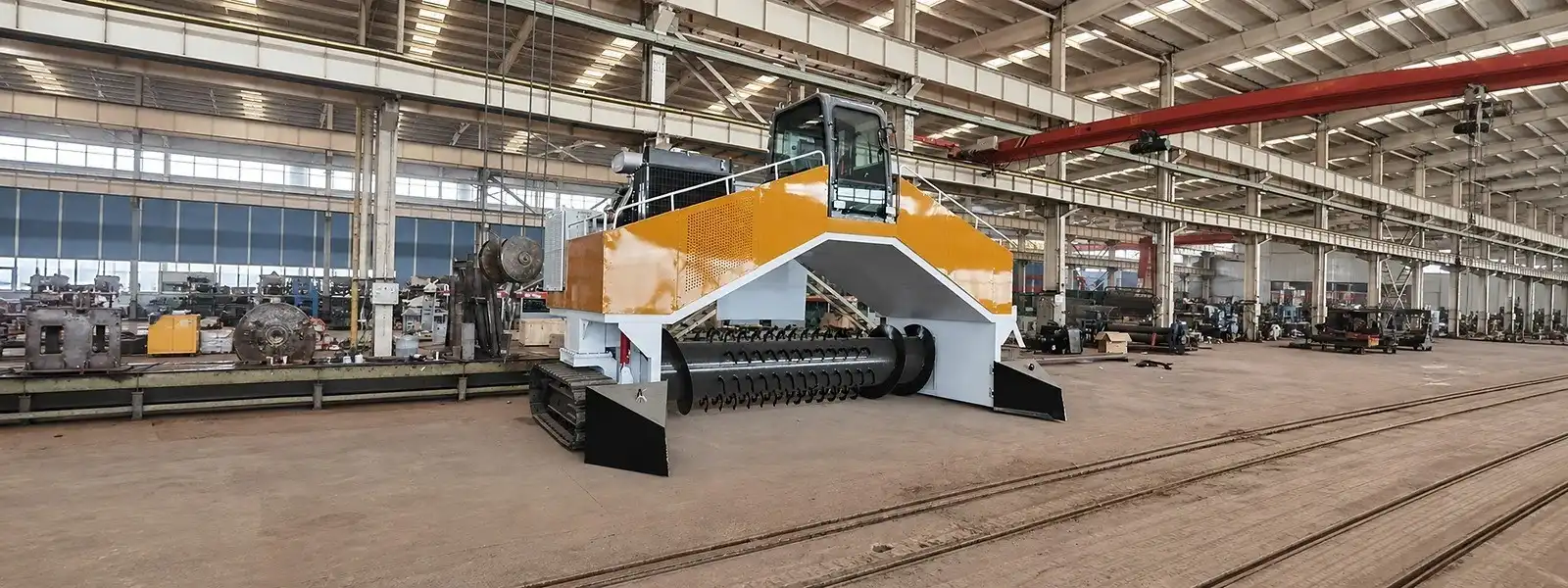
Startups and small farms can use entry-level systems that can handle 1 to 3 tons per hour. Medium-sized businesses can use mid-range lines that can handle 5 to 10 tons per hour. Large processing plants use industrial systems that can handle more than 15 tons per hour. One example is the YUXING YXFD-4000 Crawler Compost Turner, which can handle up to 1,200–1,600 m³/h, which makes it perfect for large-scale windrow composting projects.
Compost Turners vs. Granulation Lines
During the fermentation stage, a compost turner mixes and aerates the piled-up material to speed up breakdown. The YXFD-4000, a key piece of fertilizer production machine, can work with piles that are up to 4,000 mm wide and 1,800 mm high. There is equipment for breaking, mixing, pelletizing, drying, and packing on a full granulation line. You will need either a partial or full production line, depending on what you want to make (powder or grains).
Green Technology and Energy Efficiency
High-torque, low-speed motors, PLC automation, and sealed fermentation systems are some of the new technologies used to make fertilizer. These technologies help save energy and keep smells under control. There are diesel-powered turners like the YXFD-4000 that are made for outdoor windrow sites that don't have access to grid power. It has a National III 6-cylinder 154kW engine. These rules are in line with the fact that export markets are becoming more strict about protecting the environment.
How to Choose the Best Organic Fertilizer Manufacturing Machine
Match Capacity to Your Raw Material Supply
Figure out your daily input volume before you buy. When there isn't enough capacity, capital is wasted, and jams happen. The YXFD-4000 can handle up to 1,600 m³/h and can work at speeds between 0 and 15 m/min or move at speeds between 0 and 20 m/min. It is perfect for large compost yards. When used with a grinding line, a smaller turner may give you a better cost-to-output ratio for medium-sized jobs.
Evaluate Total Cost of Ownership
The price you pay is only one part of the equation. Think about the cost of installation, the power standards in the area (380V, 440V, or 480V), the availability of spare parts, and the cost of labor. Automatic systems cost more up front, but they save a lot of work in the long run. YUXING has standard stock equipment and customized voltage settings to speed up shipping. Customized units are usually ready in 15–20 days.
Certifications and Supplier Reliability
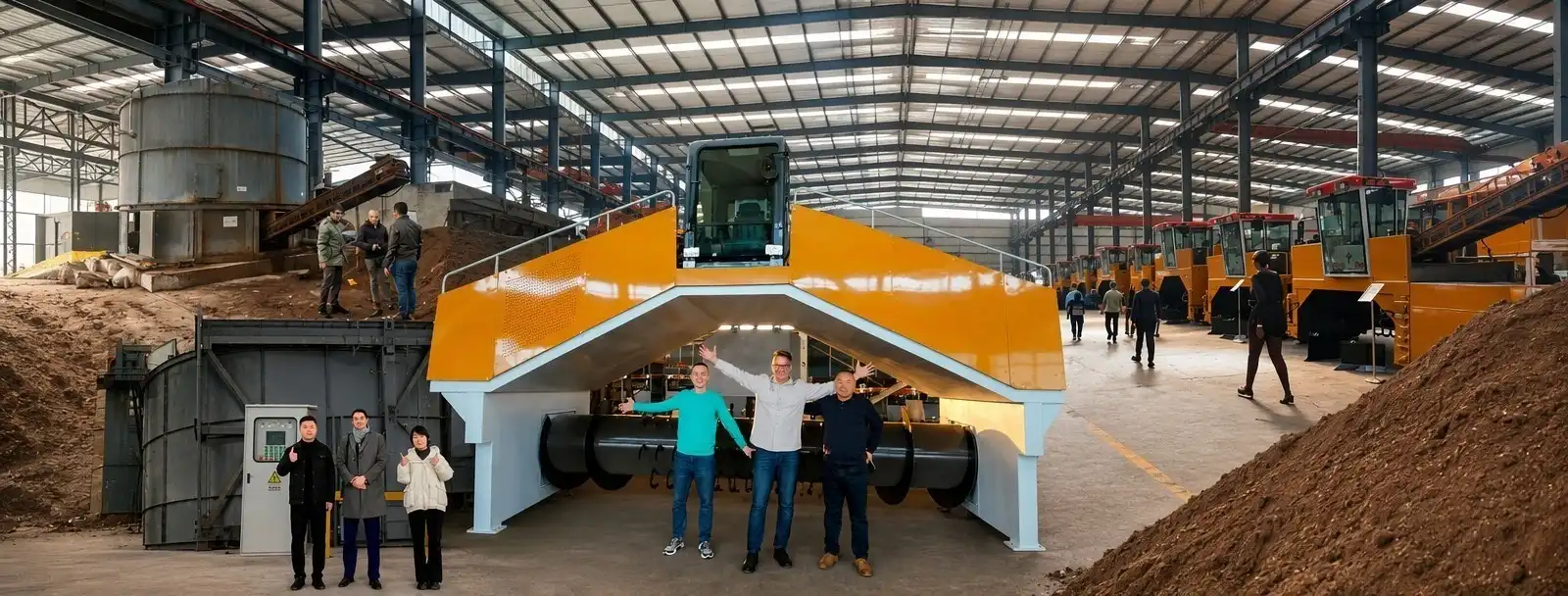
CE and ISO certifications are more than just paperwork; they also guarantee the safety of the structure, the electricity, and the quality of the production. When buying from international suppliers, make sure the company has actually exported goods before and can help with installation in other countries. It has CE and ISO standards, works with customers in more than 50 countries, and provides lifetime after-sales help 24 hours a day, 7 days a week, including advice on spare parts.
Operation Guide and Best Practices for Organic Fertilizer Production
Preparing Raw Materials Correctly
Moisture level is very important. For the best aerobic composting, the material's wetness should be between 50% and 65% when you turn the compost. The YXFD-4000 can handle material particles up to 250 mm in size, which means that less pre-processing is needed. Mix dung with straw or other carbon-rich materials before filling to get the carbon-to-nitrogen (C/N) ratio between 25 and 30:1.
Running the Machine Safely and Efficiently
The YXFD-4000 has a hydraulic walking system that can turn 360° while still in place. This saves space on the job site and makes operations more flexible. The moving shaft is made from a 20# seamless steel rod that has been balanced, and the chain and sprocket system uses an elephant chain and high-strength sprockets. Both are designed to be used continuously for heavy-duty work. For any fertilizer machine price comparison, remember that every time a shift starts, operators should check the amount of hydraulic fluid, the tightness of the tracks, and the wear on the drum blades.
Routine Maintenance to Protect Your Investment
Regular repair keeps downtime from happening out of the blue. Here is a plan that you can use:
- Daily: Inspect blade tips for wear, check hydraulic oil level, and clear material buildup around the drum housing.
- Weekly: Lubricate all chain joints, inspect sprocket teeth for deformation, and verify track alignment on the heavy-duty widened Track Model 4000.
- Monthly: Perform a full hydraulic system pressure test, inspect the fast gearbox for leaks, and check the engine air filter.
If you stick to this routine, your machines will last longer and not break down in ways that cost a lot of money and stop production. YUXING helps workers stay on schedule by giving them video advice from afar and technician support on-site.
Procurement and Transaction Insights for B2B Buyers
Where and How to Buy
B2B buyers can find tools for making fertilizer on the websites of manufacturers, on foreign trade platforms, or by talking to factories directly. When you buy directly from the manufacturer, you usually have more customization options and better warranty terms. YUXING provides OEM/ODM services, which include unique branding, PLC control systems, Siemens or Schneider electrical parts, and different working interface language choices. These are important for the Nigeria, Vietnam, Uzbekistan, and Brazil markets.
Understanding Warranty and After-Sales Terms
In remote areas, a guarantee that only covers parts for 12 months is not enough for durable goods. Ask especially about installation help in other countries, how quickly technology problems can be fixed, and how long you can get spare parts. YUXING offers lifetime expert help, an on-site installation service, and a service line that is open 24 hours a day, seven days a week. As your business grows, the company can also help you plan your plant, analyze your raw materials, and increase your capacity.
Aligning Equipment to Your Business Scale
There are good choices for buyers with prices between $20,000 and $300,000. A windrow composting setup based on the YXFD-4000 works for businesses that already deal with a lot of waste and want to cut down on fermentation times. A full turnkey line, from dewatering to bagging, is good for people who want to package fertilizer that is ready to sell. Before you place an order, talk to your provider about your output goal, the land that is available, and the rules in your area.
Conclusion
Investing in the right organic fertilizer manufacturing machine is a long-term decision that will affect your production costs, product quality, and ability to stay in compliance. The YUXING YXFD-4000 Crawler Compost Turner is a great example of purpose-built equipment because it has a high capacity, is built to last, and has been used in the field before. When you add a full production line, good upkeep habits, and a source who really helps you after the sale, your business is set up to grow.
FAQ
1. What raw materials can an organic fertilizer machine process?
Most systems handle livestock manure (poultry, cattle, swine), crop residues (straw, husks), food waste, and municipal sludge. The YXFD-4000 accepts material up to 250mm particle size, covering most farm and processing facility inputs.
2. How does automatic operation differ from manual?
Automatic systems use PLC controls to monitor temperature, motor torque, and material flow in real time, reducing operator errors and labor costs. Manual systems require more staffing and produce less consistent output—a significant drawback when selling to commercial agricultural buyers who expect uniform product quality.
3. What is the typical fermentation time with a crawler compost turner?
With proper aeration from a machine like the YXFD-4000, fermentation time can be shortened by up to 30% compared to static piling, depending on material composition and ambient temperature. Most organic waste reaches stable compost in 15–25 days under managed turning conditions.
4. How much power does the YXFD-4000 consume?
The YXFD-4000 runs on a National III 6-cylinder diesel engine rated at 154kW. Fuel consumption depends on working duration and material resistance, but diesel operation makes it viable for sites without stable grid power.
Start Your Organic Fertilizer Project with YUXING
It took YUXING more than 20 years to build an organic fertilizer manufacturing machine that is now used in more than 50 countries. We are a trusted company that makes machines for making organic fertilizer, and we offer full lines, turnkey projects, and custom configurations. You can email us at yuxing@hnyxmachinery.com to get a price, talk about the conditions of your raw materials, and get a production plan that fits your budget and spot.
References
1. Grand View Research. (2023). Organic Fertilizer Market Size, Share & Trends Analysis Report. Grand View Research.
2. Food and Agriculture Organization of the United Nations (FAO). (2021). Livestock and the Environment: Managing the Impacts. FAO.
3. Cooperband, L. (2002). The Art and Science of Composting. University of Wisconsin–Madison Center for Integrated Agricultural Systems.
4. Bernal, M. P., Alburquerque, J. A., & Moral, R. (2009). Composting of animal manures and chemical criteria for compost maturity assessment. Bioresource Technology, 100(22), 5444–5453.
5. International Finance Corporation (IFC). (2020). Waste and Agriculture: Turning Organic Waste into Resource. World Bank Group.
6. Huang, G. F., Wu, Q. T., & Wong, J. W. C. (2006). Transformation of organic matter during co-composting of pig manure with sawdust. Bioresource Technology, 97(15), 1834–1842.

USER EVALUATE
Get your tailored fertilizer plant solution — contact us today.