




Compost Turning Equipment Beginner's Guide
If you manage a livestock farm, run an organic fertilizer plant, or operate a commercial composting business, understanding compost turning equipment is one of the most practical steps you can take toward faster, cleaner fermentation. This guide walks you through how these machines work, what to look for when buying one, and how to get the most out of your investment. Whether you are processing cattle manure in Kenya or poultry waste in Vietnam, the right windrow turning machine can cut your fermentation cycle from months down to just 7–15 days.
Understanding Compost Turning Equipment: How It Works and Why It MattersWhat Is a Compost Turner?
A compost turner is a machine that moves organic matter around in windrows or fermentation troughs. It breaks up dense piles, adds oxygen, gets rid of heat, and moves water around. If you don't turn the pile often, anaerobic conditions can form inside it, which slows down decomposition and makes it smell bad. Aerobic fermentation, on the other hand, turns raw manure or farm waste into stable compost that doesn't have any pathogens in a lot less time.
Key Equipment Types
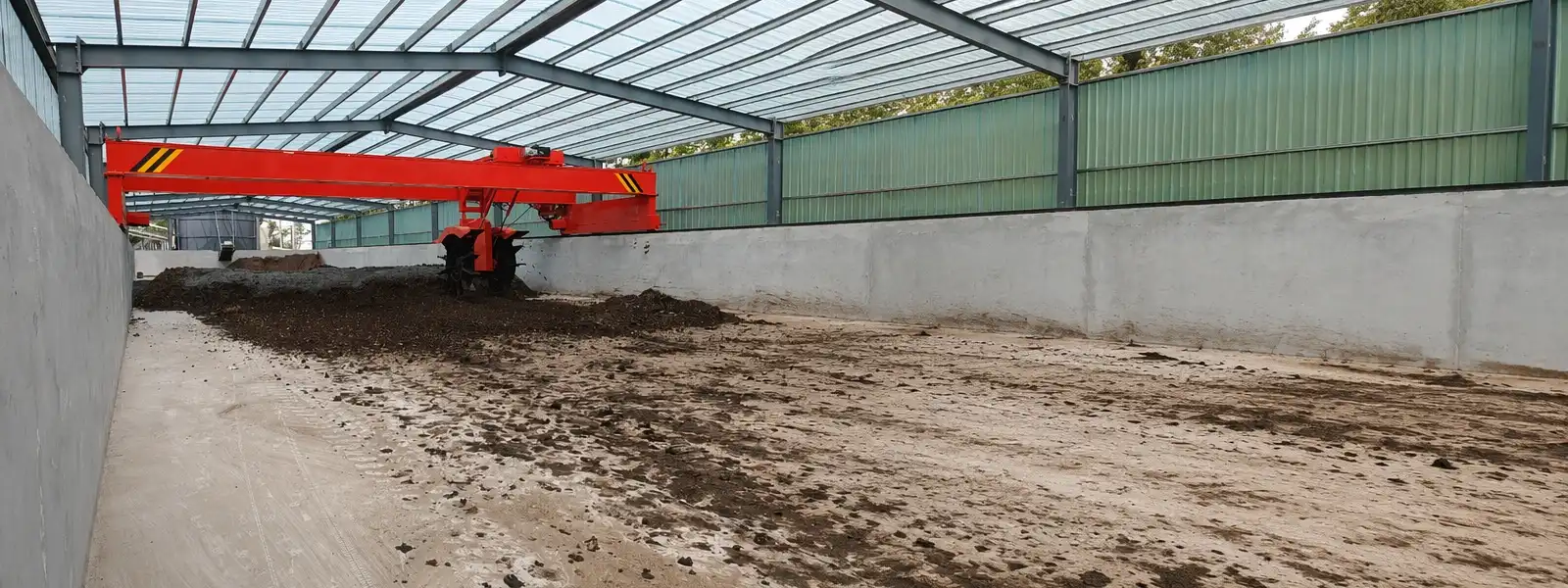
There are many types of compost turners, from small walk-behind models to big industrial tools with troughs. Trough-type turners with fixed fermentation lines are the usual choice for medium- to large operations that handle daily amounts above 200 m³. Windrow turners that move on their own are good for open, flat areas. Groove-type turners, like the YXFP-3000, are better for tight spaces with many parallel fermentation troughs.
Environmental and Business Benefits
To meet Class A pathogen reduction standards set by the U.S. Environmental Protection Agency (EPA), the temperature of a compost pile must stay above 55°C (131°F) for at least three days in a row. This is always possible with mechanical turning. When businesses switch from passive piling to active turning, they get fewer complaints about smells, their compost keeps more of its nutrients, and they follow local environmental laws better.
How to Choose the Right Compost Turning Equipment for Your Business
Match Capacity to Your Daily Output
First, figure out how much organic waste you produce every day in cubic meters. A medium-sized livestock farm usually makes between 50 and 300 m³ of manure every day. The YUXING YXFP-3000 can process up to 200 m³/h, has a moving width of 3,000mm, and a height that can be changed from 0.8 to 1.2 meters. It works well for tasks in this range.
Evaluate Power and Site Compatibility
Electric trough turners are better for composting halls that are closed off or mostly closed off because they don't produce exhaust fumes and are quieter than diesel alternatives. This windrow turning machine has two 15kW main motors, one for travel and the other for transfer. It also has a separate 2.2kW transfer car motor. Before you buy, make sure that the voltage of your facility's power supply matches the equipment's voltage needs and that the size of your trough matches the machine's turning width.
Consider Total Cost of Ownership
The purchase price is only one part of the equation. Think about how often to replace wear parts, how much energy is used, and how easy it is to get spare parts. Every 500 hours of use, high-manganese steel teeth that are used for turning usually need to be checked. The YXFP-3000 and other machines like it that have dual cycloidal pinwheel reducers and double-row chain-and-sprocket transmission systems tend to need less upkeep than gear-drive machines. When bringing tools across countries, CE and ISO certification are also important.
Optimizing Compost Turning Efficiency: Best Methods and Equipment Use
When to Turn the Pile
If the core temperature drops below 45°C, the top starts to dry out or crust over, or there is a strong increase in the smell of ammonia, it's clear that the pile needs to be turned. In active fermentation, moving the mixture every one to two days for the first week keeps the thermophilic temperature range that breaks down matter quickly. The YXFP-3000 can move at speeds of up to 10 meters per minute, so workers can set the speed of the turning cycles based on the density of the material.
Best Practices for Aeration and Moisture
How well the turning device gets to the bottom of the pile affects how evenly air is spread. The YXFP-3000 stays in contact with the trough floor even when the density of the material changes because it has 8 cast-steel motion wheels and a hydraulic lifting system. If the moisture level is higher than 70%, adding bulking agents like straw or sawdust before turning stops the pile from clumping and lets more air flow through it.
Routine Maintenance That Protects Performance
These maintenance steps directly lower the risk of breakdowns in the middle of a fermentation batch, which can stop the whole batch and make it more expensive to get rid of the waste.
- Turning teeth inspection: Check for wear or deformation every 500 hours; replace immediately if HRC hardness has dropped below specification.
- Hydraulic system check: Monitor oil viscosity and filter condition monthly; high-temperature fermentation environments accelerate oil degradation.
- Chain and sprocket lubrication: Apply grease to the double-row 20A chain every 200 operating hours to prevent premature link wear.
- Travel wheel inspection: Examine the 290mm cast-steel wheels for flat spots or cracking each quarter, especially after processing high-moisture, heavy material.
These maintenance steps directly reduce the risk of mid-cycle breakdowns, which can stall an entire fermentation batch and increase waste disposal costs.
Comparing Compost Turning Solutions: Manual vs. Equipment and Other Market Options
Manual Turning vs. Mechanical Turning
Using front-end rollers or hand tools to turn piles by hand costs less up front, but it doesn't scale well. It can take one person an entire workday to turn a 200 m³ pile by hand, and the quality of the turn is often not consistent. The same job can be done by industrial compost turning solutions in less than an hour, and the air and penetration level are the same all the way through the pile.
Electric vs. Diesel Turners
Diesel-powered windrow turners can move around in open spaces that don't have electricity, which is good for farms in places like Uzbekistan or Ethiopia that are far away from cities. Electric trough turners, on the other hand, have lower costs per cubic meter worked on, don't release pollution when they're used inside, and are easier to connect to remote control systems. The YXFP-3000 can be controlled by both hand and a remote, which gives users options without losing accuracy.
Renting vs. Buying
Renting tools may be a good idea for short-term composting projects or times of the year when there is a lot of trash. For businesses that deal with organic waste all year, like most medium-sized animal farms do, buying it directly makes more financial sense. Over three years, the time saved and better quality soil usually cover the cost of buying a specialized trough turner.
Procurement Guide: Where and How to Buy Compost Turning Equipment
Sourcing from a Verified Manufacturer
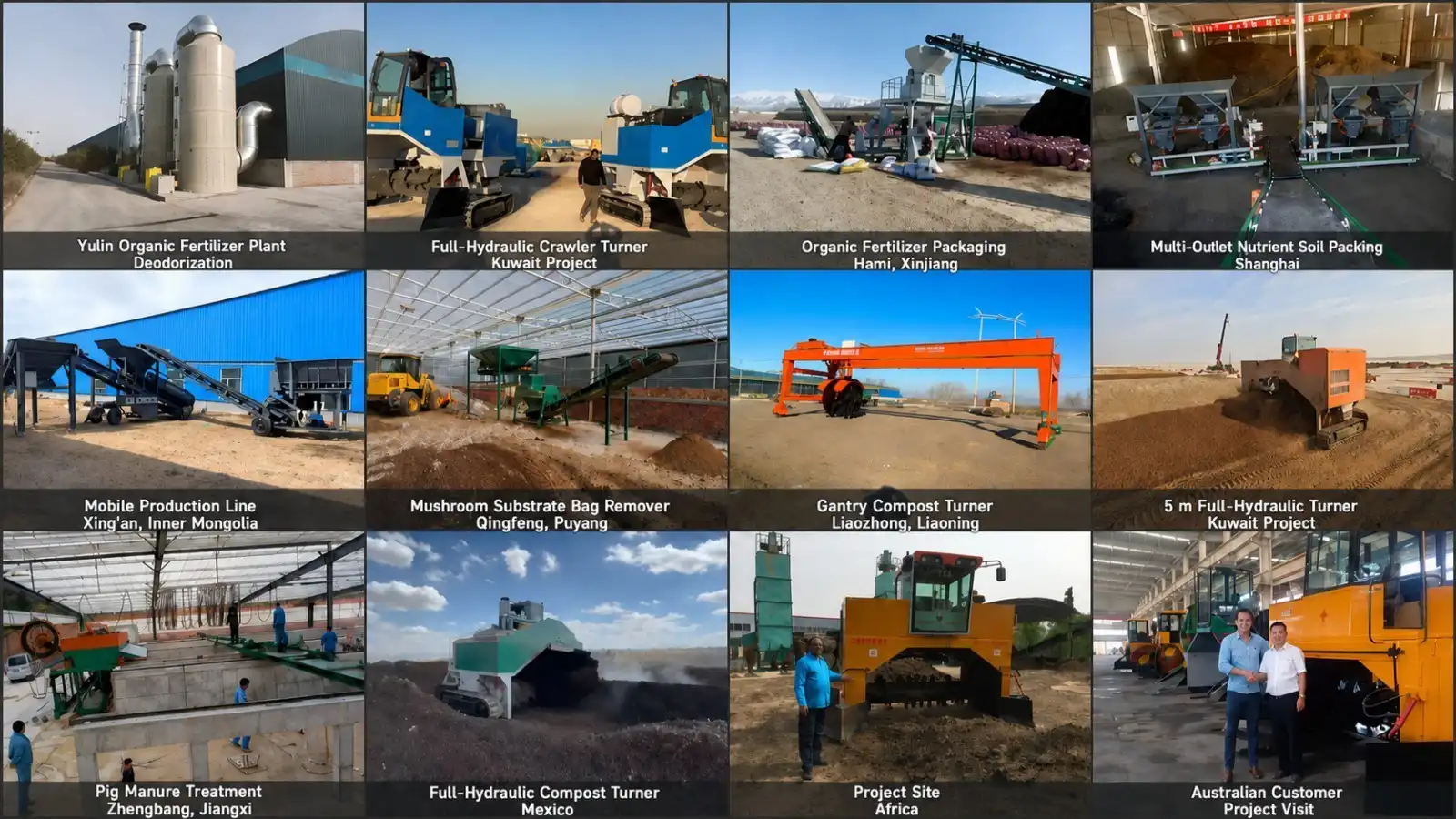
If you buy straight from a company that has been making fertilizer equipment for more than 20 years, you are less likely to get fake parts or bad customer service after the sale. Customers in more than 50 countries have bought compost turning equipment from YUXING. Customized orders take 15–20 days to make, and standard models are always in stock.
Customization and Certification
YUXING offers ODM/OEM customization for buyers in markets with specific electrical standards or branding needs. This includes voltage adaptation, PLC automation systems, Siemens or Schneider electrical components, and control interfaces that are language-specific. All of the equipment that ships comes with paperwork showing that it is CE and ISO certified, which is needed in many countries to clear imports.
Logistics and After-Sales Support
Yuxing ships equipment in 40GP and Open Top containers with professional loading plans that are made to fit the size of the machine. Oversized parts can be taken apart for transport and put back together at the job site. After the delivery, the YUXING team offers video-guided installation, operator training, and a 24/7 lifetime after-sales service that includes advice on spare parts and fixing problems.
Conclusion
Picking the correct compost turning equipment is a useful choice that impacts daily tasks, the quality of the compost, and the business's ability to make money in the long run. A trough-type turner with enough capacity, long-lasting wear parts, and a flexible multi-trough design will work much better for a medium-sized composting business than hand methods or equipment that is too small. All of these needs are met by the YXFP-3000 from YUXING, which has a processing rate of up to 200 m³/h, a changeable travel speed, a dual-motor drive, and a multi-trough transfer function that lets one machine handle the whole composting facility. This is a good place to start if you want to shorten the fermentation process and make the compost better.
FAQ
1. How often should I turn compost in a trough system?
During the active thermophilic phase, turn every 1–2 days to maintain temperatures above 55°C. Once the pile stabilizes and temperatures drop, reduce turning to every 3–5 days.
2. Can trough turners handle moisture levels above 70%?
They can, but it is best to mix in bulking agents like rice husks or sawdust first. This prevents the material from clumping around the turning shaft and ensures proper oxygen distribution.
3. What is the primary maintenance requirement for the hydraulic lifting system?
Monitor oil viscosity and inspect filters monthly. High-temperature fermentation environments cause oil to degrade faster than standard industrial conditions.
4. How does mechanical turning meet EPA pathogen reduction standards?
By ensuring every section of the compost pile reaches 55°C (131°F) for at least 3 days through consistent, thorough turning cycles, meeting the federal Class A or Class B biosolids reduction benchmarks.
Get a Quote from YUXING — Trusted Compost Turning Equipment Manufacturer
Yuxing makes recycling systems that work well and last for medium- to large-sized businesses. There is lifetime 24/7 after-sales support for the YXFP-3000 compost turning equipment, and it can be changed to fit your site's power supply, trough layout, and production scale. Get in touch with our team directly to get a custom quote and set-up of your tools. You can email yuxing@hnyxmachinery.com.
References
1. United States Environmental Protection Agency. Biosolids Technology Fact Sheet: Land Application of Biosolids. EPA, 2000.
2. Rynk, R. (Ed.). On-Farm Composting Handbook. Northeast Regional Agricultural Engineering Service, 1992.
3. Haug, R. T. The Practical Handbook of Compost Engineering. CRC Press, 1993.
4. Tuomela, M., Vikman, M., Hatakka, A., & Itävaara, M. "Biodegradation of lignin in a compost environment." Bioresource Technology, 2000.
5. Larney, F. J., & Hao, X. "A review of composting as a management alternative for beef cattle feedlot manure in southern Alberta, Canada." Bioresource Technology, 2007.
6. Food and Agriculture Organization of the United Nations. Livestock's Long Shadow: Environmental Issues and Options. FAO, 2006.

USER EVALUATE
Get your tailored fertilizer plant solution — contact us today.